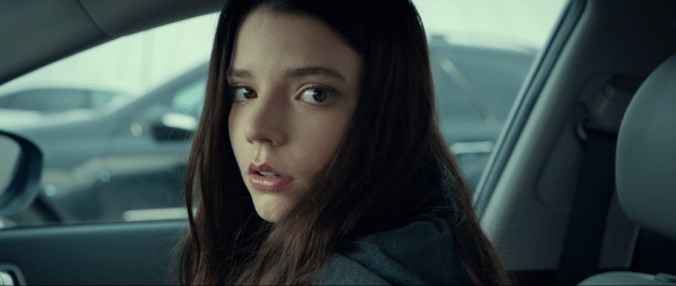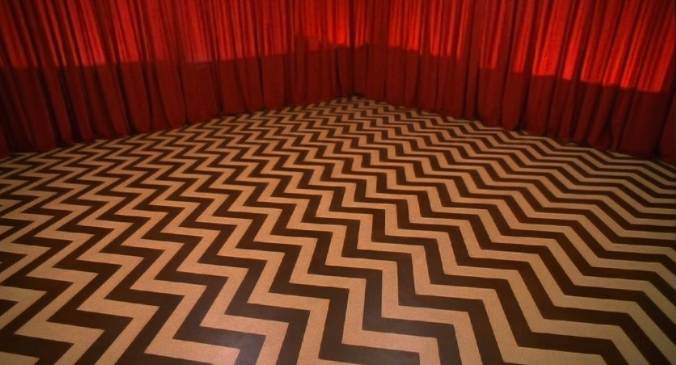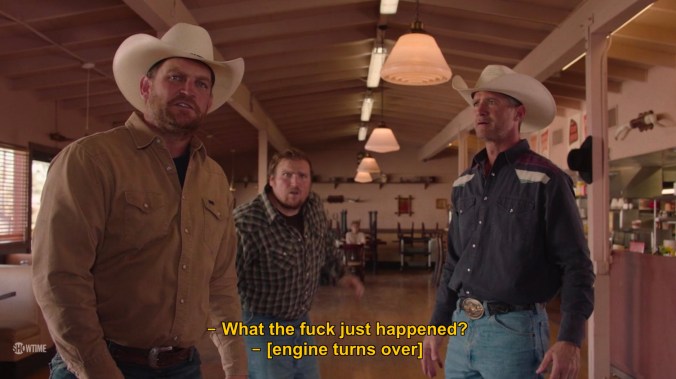
About Last Night…: Being “The Dreamer” in TWIN PEAKS

Screen Shot 2017-09-04 at 7.07.43 PM

Mulholland Drive isn’t like Memento, where if you watch it closely enough, you can hope to explain the mystery. There is no explanation. There may not even be a mystery.

That quote comes from Roger Ebert’s 4-out-of-4-star review of Mulholland Drive back in 2001. Ebert had spent the previous 15 years panning almost every David Lynch film that came along, brutally tearing into Lost Highway (1997), Wild At Heart (1990), and even Blue Velvet (1986) with all the strength of his downward thumb. But with Mulholland Drive, we have an example of a unique and glorious Lynch paradox: the willingness to crown a film a masterpiece while maintaining (as Ebert did over and over in his review) that one simply needn’t and probably can’t understand it.

In my last post about Twin Peaks: The Return, I said that I didn’t envy TV critics who have to get their reviews online so quickly. But I especially don’t envy any critic who owes a publication a David Lynch review on short notice. Ebert’s prognosis was correct: Mulholland Drive is a masterpiece. His analysis was not; the plot of Mulholland Drive can be decoded, and rather nicely. I first saw the film one Saturday night in college, and it was my first experience with Lynch. I started the movie at 11 PM, and got progressively more and more sleep-deprived as the film got more and more surreal. I lay awake until 4 AM thinking about it, and spent much of my Sunday reading theories about it online instead of studying.

I didn’t see Mulholland Drive again for another 10 years, but when I revisited it, it was almost disappointing how much sense it made, how tidily each of its pieces could be accounted for. Lynch may be a surrealist, and much of his aesthetic choices—a cowboy with no eyebrows, say—can be explained simply by noting the irrational impact they’re supposed to have. But as a storyteller, he’s more like a puzzle-master who’s gotten high on symbolism and spiritual dream logic. In other words, his best work is clearly more than random wanking or a mere “trip”, but a different approach to narrative—one in which objective and subjective events criss-cross and do a waltz.

All of which leads me to my reaction to last night’s hotly anticipated finale of Twin Peaks: The Return, which said the last word not only on this Showtime miniseries but presumably the franchise as a whole. I confess, the viewing experience left me frustrated. Of all the threads the show had set up—what the fuck is up with Audrey? what the fuck is up with the girl and the frog-bug? what the fuck is up with… etc.—the dawning horror of last night’s 2-hour weird-fest wasn’t just that it wasn’t going to answer the questions, but that it wasn’t going to address them at all. And this raises a hard question for cine-fans everywhere.

There are certain directors—Lynch, Kubrick, Godard, etc.—who attain such a reputation for mastery, for everything being deliberate and meaningful no matter how perplexing, that all their work gets viewed accordingly. But isn’t it possible that those directors, like more or less every great director in history, can lose the thread? That is, for a puzzle-master like Lynch, if he ever crossed the line from cryptic brilliance to utter messiness, how would we know?

One answer may just be our gut reaction to the images on the screen, and even that only takes you so far; as much as it would suck to be prematurely on the bandwagon, it would suck even more to write off a work of art you’re not ready to understand. So after anxiously awaiting last night’s finale, I found myself anxiously awaiting what the hivemind of the internet would make of it. I saw pretty much every possible human emotion expressed somewhere: raves, confusion, ambivalence, disappointment, and a die-hard Peaks fan friend who simply posted an angry, Diane-esque “Fuck you” aimed at David Lynch.
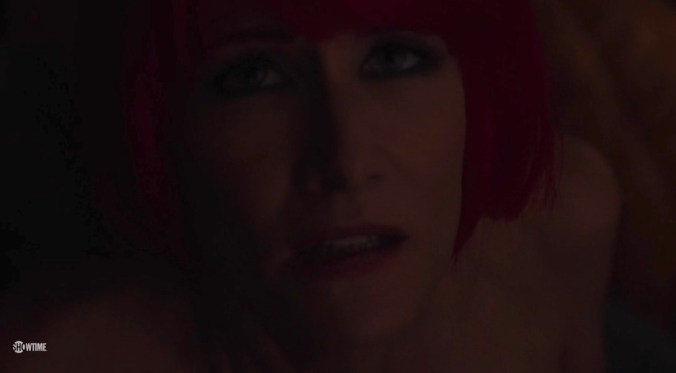
Screen Shot 2017-09-04 at 7.10.29 PM

So what the fuck is going on? Below is a breakdown of one plausible theory. It is by no means complete, and it won’t account for everything, but it’s the theory I like the most. It is also naturally filled with spoilers, so don’t read it unless you know what you’re getting into.

First off, Lynch can make fools of us all. Yesterday, I posted that I thought the new series was heading in the direction of an optimistic finale. I was fractionally right. The optimistic showdown it had been building towards did indeed happen: Special Agent Cooper arrived back in Twin Peaks for a tender reunion, and the evil entity known as Bob was defeated and destroyed.

But almost instantly, you can tell that something is wrong, not just because this “happy ending” happens with 90 minutes still left to go, but because Lynch suddenly stages it with Cooper’s horror-stricken face superimposed over the action. That is, he gives us the triumph and smiles and kisses while framing it with deep unease.

“We live inside a dream,” the floating head of Cooper says. And then the following events occur:

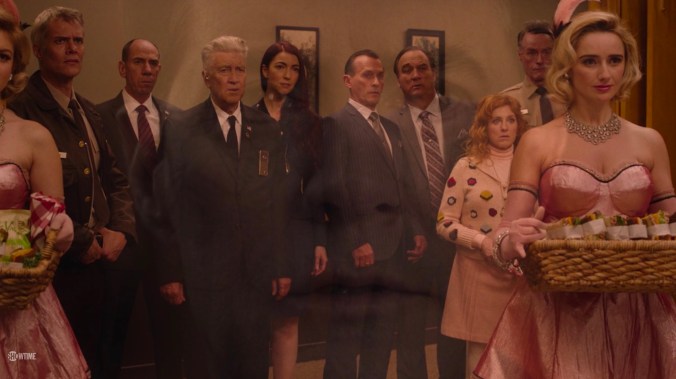
  • Cooper says “I hope I see all of you again” to the cast of the show.
  • Cooper’s goes back in time to prevent Laura—who in Episode 8 was revealed as a symbol of heavenly goodness—from ever being killed. He succeeds in preventing her murder, but then loses her in a dark forest.
  • Cooper and Diane drive out to the middle of nowhere. There is a threshold in the highway, and they know it will change everything if they cross it. They cross it anyway.
  • Day turns to night, and Cooper and Diane arrive at a roadside motel. They say almost nothing to one another.
  • Diane, briefly, sees an image of her own doppelgänger lingering in the darkness. (Is she no longer whole?)
  • The two of them have cold, passionless sex, while the Platters song from Episode 8 plays in the background.
  • Cooper wakes up the next morning to find that he’s alone. There’s a goodbye letter on the nightstand addressed to “Richard” from “Linda”. (The names “Richard and Linda” were previously spoken by the giant in Episode 1. The giant didn’t give us context, explanation, or even a verb, but in Lynch-land, that’s the closest we get to a clue).
  • Cooper steps outside. The motel is now completely different.
  • Cooper drives to a diner. He asks for an off-duty waitress’s address.
  • He goes to the waitress’s house. The door is opened by a woman named Carrie Page, who, because she’s played by Cheryl Lee, is the spitting image of an older Laura Palmer.
  • Cooper tells her that he suspects that she is really “a girl named Laura Palmer”. He asks her to come to Twin Peaks with him to see her mother.
  • The two of them drive to Twin Peaks on a long, lonely, eerie journey.
  • They arrive at the Palmer’s house, to find it occupied by a different family who’ve never heard of the Palmers.
  • Cooper asks aloud to himself “What year is this?” In the distance, you can hear Laura’s mother call her name, and Cheryl Lee suddenly seems overtaken and gives possibly the most terrifying scream in Lynch’s filmography.

So what does all this translate to? What was the threshold that Cooper and Diane crossed? Was it a kind of time warp, or yet another alternate dimension? Is it possible that, as has been intimated, the entirety of Twin Peaks has been a dream? And if so, who, as has been asked directly, is the dreamer?

I don’t say this with any hatred for the it-was-all-a-dream trope. In fact, Lynch is one of that trope’s best practitioners, because in the spiritualism of the Lynch universe, what you dream means just as much as what you do in waking life. But he has, of course, played tricks like this before—even if who-shot-J.R.-ing a 25 year franchise would take guts, even for him. Both Lost Highway and Mulholland Drive feature characters who construct fantasy versions of themselves, only to watch the fantasy come apart. And the way those films yank reality out from under you, or show you not the story but a reflection of the story, never bothered me. In fact, their doppelgänger funhouses are not only daring, but emotionally coherent; for Lynch, “dreams” and “reality” are two rooms you can walk between.

So it’s not unlikely that he’s doing similar metaphysics again. Consider how different Cooper behaves in this last stretch of the show: fatigued, lonely, without his characteristic heartwarming pep. He accepts his coffee at the diner (his favorite drink) without any enthusiasm. He never smiles. When he confronts violent shit-kickers who harass a waitress, it’s with a mixture of moral purpose and vicious tactics. This final incarnation of Coop is played by MacLachlan, rather brilliantly, as a kind of cross between the impulses of the good Coop and the dourness of his evil doppelgänger.

So has Cooper really been “Richard”, and Diane is “Linda”? Has the world of Twin Peaks, in which he’s a knight in shining armor, been both his fantasy and a way of processing the pleasure and pain he’s seen over his lifetime? In the real world, is Richard a worn-down FBI agent who’s been in a relationship with Linda? And Linda, instead of his gal Friday (as “Diane” was), is a lover who was slowly drifting away from him? What’s so eerie about the final stretch is how alien the town of Twin Peaks looks when Cooper and this latest version of Laura arrive back in it: the familiar eccentricity is gone, leaving just a rural backwater after nightfall. It is as if we’re seeing Laura’s house and the Double R Diner for the first time. And while that rattling scream raises questions, it suggests most of all that we’re in a world where no permanent resolution to your scars can be found—that the horrors and wonders of “Twin Peaks” will always run under the surface until the end of time.

This would make red herrings out of all the subplots we hoped would be addressed. Or rather, it makes them individual units or thematic coloration instead of larger plot points. Audrey’s terrifying and unspecified awakening at the end of Episode 16 would be a mirror of Richard’s, or her own threshold crossed. The Janey-E plotline would reflect an all-American suburban relief that Richard doesn’t have. The evil frog-bug that crawls into the girl’s mouth after she has her first kiss—and after she listened to the same song Cooper and Diane make passionless love to—would be not a crucial detail of Twin Peaks backstory, but a discrete Lynchian sketch of sex turned sour. Richard’s haunting final question—”What year is this?”—would be the pondering of an old man who no longer recognizes the world. The entire universe of Twin Peaks, with its “Laura Palmers” and “Bobs”, would be a psychic space, not a literal one. And so, last but not least, Richard’s insistence that “Carrie Page” is really “a girl named Laura Palmer” would be symbolic, because “Laura Palmer”—or the concept of a “Laura Palmer”—would be an image of young innocence that a dutiful lawman is never able to fully protect from trauma. Who knows—for Lynch, dreams could even be shared. Twin Peaks might be a kind of Oz that Carrie and Richard and whoever Audrey is return to when they close their eyes.

All of which is to say that even if fans wanted plot, the answers they got came as themes—and in our new Twin Peaks, it’s much easier to account for the themes and feelings than plot. (Where did Cooper/Richard learn who Carrie Paige was? Is that what Laura whispered to him in the Lodge? Does Carrie sense her alternate identity in the dream world, too?). So my first prediction about Twin Peaks: The Return may have been right after all: we’ll be arguing the shit out of this new series for some time to come.

For my own part, after feeling cheated and pissy, I woke up the next day to find myself more and more drawn to these ideas, to the point where they’ve almost completely won me over. I’ve dipped back into Episodes 17 and 18, and suddenly they seem more lucid, or at least more entertaining, because I know the answers we were hoping for won’t come. We were asking the wrong questions.

So argue as we may, the moment I’ll remember most is Cooper in the Twin Peaks sheriff station, saying “I hope I see all of you again.” It could just as easily be a man talking to his fantasies, or Lynch bidding farewell to his own artistic creations—creations that, as Lynch has insisted over the years, seem to spring into his mind from some unknowable source, but that he’s had the luck, fortitude, and skill to put on screen. Bless his madness.
Screen Shot 2017-09-04 at 6.59.09 PM

*******

Twin Peaks: The Return ended last night. The entire 18-hour miniseries is available for streaming.
 

Home/Stretch: TWIN PEAKS Arrives at Limbo’s End

twin peaks return 1

I don’t envy the job of a TV critic. In a way, and particularly as serialized television has become the norm, it seems strikingly illogical to have to condemn or recommend a TV show based on its first few episodes, as reviewers often have to do to get a “hot take” online by the premiere.

Then again, maybe it’s not so illogical at all, because the promise of TV has always been the immediacy of constant engagement—and if you’re not engaged after four episodes, why would you care after five? But immediacy is something that Twin Peaks: The Return hasn’t shown much interest in. Slyly, the series has offered several metaphors for itself: a mysterious box in which something may or may not appear; scribbles on paper that inexplicably make sense to a man who looks at them in the right way; and a low beeping tone in a room that moves whenever you try to find its source.

So I have to admit that at least 50% of what’s kept me going during this 18-hour miniseries—the finale of which airs tomorrow—has been pure morbid curiosity at what Showtime would let David Lynch get away with. I don’t just mean his trademark grisly surrealism, though there’s certainly been plenty of that, but that the very foundation of TV narrative seemed askew. This bizarre approach filters down to how the show has been released. The official episode summaries, currently live on Hulu.com, are quotes that read like terse, gnomic fortune cookies from another dimension, telling you almost nothing about the content of the episode. (They include such gems as “We are like the dreamer”, “This is the chair”, and a helpful one that just says “Don’t die.”) And while it may be easy for non-fans to write this off as performance art/trolling/clever marketing, they do make an odd kind of sense once you’ve actually clicked Play. Because clicking Play is the only way you’re meant to find any answers.

When Episode 7 aired back in June, I thought that for the first time, Twin Peaks: The Return had landed roughly within the margin of error for normal TV drama. That is, it moved like clockwork, pushed the plot along, and answered earlier questions while raising more.

Then Episode 8 blew up the internet.

twin-peaks-nuclear-explosion

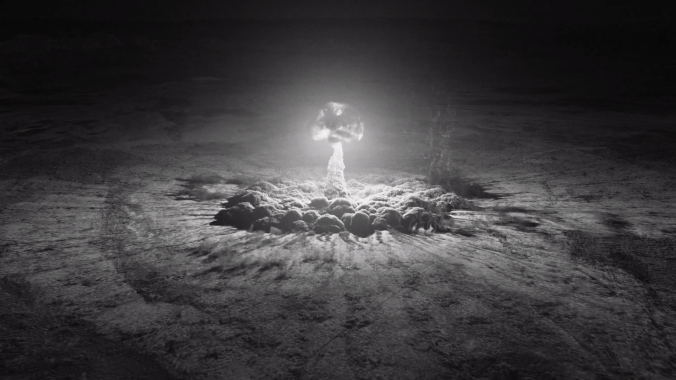
Episode 8 has already become legendary, and if you’ve been following the series and reading about it online, there’s not much more I can add to the discussion. The episode, which includes an avant-garde sensory trip through an atomic blast, followed by a wordless origin story for evil on Earth, followed by Lynch’s most grotesque and visceral horrors since Eraserhead (1977), has already been treated as its own discrete work of cinema. It’s been written up in film journals, and has inspired a program at one of my favorite New York theaters, the Metrograph. It’s easy to see why—for a moment, it seemed like Stan Brakhage had taken over the airwaves, or that any rule could be broken. It was as radical for TV as the stargate sequence in 2001 must have been on movie screens in 1968. The irony is that right when Twin Peaks seemed like it might be becoming more concrete, it suddenly became scarier and wilder than ever. After Episode 8, I’ve been noticeably more afraid to click Play each Sunday night.

This level of unpredictability has been perhaps the new series’ most definitive asset: any new episode could be (and has been) either a glacial non-event, an invigorating slice of TV drama, or a terrifying house of horrors. That is, it breaks so many rules that you can’t even rely on it to not follow the rules. There have been plenty of times it gives the fans what they want, and even more times when it’s given fans plenty of good reasons to kvetch in frustration on social media. It has been problematic in its use of sexual violence. Most of the comic relief isn’t very funny. Some subplots turn out to matter, some don’t, and there’s no way to tell them apart. The main plotline feels like a tangent, while tangents take center stage. And the method has, in the most immediate sense, been difficult to discern.

I mean, how else to describe a series that brings back an iconic TV hero, then spends 13 out of 18 hours having him wandering around comatose without a firm identity or purpose? How else to explain that a circular argument between Sherilyn Fenn and her husband over whether or not to leave the house together is not given simply a single scene (the way most TV storytellers would do it, if they did it at all), but a multiple episode arc? How else to account for a seemingly aimless sequence of shovels being spray-painted gold, except to note that if you follow the thread for another 10 weeks, you’ll get a satisfying payoff? The series has an approach to duration that could be described as “Rivette-esque”, but that most people would just describe as “boring”. And like Jacques Rivette’s Out 1 (1971), another serialized funhouse of wicked conspiracy and cagey arthouse flotsam, its most daring aspect is its use of time.

“Time”, I think, is the key to the new Twin Peaks. This is, by necessity and for a greater good, a very different series than if Twin Peaks had been revived earlier instead of after a 25 year hiatus. That length has infused the show with a melancholy; after all, what is 18 hours in comparison? No attempt is made to ignore the age of the actors. So many episodes have been dedicated to former cast members who passed away before the release, including David Bowie, who never got to film his scenes. And there is an undeniable potency to the idea that so many of the show’s conflicts—unsolved mysteries, unrequited love, unaddressed trauma—have been stuck for a quarter century, unresolved, niggling away, sitting in entropy as they wait for something to shake them loose.

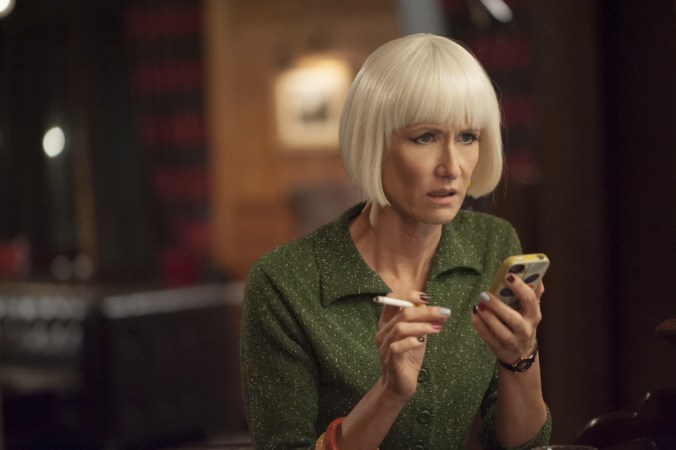
Laura Dern in a still from Twin Peaks. Photo: Suzanne Tenner/SHOWTIME

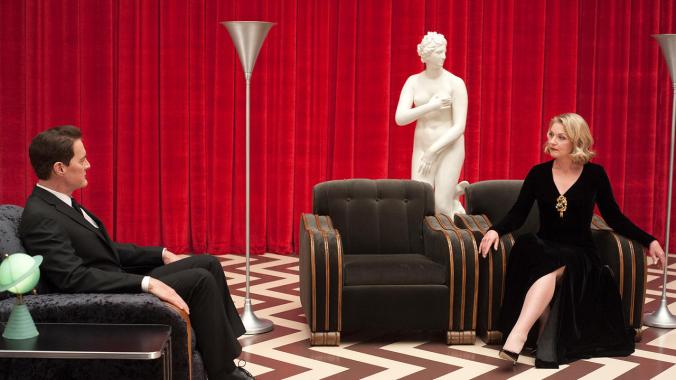
There are scenes almost entirely devoted to old-timers surveying this new world, not the least of which is Lynch himself. He appears on-screen in his old role as FBI Deputy Director Gordon Cole, and you could argue that Lynch’s characters, not Kyle MacLachlan’s Special Agent Cooper, provides the eyes through which we see this world. As much time as Lynch/Cole spends on detective work, the camera also hangs on his weathered face as he looks at both the delights, the riddles, and the fears that have built up in him as enters his seventies.

It’s been noted before—and with Twin Peaks: The Return it deserves to be noted again—that Lynch’s cinema is a strange brew of aesthetic radicalism and a moral urge that could be easily defined as old-fashioned. What can throw off neophyte cinema hipsters about Blue Velvet (1986) or Wild At Heart (1990) is that their optimistic endings aren’t ironic at all: Lynch, with his uncommon skill at evoking pain and trauma, wants peace of mind. His films don’t delight in dredging up the sordid perversity that lies beneath wholesome Americana; they want wholesome Americana, or at least the reassuring dream-space it provided, to live up to its promise.

That promise is not sociopolitical (Lynch is too far removed) but deeply ingrained in the psyche, like Carl Jung meets Norman Rockwell. Lynch’s previous theatrical feature, and the last one we’re likely to get, was Inland Empire (2006). It is his most optimistic film, which can be easy to miss because it’s completely goddamned terrifying. But it stands as not so much a narrative as an act of therapy: a gauntlet through dark, disturbing fears to the light at the end of the tunnel. It’s no coincidence that Lynch is famous for his promotion of Transcendental Meditation, and both Inland Empire and the way The Return is shaking out so far strike me as ways of acknowledging the ugliness that can clutter the human mind, but which must be discarded to find calm, a sense of wholeness, and a way to enjoy being alive. It never fails to make me smile that Lynch’s fantasy is a world where the FBI—a seat of high government authority—doesn’t just solve crimes, but provides spiritual aid, plumbing life’s mysteries and interpreting your dreams.

There is something poetic to this search for completion, because the Twin Peaks franchise itself, much like so many of those weathered faces in The Return, has felt incomplete for so long. The original show had lost its luster by the time it was cancelled. Its “final” cliffhanger from 25 years ago was accepted as something that would never be fully resolved. The follow-up movie, Twin Peaks: Fire Walk With Me (1992) raised as many questions as it answered and failed to satisfy most fans at the time. It was enough of a mess, or a compromise, that its disused footage could be compiled into a semi-canonical film of its own: Twin Peaks: The Missing Pieces, a 2014 DVD extra that answered a lot of questions that The Return is now building off of. But in 2017, it has been a true experience to watch those pieces come into place in slow-motion, to watch this miniature universe look for peace. Future binge-viewers may get a more cohesive look at it; after all, they’ll have a better idea of what to expect, and they won’t have to be distracted by a week’s worth of reality in between. But watching Lynch slowly tease out the picture seems the proper way to handle this particular odyssey.

Needless to say, I don’t know quite what tomorrow’s finale of The Return will bring. At this point, nothing would surprise me, though I have my suspicions and remain slightly afraid to click Play. I still can’t recommend it to anyone who isn’t already waist-deep in Lynch’s universe. But as someone who kept watching all summer out of morbid curiosity, I can definitively say that I am genuinely excited for tomorrow. Last week’s episode has energized most of the fans I know and set us up for something potentially magnificent and cathartic. If you haven’t watched it yet, I won’t spoil it. (For what its worth, its plot summary on Hulu is simply “No knock, no doorbell”). But my hope—and this miniseries is shaping up to be not only painful but rousingly hopeful—is that Lynch’s world of Twin Peaks, a world both wonderful and strange, will finally feel whole.

*********

The finale of Twin Peaks: The Return airs Sunday night on Showtime.

Vintage Spielberg Comes Back

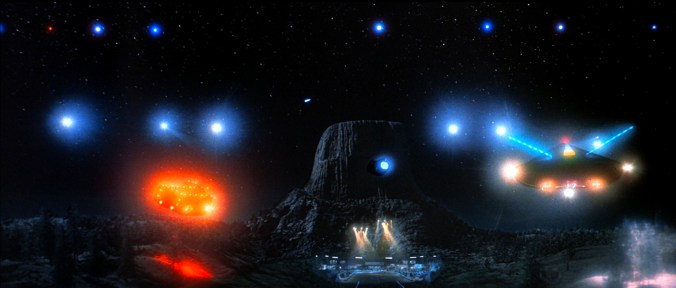
Close Encounters 3Close Encounters of the Third Kind lands back in theaters today to celebrate it’s 40th anniversary, and it’s still the best movie ever made about abandoning your duties as a spouse and parent so you can blast off on a space adventure of unspecified purposes. I’ve written an appreciation of the film and its place in Spielberg’s corpus for the MUBI Notebook. Enjoy!
Short Cuts: T2 TRAINSPOTTING

image-w1280

Throughout the announcement, development, and advertising of T2 Trainspotting, I actually wasn’t concerned that it might cheapen the original at all; even in a worst case scenario, unnecessary sequels to standalone classics generally have the decency to fade into the background. The fact that we have a follow-up as direct and sentimental as 2010 has done nothing to dilute the mystery of 2001: A Space Odyssey. And these days, who can remember that The Sting II even exists?

So Trainspotting‘s legacy is and always would be safe. But it’s worth having a think (as the British would say) about what that legacy means. Trainspotting is one of the great films of the 90s, a definitive youth movie, and a cornucopia of brilliant acting, writing, and directing. I loved it in high school and I love it now; it’s one of the best “drug movies” simply by allowing for such a range of tones. But, like so many stylish films about bad behavior, there’s always a paradox between the moral of the story and the thrill of its telling. When I think of all the Trainspotting posters I saw in dorm rooms during college, my guess is that they’d been hung on the wall not because of the film’s life-affirming ending, but because of the infectious, heroin-fueled anarchy that preceded it. So all those comparatively sheltered kids who could quote the film verbatim, but who were on their way to white collar jobs and would never dream of risking any drug harder than mushrooms—had they misunderstood the film? Or did they and the film understand each other perfectly?

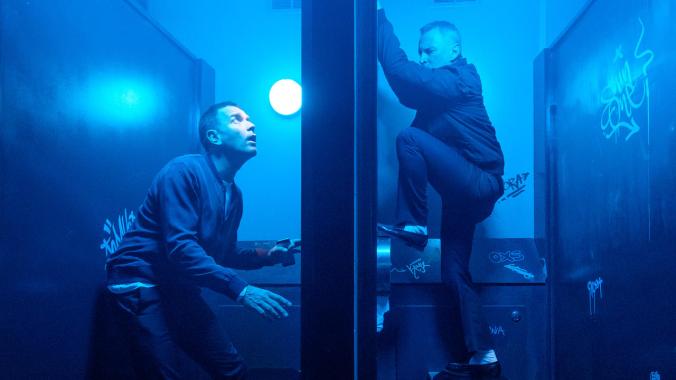
If nothing else, T2 Trainspotting becomes an attempt to reckon with this paradox. It dives in with a sense of worldliness, and the first half hour is done so well that it justifies the film’s existence. You can see why director Danny Boyle would want to revisit this group, and why he insisted on waiting for the original cast to age before doing so. As the film (re)introduces the hell-raisers of 1996, it extends a “youth movie” into a sensitive, character-driven look at time gone by. Here are figures, their hair greying and their faces creased, who realize all too well that they’ve pissed it away.

In a way, it’s a crying shame the film then felt the need to have a plot. The characters are as engaging as ever: Ewan McGregorof course, but Ewen Bremner is the beating heart and Robert Carlyle registers instantly as both tragic and threatening in a role that requires both. But when the film throws them back into criminal schemes and hijinks—when, in other words, it tries to simply be Trainspotting 2—it becomes an awkward blend of tones and plot contortions. (In this case, it involves sexual blackmail, defrauding the British government, running afoul of a local mob boss, and having to improvise a song in a hostile pub). It can’t quite sell McGregor’s return to such risk-taking after having gone straight for twenty years; the only answer he gives is that he “can’t think of anything better,” and both he and the story need more than that. When the film plays the hits, or when it goes for guffaws, it cheapens the mature themes it’s laid out for itself. It’s nearly a half hour longer than the original, not because it covers more ground, but because it keeps losing focus. The cast is great, and Danny Boyle proves he can adapt his hyper-kinetic direction to quiet moments. But the telling is muddled, and as one paradox is reckoned with, several more pop up in its wake.

✬✬✩✩✩

*********

T2 Trainspotting is available now on home video. If SnapChat filters are the future of cinema, this isn’t it. But it will introduce you to “Silk” by Wolf Alice.


Short Cuts: GET OUT

get-out-2017

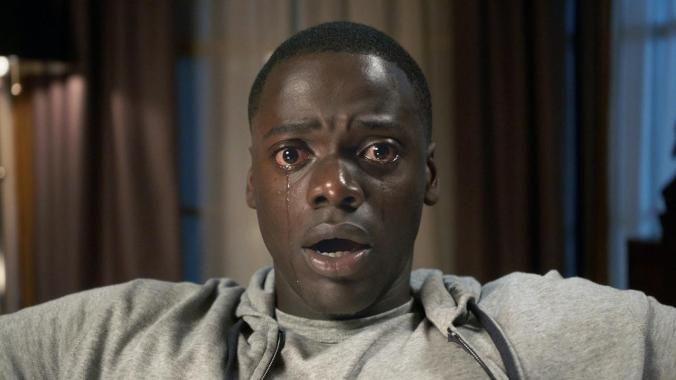
I have a very good reason for reviewing this now, when it hits home video, instead of when it was in theaters four months ago: I’m a coward. Despite having a taste for horror films, I rarely dare to tackle them blind on the big screen—although when it comes to jump-scares or gore, JordanPeele’s Get Out is actually very mild by today’s standards. It aims more for creepiness, and for the most underrated of horror movie qualities: actually being about something. The premise is something out of 2017 high-concept movie heaven: the film could be described both accurately and irresistibly as “Guess Who’s Coming to Dinner? meets Rosemary’s Baby,” in which a young black man (Daniel Kaluuya) gets taken to the country by his white girlfriend (Allison Williams) to meet her parents. Only, shortly after arriving, he begins to suspect that a sinister plot is afoot. The great coup of the first act is that it turns the welcoming smiles of upper-middle-class white liberals into something supremely off-putting, and I say that as one of them. (That’s the thing about white liberals; we can realize only too late, if at all, when we put somebody off). It is not a simple or easy choice of target, and the film works so well because Peele approaches it first as a friendly, cheeky satirist, and then as an earnest horror buff who knows how to hit all the story beats.

As for satire, keep your eye out and grin at the little details, like horror cinema’s best use of lacrosse sticks and croquet balls. As for horror itself, the film builds to that genre sweet spot where the end has full license to go insane without betraying the beginning. On the contrary, the bizarro details fall into place. Williams is the wild card every conspiracy needs, and Kaluuya effectively communicates a character who, when placed in situations where he’s the only black man in sight, has long since been conditioned to not say what he’s really thinking. I wouldn’t dream of spoiling where it goes, except to say that the ending has been criticized as a copout to the crowd. Personally, I think it just comes along at a time and for an audience where pleasing the crowd and posing provocative questions are one and the same. (Without revealing too much, one of its most fascinating threads is how racial dominance isn’t exactly the primary motive of the villains’ plan; rather, an inherent sense of superiority and misunderstanding is simply baked into how they pursue other goals). The film is not without flaws. It could squeeze more tension from its middle hour, or find a better balance of tones between conspiracy and comic relief. But it is a thoughtful, resonant midnight movie, a weirdly funny but justifiably anxious political popcorn flick about the fear of losing yourself. This was the subject of Rosemary’s Baby too; not for nothing is the ultimate mastermind of Get Out named “Roman.” And if a man best known for sketch comedy seems a surprising choice to dive into the horror fray, consider that Peele understands that the secret weapon of Rosemary’s Baby, hiding in plain sight with every creepy smile, was always its mischievous sense of humor.

✬✬✬✬✬

*********

Get Out is available now on home video and for rental on Amazon/iTunes. Don’t hurt yourself by waiting for it to reach its SVOD window.

Short Cuts: THE BEGUILED

The Beguiled

I have an internet connection and wasn’t at Cannes, so the attendant controversies and debates about Sofia Coppola’s new film reached me far before the film itself. Is Coppola a role model for female directors looking to challenge male-centered narratives, or more an example of Hollywood nepotism? Are critics talking about her film differently than if she were a man? Did she “feminize” the Clint Eastwood-Don Siegel original? What, in the context of cinema, does “feminize” even mean, and why should it have to sound like such a controversial word? And did Coppola whitewash history by not including the source material’s only black character, in a story set in the Civil War? The debates above—at least, those that are even worth having—deserve a longer article. Suffice it to say that a good deal of Hollywood history could have used more “feminization”, and the very real problem of Hollywood whitewashing is much more complicated when you’re talking about a film that, unlike, say, Lincoln (2012) or Gone With the Wind (1939), makes no claim to historiography. It’s not set in the South so much as it’s set in a psychosexual snow globe with weeping willows: a thin context papered over a largely unrelated allegory. Whether or not it’s alright to co-opt the aesthetic of an era but ditch its politics is (yet another) much larger debate. For now, I’d much rather discuss The Beguiled on its own merits, of which there’s plenty to recommend.

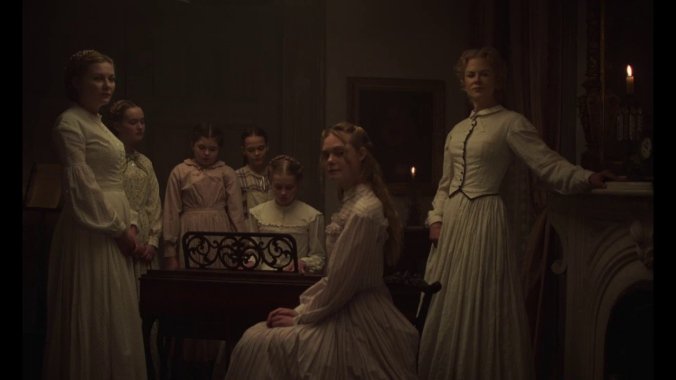
The film opens like a fairy tale, where a young girl from a nearby Southern seminary school ventures into the forest and discovers a wounded Union soldier, whom she brings home. The school is inhabited by a small group of women and touched with austerity. It could be next door to the boarding school in Picnic at Hanging Rock (1975) or on the sunnier, non-haunted side of the street from the Victorian manor in The Innocents (1961). In one of the film’s nicer atmospheric details, the war is never seen, just heard via distant rumbling from somewhere far beyond the gates. The divide between Union and Confederate—the time-period accents are iffy—is a dramatic trick, a way of evoking the otherness between men and women. And, pointedly, all the heroines at this school (Nicole Kidman, Kirsten Dunst, Elle Fanning, Oona Laurence) are at different stages of life. The film is empathetically tuned to how women in a sheltered place might react around men—fascination, attraction, confusion, fear, misplaced hope—as well as the secrets they might keep and quietly signal out. For what are the alternatives to secrets, except self-denial or throwing yourself forward? “Nous sommes des filles“, the girls are taught to say in a French lesson early in the film, and it makes a none-too-subtle mission statement for anyone with access to Google Translate.

Nicole Kidman’s unsentimental headmistress, in an act that wavers between jaded wisdom and icy repression, tries to keep everyone in check. Naturally, it’s the sort of gothic psychodrama that can only end in violence, and the sedate pace of the opening—potboiler material that isn’t treated like a potboiler—eventually finds a dreamy atmosphere for the final act to shatter. Material like this has been done many times, though knowing what I know of Don Siegel, I doubt his version of the same novel takes the idea of being young and “beguiled” seriously in the same way Coppola does, or arrives at the same conclusion about the bonds between women and the way men will always be outsiders to it. What holds Coppola back is that her characters feel strangely thin, their actions simple and monotone, creating a certain slightness. The material is fascinating, but to reach transcendence, it would need either more richly written characters or a more expressively deranged style. But as for flipping the male gaze, Coppola must be doing something right: in a film populated by women, the only character whom I could never quite get a bead on, never quite understand, is the man.

✬✬✬✬✩

*********

The Beguiled won the prize for Best Director at Cannes and is now playing at select theaters across the country. In front of me, a wife told her husband that she never reads reviews before going to the movies. Bless her.

Short Cuts: BEATRIZ AT DINNER

Beatriz at Dinner

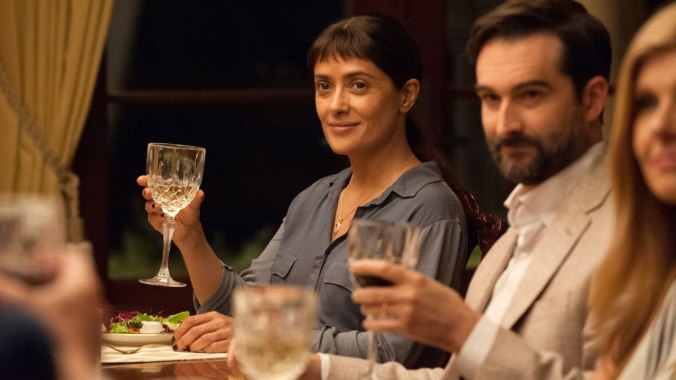
“The first great film of the Trump Era,” says the trailer, quoting Yahoo! Movies. We’ll get to “great” in a moment; for now, the Trump Era is a good place to start. Supposedly, the script actually wasn’t based on Trump, but on that dentist who shot the lion and thus kicked off an internet firestorm of general disgust at the entitled attitudes of America’s wealthy. But while they filmed Beatriz at Dinner last summer, I wonder if screenwriter Mike White and director Miguel Arteta realized just how much the American Left would see even Mike fucking Pence as a step in the right direction by the time the film came out. And thus, for a summer of scandal and superheroes, we get a well-acted Sundance character piece where fate and the writer strand a lower-class Latina immigrant (Salma Hayek) at a painfully bourgeois dinner party with a crass right-wing real estate mogul (John Lithgow).

There can be something cathartic about dueling caricatures, even if the deck is stacked cheaply in your favor. (Chloë Sevigny, with whom I share an affluent white hometown, shows up to do a remorselessly funny parody of affluent white people). The film is being billed as something of a cringe comedy, or a “comedy of manners” where the manners barely disguise a fissure about to break open. There is a little bit of truth to that, and the cross-cutting juggles the characters in its dinner-party-from-hell with admirable deftness. But the film has something more somber than comedy on its mind, and that’s often to the film’s benefit: far too much, its cringes feel more like a sitcom pitch that writes itself rather than worldly, well-earned social commentary—which is to say that even when I laughed, I wasn’t proud of myself. The film is more interesting when it scrambles its own caricatures and delves into subtler, less antagonistic interactions and surprisingly philosophical territory. Hayek’s Beatriz is a naturopathic healer and ardent spiritualist, a strict believer in fate, past lives, and everything you could call either superstition or religion. Lithgow’s character—too articulate and reflective to be a parody of Trump—is a product of a purely cynical material world, a devil with a smile who isn’t evil so much as opportunistic. And it’s to the movie’s credit that neither Beatriz’s mysticism nor the privilege of her Newport Beach hosts seem attached to reality. So its best scenes aspire to dig below the surface friction of the Trump Era to address a larger question: how does one respond to a troubled world that doesn’t seem like it can possibly be fixed? Through blind faith? Through ignoring it? Through raging against it? Through capitalizing on it? This is heady material, to be sure, and it requires subtler satirists and better observers of human behavior than Arteta and White to do it justice, to make it feel like more than playacting in front of a camera. By the end, they, like Beatriz, have taken the easy way out. But stay tuned. The Trump Era is just getting started.

✬✬✬✩✩

*********

Beatriz at Dinner is now playing at select theaters. On the way out, I heard an old woman say “I thought it was supposed to be a funny movie.”

Still Driving: Walter Hill in Santa Monica

the-driver-1978

After the end credits, Walter Hill took the stage at the Aero Theatre, looked out at the crowd, and said, “I think there are more people here tonight than who saw it in 1978.” The audience laughed. The film in question was The Driver, a 70s car chase cult classic that the Aero was playing as part of a series on Hill, with the man himself in person.

Even if you don’t know Walter Hill’s name, you very likely know his work. As a director, he’s probably most famous for the enduring cult phenomenon of The Warriors (1979), whose version of a dystopian New York City continues to find fans for its mixture of savvy 70s cool (or is it camp?) and taut B-movie expertise. With the Eddie Murphy vehicle 48 Hrs. (1982), Hill did as much as anyone to set the pace for the buddy-cop movies of the 80s. As a producer and script doctor, he has his fingerprints all over the Alien franchise.

The Driver, released in 1978, was Hill’s second film as a director, and in the grand cult movie tradition, it was a flop at the time. When the moderator asked Hill if it had been a blow to his career, Hill responded that he lucked out: by the time The Driver flopped, he had already begun shooting The Warriors, which became a hit. “In Hollywood, you’re as good as your last film,” Hill said, before adding, “In Europe, you’re as good as your best.”

I can’t speak to the ins and outs of European financing, though it’s certainly what kept David Lynch and Brian De Palma going as Hollywood lumbered into the 21st century. The occasion for this retrospective was the opening of Hill’s latest film, the gender-bending thriller The Assignment (2017), which barely got released here. But I can absolutely say that another place where you’re as good as your best film is rep houses like the Aero, where anyone who has signed a classic, let alone several, is always guaranteed a hero’s welcome. The night before, the Aero had shown The Warriors. I couldn’t make it, due to a cruel twist of scheduling. But given the large crowd that turned out for The Driver, it must have been a scene.

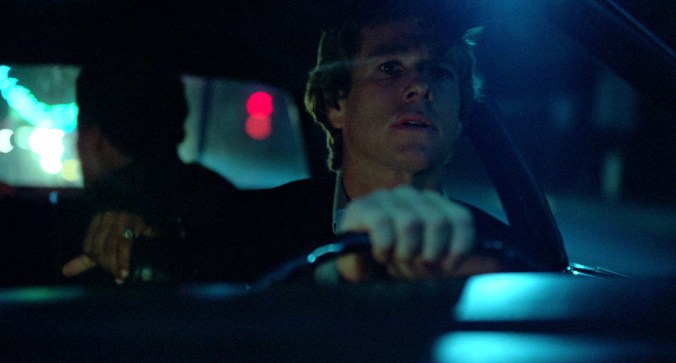
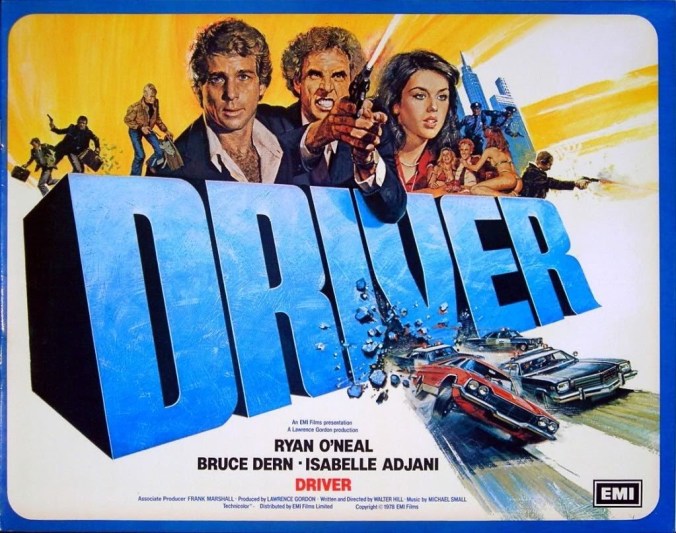
The Driver is action stripped bare, and a seminal stepping stone in cinema’s continuing fascination with the adventures of a nameless, lonesome badass. Ryan O’Neal stars as a getaway driver—sharp, professional, cold, expensive, the best in the business—with Bruce Dern as the cop hell-bent on being the man to catch him. As the moderator was quick to note, the film seems to point the way to so much Hollywood genre cinema that followed. Michael Mann, for one: the strong and silent crooks-with-a-code of Heat (1995), Thief (1981), Collateral (2004), and on and on. Nicolas Winding Refn’s Drive (2011): at first overpraised, now over-bashed, and bowing reverently to what Hill was doing 30 years earlier. And Edgar Wright’s Baby Driver (2017), opening in theaters today with Wright on the record as a Hill fan.

But then, of course, there’s the tremendous debt The Driver owes to what came before it. Hill was quick and happy to note the influence of Jean-Pierre Melville’s classic neo-noir Le Samourai (1967), from which The Driver borrowed (or heisted) a few plot points and a sense of minimalist cool, and then seamlessly transplanted them to the neon of L.A. “In the 70s, where we did have a lot of freedom, I thought the time had come to do a film like this,” Hill said after the show. “I guess I was right, but I was a little early.”

Thus partisans of The Driver can see it as one of those missing links between American and foreign genre cinema, the kind of smoldering action movie that’s big enough on emotional detachment and light enough on dialogue that it might make critics leap towards the word “existential.” Ryan O’Neal is no Alain Delon, whose hitman moved through Paris like a fallen angel in Le Samourai. But then, when watching The Driver, you must thrill to Isabelle Adjani, a brief co-conspirator in one of O’Neal’s getaways and a fallen angel par excellence. The car chases are crisp, fluid, and thrilling. It proves that mounting cameras on cars, driving them through the night, and then making it all flow together in the editing room is still action at its most elemental. No pixel-storms are necessary.

driver-poster

When discussing his favorite American influences, Hill singled out John Ford, Howard Hawks, and Raoul Walsh—a holy trinity for unpretentious, deceptively meaningful, masculine-but-not-macho Old Hollywood cinema if there ever was one. As luck would have it, Andrew Sarris once wrote a sentence uniting all three:

If the heroes of Ford are sustained by tradition, and the heroes of Hawks by professionalism, the heroes of Walsh are sustained by nothing more than a feeling for adventure.

It’s here where The Driver takes a cue from noir by way of Melville: its character are driven by neither tradition, professionalism, nor adventure, per se, but by a sense of solitary antisocial obsession. Hill has, in the past, expressed a certain rejection of backstories and inner lives: his characters simply do what they do because that’s what they do. None of the characters in The Driver are even given a name. Ryan O’Neal’s “Driver” charges a lot for his services, but as the film notes, he doesn’t seem interested in spending any of it. Bruce Dern’s “Detective” isn’t particularly devoted to the idea of law and order, but rather to the thrill of the catch. The film’s first narrative coup is that it doesn’t resolve this conflict, but suggests that the game goes on forever: a symbiosis between cop and crook that will keep genre movies being pumped into theaters until cinema gives up the ghost.

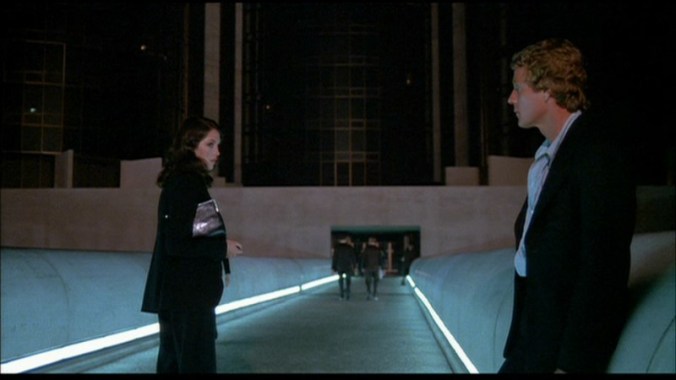
The Driver‘s second narrative coup is how it handles its women. The women in a Hawks film like Only Angels Have Wings (1939), Rio Bravo (1959), or Hatari! (1962) are adventuresses. They can certainly keep up with the boys, but they’re ultimately also sentimental foils: they want their man to crack and admit he needs her. In The Driver, the women don’t need or want anybody; they have a solitary path of their own. There are hints of attraction between O’Neal and Adjani’s characters. But the film gives no release of showing either of them act on it, and you get the sense that if they did spend the night together, it would be under the silent understanding that each was doing it only for themselves. That leaves Ronee Blakley, excellent as O’Neal’s ganglord contact in the criminal underworld. It’s the sort of role that would typically go to a male character actor, but Hill said that he wanted “something a little different”, so here it goes against type to a country singer best known to moviegoers for her vulnerable star turn in Nashville (1975). Bruce Dern isn’t an actor I’ve ever associated with pure machismo, and when it comes to standard noir masculinity—stoicism, control, self-reliance, a rejection of sentimentality—the characters of Blakley and Adjani outstrip him.

driver-isabelle-ryan

When it was time for the Q&A, I actually raised my hand to ask Hill why he chose to suggest chemistry between O’Neal and Adjani and not act on it. But then I immediately put my hand down, in part because the answer suddenly seemed obvious, but mainly because asking questions about anything as above-the-shoulders as a close subtextual reading seemed like it would completely kill the mood. Besides, any Fordian/Hawksian director worthy of the comparison wouldn’t give a straight answer anyway.

The evening was more a chance to sit and listen to a bona fide Hollywood war horse—amicable, grizzled, at ease—as he talked about his path through show business. He touched on his college days (“I wasn’t a particularly good student, but I never missed a party”). He talked about starting as a writer before jumping to the director’s chair (“I would read a lot of these Hollywood scripts….they all seemed to be written by the same person”). And he talked about an influential moment, when writer Alexander Jacobs showed him the script for the neo-noir classic Point Blank (1967): “It was exactly in the direction I wanted to go in. It was intelligent. It was an action movie. It had ideas in it.”

Indeed, the most overtly philosophical he got was when talking about the action genre itself. Discussing his attraction to it, he said:

To tell you the truth, I believe in the pluralistic cinema. I think musicals are great, and comedies are great. Most action movies aren’t any good. Most of them are dumb. [Appreciative laughter from the audience] But they’re popular for some very good reasons. They are kind of hymns to physical courage, which is something that doesn’t enter into most of our lives, but at the same time we always admire. Athletic heroes, I think, are part of that kind of instinct within all of us…Where the movies usually go very bad, it seems to me—and you can get this off the sports page too—is the transference of the idea that physical courage equates to being a good person. I like to get an ambivalence in.

But the centerpiece of the Q&A was when Hill talked about getting to direct his first film: the Charles Bronson Depression-era boxing drama Hard Times (1975), the success of which led Hill and producer Larry Gordon to The Driver. Of Hard Times, Hill said that after he’d started to make money as a screenwriter, Gordon called him up and said, “Look, I’m going to pay you absolutely nothing. And I’ll also pay you nothing to direct the thing. But if you accept those conditions, we’ll make a little, low-budget movie. You’ll get a shot.” Hill immediately said yes. He called it “the best deal I ever made.”

When Hill told the story about his inspiration for Hard Times, it struck me as resonant of this deal—and of Hill’s cinema, of Hawks, of Ford, of Walsh, of The Driver, and of Hollywood itself. Hill said that his grandfather used to share stories about the Depression. His grandfather had worked on an oil rig, “a long way from the bright lights,” and on their day off, his grandfather and the other drillers would drink, run races, have boxing matches, and place bets. One day, a stranger arrived:

A guy shows up. He gets off the back of a truck. He’s a hobo. He watches one of these fights, and he comes over to my grandfather’s bunch and says, “You guys feed me and give me a place for a while, and I’ll fight for you and share some of your winnings.” They didn’t know what the hell to make of him. But they put him out there the next week, and he knocked the shit out of somebody. He fought for six weeks, won every fight, never said much. And then they woke up one day, and he was gone.

The audience laughed again. And there you have it.

****

The Driver is, sadly, not available on Netflix, Hulu, iTunes or Amazon streaming, thus proving that we should still value physical media. Track down a copy and have fun.

The Strange and Mysterious Case of M. Night Shyamalan

Split

Can we admit that there is far more to the films of M. Night Shyamalan than surprise endings? We can still argue about whether or not his films are actually good—and believe me, I intend to.

For a long time, it’s seemed like there were two M. Night Shyamalans. The most famous is the director who burst onto the scene with The Sixth Sense (1999), followed it up with the less startling Unbreakable (2000), and then declined into arithmetically lower and lower TomatoMeter scores, losing his credibility by 2008’s The Happening if not 2006’s Lady in the Water before bottoming out circa 2010. This is the M. Night Shyamalan known for plot twists above all else, and teased endlessly on the internet for everything that’s awkward or nonsensical about his films. (The Happening is still the only movie where I’ve ever walked out into the lobby and asked for my money back, and the theater manager told me—I swear this is true—that I should have known it would suck because it was M. Night Shyamalan).

So it may surprise a lot of my coworkers, friends, and casual bystanders to hear that there’s a certain subset of cinephile culture—the kind that wishes the TomatoMeter would die a slow, agonizing death—that never stopped taking Shyamalan seriously. The Cahiers du Cinema voted The Village one of ten best films of 2004. Ditto for Lady in the Water in 2006, where Shyamalan’s film placed slightly ahead of films by Martin Scorsese and Terrence Malick. Ignatiy Vishnevetsky, a star critic for the A.V. Club, is an on-the-record fan, as is the Palme d’Or-winning Thai director Apichatpong Weerasethakul, whom many cinephiles (including myself) consider one of the most important filmmakers of the 21st century.

His defenders have a point that he deserves a much more careful consideration. Gigantic, rug-out-from-under-you twists play a relatively small part in his filmography considering his oversized reputation as “the twist guy”. It would be more accurate, or at least more inclusive, to focus on his other trademarks. His heroes are scarred by trauma, regret, doubt, and loss. Spiritual dilemmas often come into play: in his films, characters use the word “god” with a capital G and no irony. He incorporates natural elements (particularly water) with a sense of reverence at how overwhelming they can be. He uses color in a way that makes certain objects pop with teasing significance. He often focuses on vulnerable children—not just the old saw of putting some helpless kid in mortal peril (to get the audience to feel something), but creating child characters who live with a physical or psychological wound that makes them ache painfully with their own sense of smallness. High-concept though he may be, he doesn’t set out to make a movie without a firm sense of character.

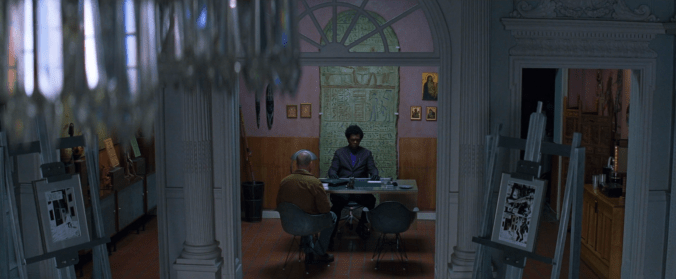
All of which marks him as a director who aspires to soulful multiplex cinema. As much as it became a cultural archetype for surprise endings, don’t forget that The Sixth Sense doesn’t end on its big reveal (the way that The Usual Suspects does) but continues on to a quiet, character-driven monolog in which Bruce Willis bares his emotions and bids farewell. There’s a shot in Unbreakable where Bruce Willis and Samuel L. Jackson are framed on all sides by both comic book pop art and religious icons. And that, more or less, is the balance Shyamalan tries to strike: a tonal equilibrium between outlandish pulp and making sure that even his superheroes follow the introspective contemplation of a pilgrim’s path.

Screen Shot 2017-05-29 at 5.05.51 PM

So he is, in film-crit terms, undeniably an “auteur”. And perhaps no principle of auteur theory has caused more headaches than Francois Truffaut’s infamous claim that “There are no good and bad movies, only good and bad directors.” Shyamalan strikes me as a talented, personal director who’s spent years at a time making misfires back to back to back. And I have to admit that I’ve thrown up my hands, at a loss for spotting a method to the madness, or for reconciling Shyamalan at his best with Shyamalan at his worst.

For instance, Unbreakable looks better and better these days, especially now that “Superheroes are People Too” has become not only a common subgenre, but a subgenre that rarely does better than the superhero Shyamalan invented fifteen years ago. But how could the man who directed the opening scenes of Unbreakable with such atmosphere and subtlety fail to notice that, say, Adrien Brody’s hammy caricature of an autistic man in The Village kills the tension of so many scenes? How could he stage that scene in The Happening where Mark Wahlberg yells “Nooo!” and dives forward while a kid gets shotgunned in the chest in a display rank cinematic cliche? I thought that Lady in the Water, in which Shyamalan literally cast himself as a Christ-like savior of mankind and imagined a straw-man film critic getting ripped to shreds, was as misbegotten and mind-boggling as its detractors maintain. The only remotely viable defense I’ve heard for The Happening is that the people who laugh at it assume that it was meant to be more serious than it is—a claim of B-movie goofiness that makes sense given how Mark Wahlberg seems to be giving a comedy performance, but a claim I can’t buy given how so much of the movie’s aspirations for aghast R-rated horror and topical preachiness are filmed without guile.

It would be too simplistic to say that Shyamalan has to pick one or the other, to argue that he does better with seriousness than humor or vice-versa. Lady in the Water is a film that takes itself far too seriously, but serious scenes make up its best moments, while its stabs at comedy are cringe-inducing. Meanwhile, comic relief works nicely in Signs (2002), and self-aware camp humor is still The Happening‘s last possible path out of the wilderness of moviegoer scorn. Perhaps the only explanation to the enigma of M. Night Shyamalan, who went from an unknown to the Next Big Thing to a pariah within the span of ten years, is that you can’t accuse him of not having good ideas, only of not filtering out the bad ones.

visit

Then, in 2015, something happened. With the low-budget found-footage thriller The Visit, the TomatoMeter lit up Fresh again, and suddenly Shyamalan, now working on a modest scale, was no longer just for apologists. Part of this surely has to do with collaboration: while still holding the reins, Shyamalan had partnered with producer Jason Blum (Paranormal Activity), who like Val Lewton or John Carpenter before him grasped that the necessary elements of a successful horror film are cheap—and can be something more so long as they’re in the hands of someone with the imagination to use them. I attended The Visit with curiosity. No grand claims can be made for it, but its twist caught me genuinely off-guard, and as the film reached its climax, I thought that Shyamalan had pulled off a trick that would make Lewton himself proud: he’d made a film that, without ever shedding the appeal of cheapo B-horror, had managed to infuse its genre with creativity, humor, and a surprisingly graceful emotional catharsis. And then, after accomplishing all that, The Visit suddenly tacked on a coda of a twelve-year-old white kid rapping about poop that’s so bad and so utterly wrong for the tone of what came before it that I’m amazed no one involved pulled the plug. Again, I threw up my hands. The method is a mystery.

Split 2

But a degree of hype was in the air for his follow-up Split. The curiosity, for me, was even greater than with The Visit, especially since the studio was giving Split such a confident advertising push. The trailer focused on a) the brand of a director who’d just spent a decade as a punchline, and b) the played-out and inevitably ridiculous cliche of a horror movie villain with split personality disorder. In short, if you’d checked out after The Happening, the concept sounded like a joke. And yet here it was, and for audiences, it worked: when it opened in January, Split spent three weeks as the top box office hit in the US, ultimately pulling in blockbuster bank on a production budget of less than $10 million.

Where does Split find us? In the suburbs of Philadelphia, three teenaged girls are kidnapped by a stranger (James McAvoy) and held captive underground. McAvoy suffers from an extremely cinematic version of dissociative identity disorder—even by Psycho‘s standards—which compels him to affect wildly different accents and costume changes, sometimes in drag and always sinister. The girls play a cat-and-mouse game with their captor, attempting different strategies for each personality, while supernatural elements start to come into play. Most of the praise has gone to McAvoy, who shows remarkable dexterity and commitment with a character—or rather, a set of characters—who at different times has to be intimidating, pitiable, or a looney tune for carefree horror audiences looking to get their rocks off. But special mention is also deserved for Anya Taylor-Joy as the misfit loner among the captives, whose own connection to McAvoy, spiritual or otherwise, is teased out beautifully.

Split 3

So Split is solid, emotionally satisfying entertainment, well told and prepared to dive in unexpected but not arbitrary directions. At times, it certainly bends towards conventions of the genre—teen girls in danger wearing nothing but their bras, say. But as the film went on, it occurred to me that bottoming out could be a blessing for Shyamalan, for reasons not entirely to do with the quality of his films, but with his audience’s perception of them. Walk into The Village knowing that it’s from the serious, prestigious, Oscar-nominated director of The Sixth Sense, and you may roll your eyes (as many critics did) when it gets preposterous. But walk into Split knowing only what you saw in the trailer—that it’s a goofy split personality B-movie thriller where James McAvoy wears a dress—and you’ll be surprised at the serious and effective places it goes.

Speaking of surprises, there is one awaiting at the very end of Split. If you somehow haven’t had it spoiled for you yet, like it was for me, I’ll try to be vague. Suffice it to say that it twists Hollywood’s new trend of extended universes. To which I throw up my hands again, only this time to say “Why not?” So many extended universes are in theaters already, with committees deciding the fates of Marvel, DC, King Kong, and now Universal Horror. So why can’t Shyamalan have one of his own? At the very least, and even when he’s at his worst, his films never felt like they were decided on by committee.

So I’m intrigued by the promise of a “new Shyamalan film” again for the first time in years. But I disapprove of the use of the phrase “return to form” that keeps popping up in reviews, not only because I still don’t think he’s made another movie on par with The Sixth Sense or Unbreakable, but because his latest two films away from the A-list don’t strike me as an attempt to “return” so much as to try out different territory. But keep your eyes on him. He may surprise you.

*********

Split is now available on home video. See it before it becomes important.

“It is Happening Again”: TWIN PEAKS and Meditations on Four Weird Hours of Television

6361094739237986661586174273_64-Red-Room-Empty

Preceded by a week where my social media feed was filled with in-jokes, excitement, and callbacks, “The Return” of Twin Peaks dropped last weekend on Showtime. There is already a lot of great writing about Lynch and his spiritual noir mini-verse out there, including this thoughtful plunge through the complexities of the original show by Matt Zoller Seitz and the excellent recaps on my old stomping ground, the MUBI Notebook.

But now that the first four episodes that Showtime has made available are still bouncing around in my mind, and since I can’t go anywhere in LA without seeing a Twin Peaks billboard announcing that “It Is Happening Again”—a line from the original show, warning our hero Special Agent Cooper (Kyle MacLachlan) about a murder—here are a few disparate thoughts on a disparate series.

First and foremost, if you’re looking for a recommendation on whether or not you should watch it—the most widely used and least interesting part of a critic’s job—I hereby abdicate my responsibility. At the risk of useless tautology, the people who should watch the new Twin Peaks are the sort of people who’d like the new Twin Peaks. To watch it is to follow Lynch down a rabbit-hole on a journey that may filter out all but the most dedicated, with any payoff still very much up in the air. But I’d be lying if I said I’m not fascinated by where it can go.

It is Happening Again. A good tagline, particularly when it’s superimposed on the iconic face of Laura Palmer hovering above Santa Monica Boulevard every six blocks. But it’s worth parsing what “it” and “again” mean in regards to the original show. The reason I’d heartily encourage just about everyone to give season 1 of Twin Peaks a try is that the strictures of network television forced David Lynch’s aesthetic and metaphysical obsessions into an accessible form without ditching his essence.

We carry a certain number of preconceptions about how serialized television works. TV—that great destroyer of attention spans—is about flow. It should prioritize forward motion. It should have one main event that becomes the axel of the show, with subplots forming the spokes of a wheel. It should have an interconnected group of regular characters who relate to one another in different ways. Most episodes should end on a reveal, a twist, a cliffhanger, or some tease to get you to tune in next week. The episodes should have an A-storyline and a B-storyline that arc in tandem. There may be soap opera-ish subplots, like romances or intrigue that don’t really effect the main story, but which we invest in anyway because we care about the characters. And so on.

For the most part, the original Twin Peaks worked within that system. It was direct when it needed to be, bizarre when it could get away with it, and it combined its weirdness with tantalizing showmanship. It had a sneaky sense of humor. It moved at a loopy rhythm, but not outside the bounds of the speed of TV drama. And while doing so, it carved out an aesthetic and a mythology of its own, in which a cozy smalltown held innumerable sordid secrets, the FBI solved cases by interpreting dreams, and the material world was haunted by a spiritual embodiment of pure evil named Bob.

It is also something of an infamous cautionary tale about how far you can string your audience along before they start to turn on you. In the second season, it solved the central murder in one of the most potent TV episodes I’ve ever seen. After that, it fell into a diffuse camp-fest that I haven’t heard any fan defend. Then it ended on a Lynch-directed grand finale, which is possibly the single most abstract thing to ever air on primetime network television. (I know baby boomer Peaks viewers who still feel cheated by it). For a coda, Lynch and most of the cast returned for a theatrical film, Twin Peaks: Fire Walk With Me, a messy, cathartic, often frighteningly emotional prequel that scrambled expectations from the show and flopped with audiences, but now has Lynch fans pushing hard to get it recognized as an underrated masterpiece.

So it should surprise no one that the youthful and now-nostalgized 1990s Twin Peaks, with its coffee and pie, poodle skirts, soap opera parodies, revamped 50s teen melodrama, and jazzy soundtrack, isn’t exactly “happening again.” Lynch recently said that cable has become “the new arthouse”, which implies not only a breakdown between the prestige of television and the prestige of movies, but a breakdown of conventional TV itself. The new Twin Peaks is if nothing else a ballsy rejection of the norms that even the best Golden Age of Television shows play by. Yes, a lot of your favorite characters are back (sort of). But as much as it’s a continuation of Twin Peaks, it strikes me as a continuation of David Lynch, a new sandbox for the director who drifted into semi-retirement ten years ago, focusing on avant-garde video shorts instead of feature films. And now he has 18 hours with which to play.

Despite any claims to the contrary, the new Twin Peaks does have a clearly defined plot, though at this point, the most honest way to synopsize it would be to just make a list of its currently disconnected elements. It is, in a literal sense, all over the place, jumping from New York to South Dakota to Las Vegas to, only infrequently, the town of Twin Peaks itself. There’s a grizzly murder in the midwest. There are three (or at least two and a half) Kyle MacLachlans running around. There’s a mysterious sealed chamber in Manhattan where a hapless college student is paid by a mysterious billionaire to watch an empty glass box for hours on end just in case something—we don’t know what—happens to appear in it. (It’s the most tantalizing part of the premiere, and as Keith Uhlich points out on the MUBI Notebook, a pretty handy metaphor for the show itself). The Log Lady warns that something is missing. And then there are stray oddities filling out the edges, like a scene in Part 4 where Michael Cera shows up to do what I gather is an extended Marlon Brando impression.

In short, Twin Peaks has doubled down (and then some) on a strictly-for-cultists appeal. It is not simply best appreciated, but perhaps only appreciated, by those with memories of the first two seasons and the prequel film burnt fresh into their minds. (They’re the only ones for whom a mention of a “blue rose” or a stray owl flying overhead are likely to signify). Yet it is so different in tone and feel from the original show that it would be laughable to call it fan service. Or if it is fan service, it’s for cultists not of Twin Peaks but of Lynch as a whole, where fandom has meant an abiding, patient, nerve-shredding curiosity to see what he’ll do with each new vessel he sets his eye on—the latest being the freedom of very R-rated cable in an age where all the context a viewer needs is just a convenient binge-watch away.

Some observations:

  • The pacing and structural choices defy explanation. Consider that this is a season of television where you can watch the first hour and still not be entirely sure what the new mini-series is actually about. Compared to what your average commercial-free cable drama would pack into an episode, Lynch is utterly unconcerned with taking advantage of just how far a story can move in 60 minutes of screen time. Even the episode endings are eccentric; the credits start to roll on moments or musical numbers that can seem like arbitrary places to put a “To Be Continued…”
  • The near absence of music is striking. Only rarely, and when pushed, does it replay its famous musical score.
  • I’ve found the new show to be almost completely humorless, though not for lack of trying. Many scenes are clearly written as comedy, but play out on screen without much attention for energetic, quick-witted chemistry. The over-riding atmosphere is that of a sleepwalker.
  • Like any film or show that revisits the same cast so many years ahead, it becomes—whether it wants to be or not—a story about aging. There is something inherently melancholy about each creased and weathered familiar face, and the show seems well aware of that. Glimpses of old footage, seen at the beginning of the series, are phantasms that melt away.
  • It contains some of Lynch’s most extended and purely abstract setpieces since he debuted with Eraserhead, and I’m not sure that animating his dreamscapes on a computer does Lynch any favors. In fact, it robs his world of tactility. (Who’d have thought that, thirty-something years after Lynch turned down directing Return of the Jedi, he and George Lucas would have hit the same wall?)
  • Many scenes that check in on the old cast seem strangely placed and dislocated from the plot. Are they nostalgic throwbacks for the fans? Will they become important later? Or are they merely their own discrete vignettes, spinning outward in the Lynch-verse? None would surprise me.
  • The subtlest, most controlled performance belongs to Matthew Lillard, which is something I never thought I’d say about anything.

This sense of narrative diffusion is hardly new to Lynch. Mulholland Drive also spends its much of its first half introducing characters and narrative directions that either disappear or get flipped on their head by the end, and yet the whole picture still arrives at a satisfying and coherent conclusion.

It’s entirely possible that the new Twin Peaks is doing something similar on a more drawn out timescale. I’d say “time will tell” if Lynch ties it all together, but I strongly suspect that time won’t; being confounded will become a feature, a bug, or at least an inevitability. Still, one advantage of TV being the “new arthouse” is that, in an age when it’s harder and harder to get audiences to care about either an old-fashioned or a radical ideal of cinema, the most brilliant work on television is much more capable of getting millennials abuzz. (When the numbers came in, the broadcast ratings were disappointingly low, but the number of people who signed up to watch it on the internet broke Showtime’s records). I expect our new Twin Peaks is something we’ll be debating for quite a while to come.