Short Cuts: BEATRIZ AT DINNER

Beatriz at Dinner

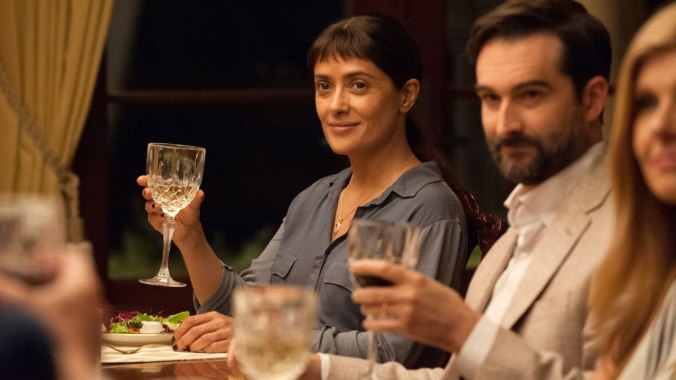
“The first great film of the Trump Era,” says the trailer, quoting Yahoo! Movies. We’ll get to “great” in a moment; for now, the Trump Era is a good place to start. Supposedly, the script actually wasn’t based on Trump, but on that dentist who shot the lion and thus kicked off an internet firestorm of general disgust at the entitled attitudes of America’s wealthy. But while they filmed Beatriz at Dinner last summer, I wonder if screenwriter Mike White and director Miguel Arteta realized just how much the American Left would see even Mike fucking Pence as a step in the right direction by the time the film came out. And thus, for a summer of scandal and superheroes, we get a well-acted Sundance character piece where fate and the writer strand a lower-class Latina immigrant (Salma Hayek) at a painfully bourgeois dinner party with a crass right-wing real estate mogul (John Lithgow).

There can be something cathartic about dueling caricatures, even if the deck is stacked cheaply in your favor. (Chloë Sevigny, with whom I share an affluent white hometown, shows up to do a remorselessly funny parody of affluent white people). The film is being billed as something of a cringe comedy, or a “comedy of manners” where the manners barely disguise a fissure about to break open. There is a little bit of truth to that, and the cross-cutting juggles the characters in its dinner-party-from-hell with admirable deftness. But the film has something more somber than comedy on its mind, and that’s often to the film’s benefit: far too much, its cringes feel more like a sitcom pitch that writes itself rather than worldly, well-earned social commentary—which is to say that even when I laughed, I wasn’t proud of myself. The film is more interesting when it scrambles its own caricatures and delves into subtler, less antagonistic interactions and surprisingly philosophical territory. Hayek’s Beatriz is a naturopathic healer and ardent spiritualist, a strict believer in fate, past lives, and everything you could call either superstition or religion. Lithgow’s character—too articulate and reflective to be a parody of Trump—is a product of a purely cynical material world, a devil with a smile who isn’t evil so much as opportunistic. And it’s to the movie’s credit that neither Beatriz’s mysticism nor the privilege of her Newport Beach hosts seem attached to reality. So its best scenes aspire to dig below the surface friction of the Trump Era to address a larger question: how does one respond to a troubled world that doesn’t seem like it can possibly be fixed? Through blind faith? Through ignoring it? Through raging against it? Through capitalizing on it? This is heady material, to be sure, and it requires subtler satirists and better observers of human behavior than Arteta and White to do it justice, to make it feel like more than playacting in front of a camera. By the end, they, like Beatriz, have taken the easy way out. But stay tuned. The Trump Era is just getting started.

✬✬✬✩✩

*********

Beatriz at Dinner is now playing at select theaters. On the way out, I heard an old woman say “I thought it was supposed to be a funny movie.”

Still Driving: Walter Hill in Santa Monica

the-driver-1978

After the end credits, Walter Hill took the stage at the Aero Theatre, looked out at the crowd, and said, “I think there are more people here tonight than who saw it in 1978.” The audience laughed. The film in question was The Driver, a 70s car chase cult classic that the Aero was playing as part of a series on Hill, with the man himself in person.

Even if you don’t know Walter Hill’s name, you very likely know his work. As a director, he’s probably most famous for the enduring cult phenomenon of The Warriors (1979), whose version of a dystopian New York City continues to find fans for its mixture of savvy 70s cool (or is it camp?) and taut B-movie expertise. With the Eddie Murphy vehicle 48 Hrs. (1982), Hill did as much as anyone to set the pace for the buddy-cop movies of the 80s. As a producer and script doctor, he has his fingerprints all over the Alien franchise.

The Driver, released in 1978, was Hill’s second film as a director, and in the grand cult movie tradition, it was a flop at the time. When the moderator asked Hill if it had been a blow to his career, Hill responded that he lucked out: by the time The Driver flopped, he had already begun shooting The Warriors, which became a hit. “In Hollywood, you’re as good as your last film,” Hill said, before adding, “In Europe, you’re as good as your best.”

I can’t speak to the ins and outs of European financing, though it’s certainly what kept David Lynch and Brian De Palma going as Hollywood lumbered into the 21st century. The occasion for this retrospective was the opening of Hill’s latest film, the gender-bending thriller The Assignment (2017), which barely got released here. But I can absolutely say that another place where you’re as good as your best film is rep houses like the Aero, where anyone who has signed a classic, let alone several, is always guaranteed a hero’s welcome. The night before, the Aero had shown The Warriors. I couldn’t make it, due to a cruel twist of scheduling. But given the large crowd that turned out for The Driver, it must have been a scene.

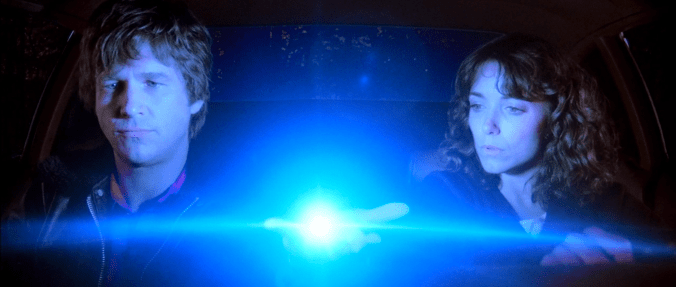
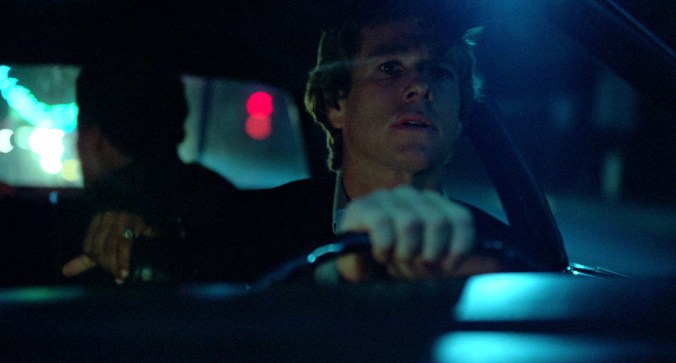
The Driver is action stripped bare, and a seminal stepping stone in cinema’s continuing fascination with the adventures of a nameless, lonesome badass. Ryan O’Neal stars as a getaway driver—sharp, professional, cold, expensive, the best in the business—with Bruce Dern as the cop hell-bent on being the man to catch him. As the moderator was quick to note, the film seems to point the way to so much Hollywood genre cinema that followed. Michael Mann, for one: the strong and silent crooks-with-a-code of Heat (1995), Thief (1981), Collateral (2004), and on and on. Nicolas Winding Refn’s Drive (2011): at first overpraised, now over-bashed, and bowing reverently to what Hill was doing 30 years earlier. And Edgar Wright’s Baby Driver (2017), opening in theaters today with Wright on the record as a Hill fan.

But then, of course, there’s the tremendous debt The Driver owes to what came before it. Hill was quick and happy to note the influence of Jean-Pierre Melville’s classic neo-noir Le Samourai (1967), from which The Driver borrowed (or heisted) a few plot points and a sense of minimalist cool, and then seamlessly transplanted them to the neon of L.A. “In the 70s, where we did have a lot of freedom, I thought the time had come to do a film like this,” Hill said after the show. “I guess I was right, but I was a little early.”

Thus partisans of The Driver can see it as one of those missing links between American and foreign genre cinema, the kind of smoldering action movie that’s big enough on emotional detachment and light enough on dialogue that it might make critics leap towards the word “existential.” Ryan O’Neal is no Alain Delon, whose hitman moved through Paris like a fallen angel in Le Samourai. But then, when watching The Driver, you must thrill to Isabelle Adjani, a brief co-conspirator in one of O’Neal’s getaways and a fallen angel par excellence. The car chases are crisp, fluid, and thrilling. It proves that mounting cameras on cars, driving them through the night, and then making it all flow together in the editing room is still action at its most elemental. No pixel-storms are necessary.
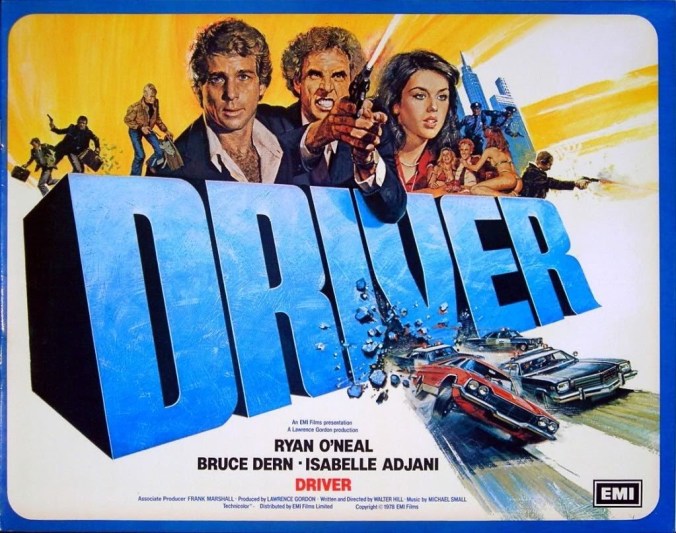
driver-poster

When discussing his favorite American influences, Hill singled out John Ford, Howard Hawks, and Raoul Walsh—a holy trinity for unpretentious, deceptively meaningful, masculine-but-not-macho Old Hollywood cinema if there ever was one. As luck would have it, Andrew Sarris once wrote a sentence uniting all three:

If the heroes of Ford are sustained by tradition, and the heroes of Hawks by professionalism, the heroes of Walsh are sustained by nothing more than a feeling for adventure.

It’s here where The Driver takes a cue from noir by way of Melville: its character are driven by neither tradition, professionalism, nor adventure, per se, but by a sense of solitary antisocial obsession. Hill has, in the past, expressed a certain rejection of backstories and inner lives: his characters simply do what they do because that’s what they do. None of the characters in The Driver are even given a name. Ryan O’Neal’s “Driver” charges a lot for his services, but as the film notes, he doesn’t seem interested in spending any of it. Bruce Dern’s “Detective” isn’t particularly devoted to the idea of law and order, but rather to the thrill of the catch. The film’s first narrative coup is that it doesn’t resolve this conflict, but suggests that the game goes on forever: a symbiosis between cop and crook that will keep genre movies being pumped into theaters until cinema gives up the ghost.

The Driver‘s second narrative coup is how it handles its women. The women in a Hawks film like Only Angels Have Wings (1939), Rio Bravo (1959), or Hatari! (1962) are adventuresses. They can certainly keep up with the boys, but they’re ultimately also sentimental foils: they want their man to crack and admit he needs her. In The Driver, the women don’t need or want anybody; they have a solitary path of their own. There are hints of attraction between O’Neal and Adjani’s characters. But the film gives no release of showing either of them act on it, and you get the sense that if they did spend the night together, it would be under the silent understanding that each was doing it only for themselves. That leaves Ronee Blakley, excellent as O’Neal’s ganglord contact in the criminal underworld. It’s the sort of role that would typically go to a male character actor, but Hill said that he wanted “something a little different”, so here it goes against type to a country singer best known to moviegoers for her vulnerable star turn in Nashville (1975). Bruce Dern isn’t an actor I’ve ever associated with pure machismo, and when it comes to standard noir masculinity—stoicism, control, self-reliance, a rejection of sentimentality—the characters of Blakley and Adjani outstrip him.
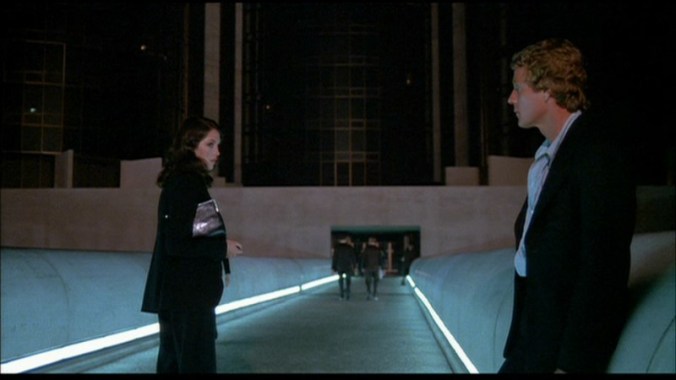
driver-isabelle-ryan

When it was time for the Q&A, I actually raised my hand to ask Hill why he chose to suggest chemistry between O’Neal and Adjani and not act on it. But then I immediately put my hand down, in part because the answer suddenly seemed obvious, but mainly because asking questions about anything as above-the-shoulders as a close subtextual reading seemed like it would completely kill the mood. Besides, any Fordian/Hawksian director worthy of the comparison wouldn’t give a straight answer anyway.

The evening was more a chance to sit and listen to a bona fide Hollywood war horse—amicable, grizzled, at ease—as he talked about his path through show business. He touched on his college days (“I wasn’t a particularly good student, but I never missed a party”). He talked about starting as a writer before jumping to the director’s chair (“I would read a lot of these Hollywood scripts….they all seemed to be written by the same person”). And he talked about an influential moment, when writer Alexander Jacobs showed him the script for the neo-noir classic Point Blank (1967): “It was exactly in the direction I wanted to go in. It was intelligent. It was an action movie. It had ideas in it.”

Indeed, the most overtly philosophical he got was when talking about the action genre itself. Discussing his attraction to it, he said:

To tell you the truth, I believe in the pluralistic cinema. I think musicals are great, and comedies are great. Most action movies aren’t any good. Most of them are dumb. [Appreciative laughter from the audience] But they’re popular for some very good reasons. They are kind of hymns to physical courage, which is something that doesn’t enter into most of our lives, but at the same time we always admire. Athletic heroes, I think, are part of that kind of instinct within all of us…Where the movies usually go very bad, it seems to me—and you can get this off the sports page too—is the transference of the idea that physical courage equates to being a good person. I like to get an ambivalence in.

But the centerpiece of the Q&A was when Hill talked about getting to direct his first film: the Charles Bronson Depression-era boxing drama Hard Times (1975), the success of which led Hill and producer Larry Gordon to The Driver. Of Hard Times, Hill said that after he’d started to make money as a screenwriter, Gordon called him up and said, “Look, I’m going to pay you absolutely nothing. And I’ll also pay you nothing to direct the thing. But if you accept those conditions, we’ll make a little, low-budget movie. You’ll get a shot.” Hill immediately said yes. He called it “the best deal I ever made.”

When Hill told the story about his inspiration for Hard Times, it struck me as resonant of this deal—and of Hill’s cinema, of Hawks, of Ford, of Walsh, of The Driver, and of Hollywood itself. Hill said that his grandfather used to share stories about the Depression. His grandfather had worked on an oil rig, “a long way from the bright lights,” and on their day off, his grandfather and the other drillers would drink, run races, have boxing matches, and place bets. One day, a stranger arrived:

A guy shows up. He gets off the back of a truck. He’s a hobo. He watches one of these fights, and he comes over to my grandfather’s bunch and says, “You guys feed me and give me a place for a while, and I’ll fight for you and share some of your winnings.” They didn’t know what the hell to make of him. But they put him out there the next week, and he knocked the shit out of somebody. He fought for six weeks, won every fight, never said much. And then they woke up one day, and he was gone.

The audience laughed again. And there you have it.

****

The Driver is, sadly, not available on Netflix, Hulu, iTunes or Amazon streaming, thus proving that we should still value physical media. Track down a copy and have fun.
The Strange and Mysterious Case of M. Night Shyamalan

Split

Can we admit that there is far more to the films of M. Night Shyamalan than surprise endings? We can still argue about whether or not his films are actually good—and believe me, I intend to.

For a long time, it’s seemed like there were two M. Night Shyamalans. The most famous is the director who burst onto the scene with The Sixth Sense (1999), followed it up with the less startling Unbreakable (2000), and then declined into arithmetically lower and lower TomatoMeter scores, losing his credibility by 2008’s The Happening if not 2006’s Lady in the Water before bottoming out circa 2010. This is the M. Night Shyamalan known for plot twists above all else, and teased endlessly on the internet for everything that’s awkward or nonsensical about his films. (The Happening is still the only movie where I’ve ever walked out into the lobby and asked for my money back, and the theater manager told me—I swear this is true—that I should have known it would suck because it was M. Night Shyamalan).

So it may surprise a lot of my coworkers, friends, and casual bystanders to hear that there’s a certain subset of cinephile culture—the kind that wishes the TomatoMeter would die a slow, agonizing death—that never stopped taking Shyamalan seriously. The Cahiers du Cinema voted The Village one of ten best films of 2004. Ditto for Lady in the Water in 2006, where Shyamalan’s film placed slightly ahead of films by Martin Scorsese and Terrence Malick. Ignatiy Vishnevetsky, a star critic for the A.V. Club, is an on-the-record fan, as is the Palme d’Or-winning Thai director Apichatpong Weerasethakul, whom many cinephiles (including myself) consider one of the most important filmmakers of the 21st century.

His defenders have a point that he deserves a much more careful consideration. Gigantic, rug-out-from-under-you twists play a relatively small part in his filmography considering his oversized reputation as “the twist guy”. It would be more accurate, or at least more inclusive, to focus on his other trademarks. His heroes are scarred by trauma, regret, doubt, and loss. Spiritual dilemmas often come into play: in his films, characters use the word “god” with a capital G and no irony. He incorporates natural elements (particularly water) with a sense of reverence at how overwhelming they can be. He uses color in a way that makes certain objects pop with teasing significance. He often focuses on vulnerable children—not just the old saw of putting some helpless kid in mortal peril (to get the audience to feel something), but creating child characters who live with a physical or psychological wound that makes them ache painfully with their own sense of smallness. High-concept though he may be, he doesn’t set out to make a movie without a firm sense of character.

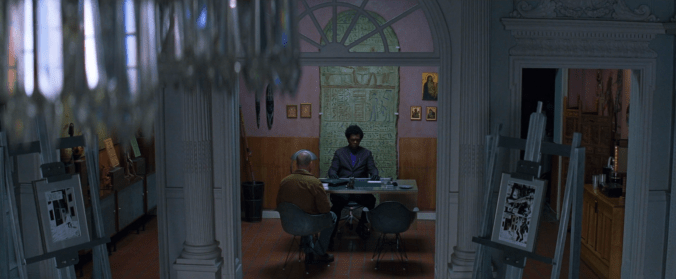
All of which marks him as a director who aspires to soulful multiplex cinema. As much as it became a cultural archetype for surprise endings, don’t forget that The Sixth Sense doesn’t end on its big reveal (the way that The Usual Suspects does) but continues on to a quiet, character-driven monolog in which Bruce Willis bares his emotions and bids farewell. There’s a shot in Unbreakable where Bruce Willis and Samuel L. Jackson are framed on all sides by both comic book pop art and religious icons. And that, more or less, is the balance Shyamalan tries to strike: a tonal equilibrium between outlandish pulp and making sure that even his superheroes follow the introspective contemplation of a pilgrim’s path.

Screen Shot 2017-05-29 at 5.05.51 PM

So he is, in film-crit terms, undeniably an “auteur”. And perhaps no principle of auteur theory has caused more headaches than Francois Truffaut’s infamous claim that “There are no good and bad movies, only good and bad directors.” Shyamalan strikes me as a talented, personal director who’s spent years at a time making misfires back to back to back. And I have to admit that I’ve thrown up my hands, at a loss for spotting a method to the madness, or for reconciling Shyamalan at his best with Shyamalan at his worst.

For instance, Unbreakable looks better and better these days, especially now that “Superheroes are People Too” has become not only a common subgenre, but a subgenre that rarely does better than the superhero Shyamalan invented fifteen years ago. But how could the man who directed the opening scenes of Unbreakable with such atmosphere and subtlety fail to notice that, say, Adrien Brody’s hammy caricature of an autistic man in The Village kills the tension of so many scenes? How could he stage that scene in The Happening where Mark Wahlberg yells “Nooo!” and dives forward while a kid gets shotgunned in the chest in a display rank cinematic cliche? I thought that Lady in the Water, in which Shyamalan literally cast himself as a Christ-like savior of mankind and imagined a straw-man film critic getting ripped to shreds, was as misbegotten and mind-boggling as its detractors maintain. The only remotely viable defense I’ve heard for The Happening is that the people who laugh at it assume that it was meant to be more serious than it is—a claim of B-movie goofiness that makes sense given how Mark Wahlberg seems to be giving a comedy performance, but a claim I can’t buy given how so much of the movie’s aspirations for aghast R-rated horror and topical preachiness are filmed without guile.

It would be too simplistic to say that Shyamalan has to pick one or the other, to argue that he does better with seriousness than humor or vice-versa. Lady in the Water is a film that takes itself far too seriously, but serious scenes make up its best moments, while its stabs at comedy are cringe-inducing. Meanwhile, comic relief works nicely in Signs (2002), and self-aware camp humor is still The Happening‘s last possible path out of the wilderness of moviegoer scorn. Perhaps the only explanation to the enigma of M. Night Shyamalan, who went from an unknown to the Next Big Thing to a pariah within the span of ten years, is that you can’t accuse him of not having good ideas, only of not filtering out the bad ones.

visit

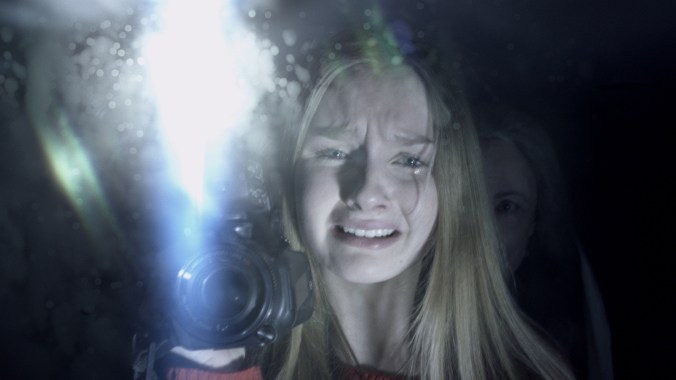
Then, in 2015, something happened. With the low-budget found-footage thriller The Visit, the TomatoMeter lit up Fresh again, and suddenly Shyamalan, now working on a modest scale, was no longer just for apologists. Part of this surely has to do with collaboration: while still holding the reins, Shyamalan had partnered with producer Jason Blum (Paranormal Activity), who like Val Lewton or John Carpenter before him grasped that the necessary elements of a successful horror film are cheap—and can be something more so long as they’re in the hands of someone with the imagination to use them. I attended The Visit with curiosity. No grand claims can be made for it, but its twist caught me genuinely off-guard, and as the film reached its climax, I thought that Shyamalan had pulled off a trick that would make Lewton himself proud: he’d made a film that, without ever shedding the appeal of cheapo B-horror, had managed to infuse its genre with creativity, humor, and a surprisingly graceful emotional catharsis. And then, after accomplishing all that, The Visit suddenly tacked on a coda of a twelve-year-old white kid rapping about poop that’s so bad and so utterly wrong for the tone of what came before it that I’m amazed no one involved pulled the plug. Again, I threw up my hands. The method is a mystery.

Split 2

But a degree of hype was in the air for his follow-up Split. The curiosity, for me, was even greater than with The Visit, especially since the studio was giving Split such a confident advertising push. The trailer focused on a) the brand of a director who’d just spent a decade as a punchline, and b) the played-out and inevitably ridiculous cliche of a horror movie villain with split personality disorder. In short, if you’d checked out after The Happening, the concept sounded like a joke. And yet here it was, and for audiences, it worked: when it opened in January, Split spent three weeks as the top box office hit in the US, ultimately pulling in blockbuster bank on a production budget of less than $10 million.

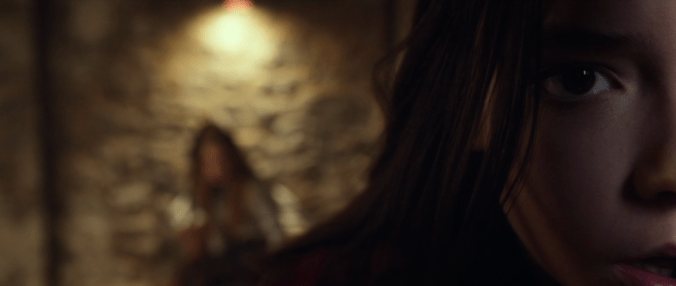
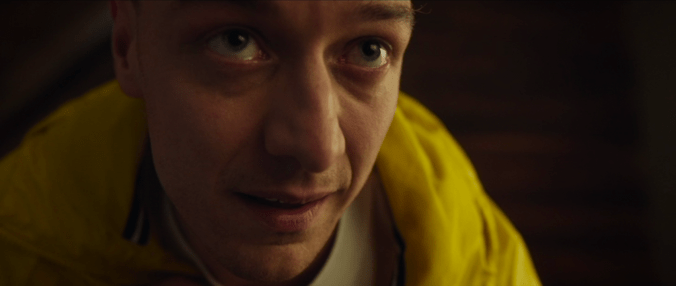
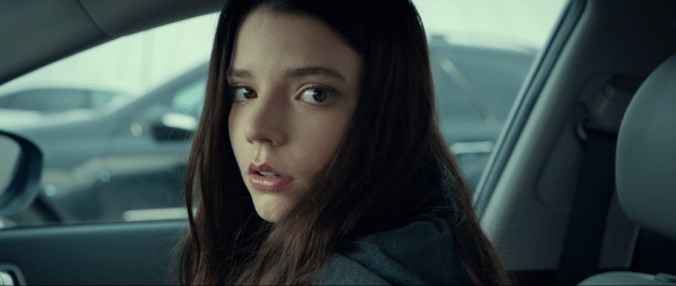
Where does Split find us? In the suburbs of Philadelphia, three teenaged girls are kidnapped by a stranger (James McAvoy) and held captive underground. McAvoy suffers from an extremely cinematic version of dissociative identity disorder—even by Psycho‘s standards—which compels him to affect wildly different accents and costume changes, sometimes in drag and always sinister. The girls play a cat-and-mouse game with their captor, attempting different strategies for each personality, while supernatural elements start to come into play. Most of the praise has gone to McAvoy, who shows remarkable dexterity and commitment with a character—or rather, a set of characters—who at different times has to be intimidating, pitiable, or a looney tune for carefree horror audiences looking to get their rocks off. But special mention is also deserved for Anya Taylor-Joy as the misfit loner among the captives, whose own connection to McAvoy, spiritual or otherwise, is teased out beautifully.

Split 3

So Split is solid, emotionally satisfying entertainment, well told and prepared to dive in unexpected but not arbitrary directions. At times, it certainly bends towards conventions of the genre—teen girls in danger wearing nothing but their bras, say. But as the film went on, it occurred to me that bottoming out could be a blessing for Shyamalan, for reasons not entirely to do with the quality of his films, but with his audience’s perception of them. Walk into The Village knowing that it’s from the serious, prestigious, Oscar-nominated director of The Sixth Sense, and you may roll your eyes (as many critics did) when it gets preposterous. But walk into Split knowing only what you saw in the trailer—that it’s a goofy split personality B-movie thriller where James McAvoy wears a dress—and you’ll be surprised at the serious and effective places it goes.

Speaking of surprises, there is one awaiting at the very end of Split. If you somehow haven’t had it spoiled for you yet, like it was for me, I’ll try to be vague. Suffice it to say that it twists Hollywood’s new trend of extended universes. To which I throw up my hands again, only this time to say “Why not?” So many extended universes are in theaters already, with committees deciding the fates of Marvel, DC, King Kong, and now Universal Horror. So why can’t Shyamalan have one of his own? At the very least, and even when he’s at his worst, his films never felt like they were decided on by committee.

So I’m intrigued by the promise of a “new Shyamalan film” again for the first time in years. But I disapprove of the use of the phrase “return to form” that keeps popping up in reviews, not only because I still don’t think he’s made another movie on par with The Sixth Sense or Unbreakable, but because his latest two films away from the A-list don’t strike me as an attempt to “return” so much as to try out different territory. But keep your eyes on him. He may surprise you.

*********

Split is now available on home video. See it before it becomes important.

“It is Happening Again”: TWIN PEAKS and Meditations on Four Weird Hours of Television

6361094739237986661586174273_64-Red-Room-Empty

Preceded by a week where my social media feed was filled with in-jokes, excitement, and callbacks, “The Return” of Twin Peaks dropped last weekend on Showtime. There is already a lot of great writing about Lynch and his spiritual noir mini-verse out there, including this thoughtful plunge through the complexities of the original show by Matt Zoller Seitz and the excellent recaps on my old stomping ground, the MUBI Notebook.

But now that the first four episodes that Showtime has made available are still bouncing around in my mind, and since I can’t go anywhere in LA without seeing a Twin Peaks billboard announcing that “It Is Happening Again”—a line from the original show, warning our hero Special Agent Cooper (Kyle MacLachlan) about a murder—here are a few disparate thoughts on a disparate series.

First and foremost, if you’re looking for a recommendation on whether or not you should watch it—the most widely used and least interesting part of a critic’s job—I hereby abdicate my responsibility. At the risk of useless tautology, the people who should watch the new Twin Peaks are the sort of people who’d like the new Twin Peaks. To watch it is to follow Lynch down a rabbit-hole on a journey that may filter out all but the most dedicated, with any payoff still very much up in the air. But I’d be lying if I said I’m not fascinated by where it can go.

It is Happening Again. A good tagline, particularly when it’s superimposed on the iconic face of Laura Palmer hovering above Santa Monica Boulevard every six blocks. But it’s worth parsing what “it” and “again” mean in regards to the original show. The reason I’d heartily encourage just about everyone to give season 1 of Twin Peaks a try is that the strictures of network television forced David Lynch’s aesthetic and metaphysical obsessions into an accessible form without ditching his essence.

We carry a certain number of preconceptions about how serialized television works. TV—that great destroyer of attention spans—is about flow. It should prioritize forward motion. It should have one main event that becomes the axel of the show, with subplots forming the spokes of a wheel. It should have an interconnected group of regular characters who relate to one another in different ways. Most episodes should end on a reveal, a twist, a cliffhanger, or some tease to get you to tune in next week. The episodes should have an A-storyline and a B-storyline that arc in tandem. There may be soap opera-ish subplots, like romances or intrigue that don’t really effect the main story, but which we invest in anyway because we care about the characters. And so on.

For the most part, the original Twin Peaks worked within that system. It was direct when it needed to be, bizarre when it could get away with it, and it combined its weirdness with tantalizing showmanship. It had a sneaky sense of humor. It moved at a loopy rhythm, but not outside the bounds of the speed of TV drama. And while doing so, it carved out an aesthetic and a mythology of its own, in which a cozy smalltown held innumerable sordid secrets, the FBI solved cases by interpreting dreams, and the material world was haunted by a spiritual embodiment of pure evil named Bob.

It is also something of an infamous cautionary tale about how far you can string your audience along before they start to turn on you. In the second season, it solved the central murder in one of the most potent TV episodes I’ve ever seen. After that, it fell into a diffuse camp-fest that I haven’t heard any fan defend. Then it ended on a Lynch-directed grand finale, which is possibly the single most abstract thing to ever air on primetime network television. (I know baby boomer Peaks viewers who still feel cheated by it). For a coda, Lynch and most of the cast returned for a theatrical film, Twin Peaks: Fire Walk With Me, a messy, cathartic, often frighteningly emotional prequel that scrambled expectations from the show and flopped with audiences, but now has Lynch fans pushing hard to get it recognized as an underrated masterpiece.

So it should surprise no one that the youthful and now-nostalgized 1990s Twin Peaks, with its coffee and pie, poodle skirts, soap opera parodies, revamped 50s teen melodrama, and jazzy soundtrack, isn’t exactly “happening again.” Lynch recently said that cable has become “the new arthouse”, which implies not only a breakdown between the prestige of television and the prestige of movies, but a breakdown of conventional TV itself. The new Twin Peaks is if nothing else a ballsy rejection of the norms that even the best Golden Age of Television shows play by. Yes, a lot of your favorite characters are back (sort of). But as much as it’s a continuation of Twin Peaks, it strikes me as a continuation of David Lynch, a new sandbox for the director who drifted into semi-retirement ten years ago, focusing on avant-garde video shorts instead of feature films. And now he has 18 hours with which to play.

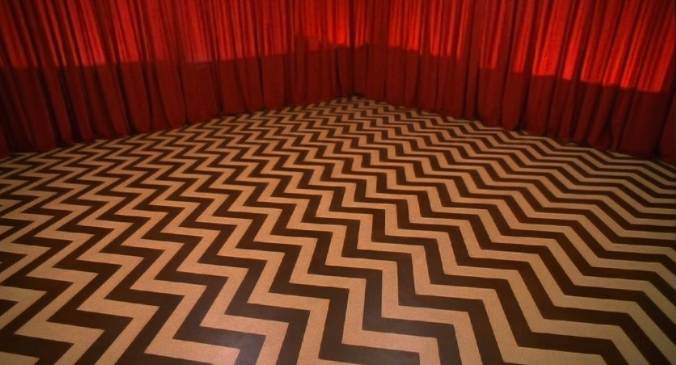
Despite any claims to the contrary, the new Twin Peaks does have a clearly defined plot, though at this point, the most honest way to synopsize it would be to just make a list of its currently disconnected elements. It is, in a literal sense, all over the place, jumping from New York to South Dakota to Las Vegas to, only infrequently, the town of Twin Peaks itself. There’s a grizzly murder in the midwest. There are three (or at least two and a half) Kyle MacLachlans running around. There’s a mysterious sealed chamber in Manhattan where a hapless college student is paid by a mysterious billionaire to watch an empty glass box for hours on end just in case something—we don’t know what—happens to appear in it. (It’s the most tantalizing part of the premiere, and as Keith Uhlich points out on the MUBI Notebook, a pretty handy metaphor for the show itself). The Log Lady warns that something is missing. And then there are stray oddities filling out the edges, like a scene in Part 4 where Michael Cera shows up to do what I gather is an extended Marlon Brando impression.

In short, Twin Peaks has doubled down (and then some) on a strictly-for-cultists appeal. It is not simply best appreciated, but perhaps only appreciated, by those with memories of the first two seasons and the prequel film burnt fresh into their minds. (They’re the only ones for whom a mention of a “blue rose” or a stray owl flying overhead are likely to signify). Yet it is so different in tone and feel from the original show that it would be laughable to call it fan service. Or if it is fan service, it’s for cultists not of Twin Peaks but of Lynch as a whole, where fandom has meant an abiding, patient, nerve-shredding curiosity to see what he’ll do with each new vessel he sets his eye on—the latest being the freedom of very R-rated cable in an age where all the context a viewer needs is just a convenient binge-watch away.

Some observations:

  • The pacing and structural choices defy explanation. Consider that this is a season of television where you can watch the first hour and still not be entirely sure what the new mini-series is actually about. Compared to what your average commercial-free cable drama would pack into an episode, Lynch is utterly unconcerned with taking advantage of just how far a story can move in 60 minutes of screen time. Even the episode endings are eccentric; the credits start to roll on moments or musical numbers that can seem like arbitrary places to put a “To Be Continued…”
  • The near absence of music is striking. Only rarely, and when pushed, does it replay its famous musical score.
  • I’ve found the new show to be almost completely humorless, though not for lack of trying. Many scenes are clearly written as comedy, but play out on screen without much attention for energetic, quick-witted chemistry. The over-riding atmosphere is that of a sleepwalker.
  • Like any film or show that revisits the same cast so many years ahead, it becomes—whether it wants to be or not—a story about aging. There is something inherently melancholy about each creased and weathered familiar face, and the show seems well aware of that. Glimpses of old footage, seen at the beginning of the series, are phantasms that melt away.
  • It contains some of Lynch’s most extended and purely abstract setpieces since he debuted with Eraserhead, and I’m not sure that animating his dreamscapes on a computer does Lynch any favors. In fact, it robs his world of tactility. (Who’d have thought that, thirty-something years after Lynch turned down directing Return of the Jedi, he and George Lucas would have hit the same wall?)
  • Many scenes that check in on the old cast seem strangely placed and dislocated from the plot. Are they nostalgic throwbacks for the fans? Will they become important later? Or are they merely their own discrete vignettes, spinning outward in the Lynch-verse? None would surprise me.
  • The subtlest, most controlled performance belongs to Matthew Lillard, which is something I never thought I’d say about anything.

This sense of narrative diffusion is hardly new to Lynch. Mulholland Drive also spends its much of its first half introducing characters and narrative directions that either disappear or get flipped on their head by the end, and yet the whole picture still arrives at a satisfying and coherent conclusion.

It’s entirely possible that the new Twin Peaks is doing something similar on a more drawn out timescale. I’d say “time will tell” if Lynch ties it all together, but I strongly suspect that time won’t; being confounded will become a feature, a bug, or at least an inevitability. Still, one advantage of TV being the “new arthouse” is that, in an age when it’s harder and harder to get audiences to care about either an old-fashioned or a radical ideal of cinema, the most brilliant work on television is much more capable of getting millennials abuzz. (When the numbers came in, the broadcast ratings were disappointingly low, but the number of people who signed up to watch it on the internet broke Showtime’s records). I expect our new Twin Peaks is something we’ll be debating for quite a while to come.

Short Cuts: THE LOST CITY OF Z

lost-city-of-z

Is there any Hollywood director working today with a bigger gap between cinephile regard and general public indifference? The films of James Gray aren’t often given a wide release, don’t get a push for Oscar season, and have shockingly low IMDb scores considering their caliber. But there are many cinephiles who will swear up and down that he’s one of American cinema’s greatest assets, with films like We Own the Night (2007) and Two Lovers (2008) as treasures too subtle for proper recognition.

The idea of classicism tends to figure into discussions of Gray’s work, and just for fun, I did a search of how often the word “old-fashioned” appeared in articles about his latest film, The Lost City of Z, in theaters now. I found results from the New York Times, Vanity Fair, Slate, IGN, IndieWire, and AllMovie before I decided I’d better get on with writing an article of my own. The use of the word is not wrong. But it raises the question of why the old-fashioned nature of Gray’s cinema seems to be a barrier for modern audiences, while movies like, say, The Grand Budapest Hotel (2014) or La La Land (2016), which are much more explicitly built from the pieces of old art, manage to catch a kind of zeitgeist. The best answer I can give is that what’s old-fashioned in Gray is not so much an aesthetic but a philosophy, and one that’s devoid of pretensions towards self-conscious hipness or modern irony. So it’s satisfying that, when approaching The Lost City of Z, which is indeed old-fashioned, I can’t cleanly peg the movie as an emulation of another director. There’s a bit of Cimino, certainly—The Deer Hunter (1978) and the good parts of Heaven’s Gate (1980). Coppola, maybe? David Lean? The ghost of Michael Powell? But in the end, the film feels most of all like his, and his alone.

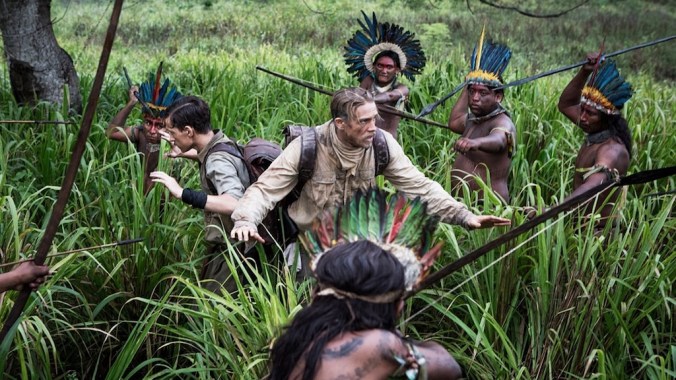
Any short plot summary of The Lost City of Z will tell you that it’s about an early 20th century explorer—Percy Fawcett, a real historical figure—on an obsessive upriver quest to find a rumored ancient city in the Amazon rainforest. This elevator pitch is only about 40% true, but it’s also the only specific information you should have when you enter the movie, so the film can slowly dawn on you as a carefully layered story about the passage of time, where moments from the beginning rhyme at the end, and where a wife you first thought might be a stock character turns out to have an arc of her own. The film is devoted to filling a CinemaScope frame and getting the proper effect from an epic runtime. It offers itself for comparison to Werner Herzog’s two trips to Amazonia, Aguirre: The Wrath of God (1972) and Fitzcarraldo (1982). The difference is that Gray’s hero doesn’t want to conquer the world but merely to understand it, which is an idea simultaneously less grand and more universal. Like Zodiac (2007), it is a case study in how to tell a “true story” when no one knows the ending. And there’s no better solution than to take that uncertainty into the real of symbolism and dreams.

So at the risk of angering Gray’s fans and confusing everyone else, I think it’s no insult to say that Gray’s strong suit here, as with his last film The Immigrant (2013), is not plot. Does he get his characters from A to B seamlessly? Does The Lost City of Z, for instance, truly sell the scene where Charlie Hunnam’s explorer goes instantly from being a cynic to a true believer in cities of gold after finding a broken pot next to a tree? Storytelling is by nature at least partly an act of salesmanship. But salesmanship is not an idea we associate with purity, and purity is Gray’s most old-fashioned aspiration. The most satisfying arcs in his films are thematic, emotional, and metaphorical—in other words, appreciating them requires a certain earnest belief that a film can arrive at simple moment, or a gorgeous image, or a look on a character’s face and still carry such a meaningful catharsis. And that’s an idea that, I fear, much of today’s moviegoing culture would be happy to roll its eyes at. (I remember once going with a friend to The 400 Blows (1959), and he didn’t see why the ending was anything more than a young boy standing on a beach). There are purely mechanical problems with The Lost City of Z. The dialogue often merely tells you its plot points or its character’s emotions without coming to life with the wit or vitality of a good wordsmith. A slightly thin set-piece on the battlefields of World War I shows that Gray’s skill set is not the same as Spielberg’s or, er, Mel Gibson’s. But it’s been 48 hours, and I keep thinking of how many different things The Lost City of Z is about. Its final shot still hasn’t left my mind.

✬✬✬✬✩

Short Cuts: THE BFG

null

I like Steven Spielberg and I like Roald Dahl, so when The BFG opened last summer to middling reviews and box office numbers that could be politely described as “disappointing”, the bad buzz didn’t faze me. Spielberg can find a valuable voice when he zooms in on a lonely child—E.T. (1982), Empire of the Sun (1987), A.I. (2001)—and the idea of a reunion with E.T. screenwriter Melissa Mathison to make an old-fashioned kids movie sounded enticing. So after reading several industry think-pieces about how the Spielberg brand might not appeal to audiences as much as it used to, I decided to see the movie. I was living in New York City at the time, and it was during a heat wave, one of those hot, ungodly humid summer days where the city air feels thick and every subway station is like the world’s filthiest sauna. I walked around Prospect Park to get to the theater and arrived feeling unpleasantly like I was about to pass out. I asked for a ticket for The BFG, and the girl behind the counter said, “Are you sure?” It turns out, the air conditioning had broke in one of their screens, so they’d moved The BFG to the Room With No Ventilation and kept the rest running as normal. I decided it wasn’t meant to be, bought a drink from a Mister Softee truck, and spent my ticket money on taking a cab home. The think-pieces were onto something.

But now The BFG is streaming on Netflix, available to all current subscribers at a very reasonable marginal cost of $0, so I dipped in. And I exited the film the way I began it: wondering whether or not making an “old-fashioned kids movie” is even possible today, given that a certain level of technocratic bombast comes as a summer movie prerequisite. Aside from being a Disney film, you should also note the involvement of the production house Walden Media, which was set up with the admirable goal of recreating the feeling of children’s lit in children’s films. They’ve had a hand in adapting such school library classics as The Chronicles of NarniaCharlotte’s Web, Holes, and Bridge to Terabithia, and I’ve often noticed a somewhat schizoid pull in their films between the modest, gentle nature of a good children’s book and the way that, after Lord of the Rings, everything needs to be epic.

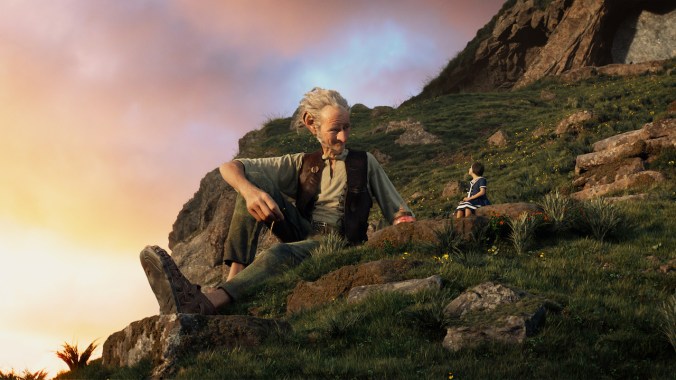
The BFG is not a disaster, but it is a film that must be approached as a gleaner, sifting through the spectacle and occasional cheap gag (like a crotch joke writ large) for several wonderful moments that inspire thinking/feeling rather than drowning them out. There is an admirable elegance to the way Spielberg’s camera swoops and whooshes through the green-screened sets. The two actors who occupy most of screen (a motion-captured Mark Rylance and a spunky young Ruby Barnhill) are both excellent. The emotional core, about dreams being captured and delivered to children, is certainly up Spielberg’s alley. And when he let’s lyricism take over—always his most underrated strength—he captures scenes worthy of the enterprise. The part that will turn most people off is also the one that best captures the movie’s head-scratching contradictions: an awkward, extended set-piece near the end built around farting in Buckingham Palace. Despite any knee-jerk reaction to blame Spielberg or Disney, I can assure you that farts belong to Dahl—as a writer, he grasped that children are much ruder than their parents might wish them to be. But the difference between how such scenes play out on page and screen is a cautionary tale if there ever was one. The idea of farting in front of the Queen may have been subversive in a book, particularly when delivered by right proper British parents reading to their children at night. Visualized on screen, with all of 2016’s worst tendencies for oversaturated live-action cartoons, it’s scarcely less crass than its more cynical competition. Which is to say, whether it’s a battle between giants or a monster-child friendship or a Quentin Blake drawing or the world’s most committed flatulence joke, there are aspects of children’s literature that movies will always have to be careful about tackling, lest the might of a nine-figure budget be easily outpaced by a slim paperback written at a 4th grade level.

✬✬✬✩✩

Short Cuts: AFTER THE STORM

after-the-storm-2016

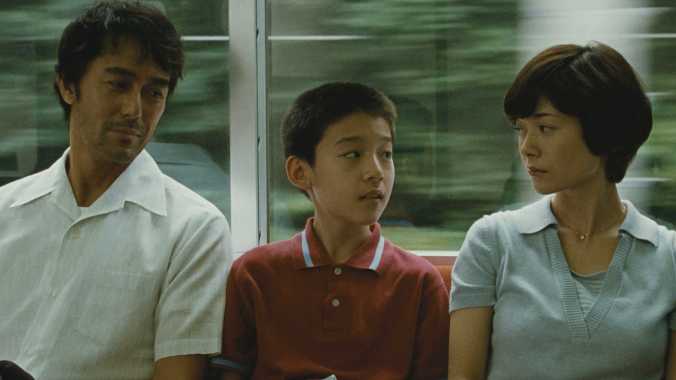
These days, it seems that films by Hirokazu Kore-eda come and go like seasons. That is, much like each spring or each summer, each Kore-eda family drama is both immediately comparable to and distinct from the one before it, and lingers, blurry, in the memory the same way. (This latest one played at Cannes last May, and is filtering through American arthouses now). As every review is more or less obligated to mention, Kore-eda owes a conscious debt to the masterpieces of Yasujiro Ozu, whose own string of family portraits from the 40s to the 60s—often titled after seasons, for that matter—are among the most revered/fetishized films in cinema history. Though he lacks the dextrous subtlety found in Ozu’s best work, Kore-eda borrows much from the late legend: the stillness of the camera, the contemplative rhythm, the unending context of daily life, the focus on different generations of a family unit, and a somewhat oblique or even indifferent approach to the idea of “plot”. Any plot summary of After the Storm might say that it’s about a loving but damaged family sharing space under a roof during a typhoon, but by the time the typhoon arrives, well into the movie, you’ll have gathered that the “storm” of the title is really a divorce. Ozu fans might spot a fleeting reference to someone named “Noriko”, the same name as Ozu’s immortal heroine who was always in want of a husband, and the quick nod exists if only to ask what becomes of Ozu’s recurring theme of marriage traditions at a time when marriage can be less an institution and more a relationship with built-in impermanence.

So where to begin? Kore-eda’s hero is a private detective and erstwhile writer stuck on his next novel—he’s a late-bloomer, his family optimistically puts it—while nursing a gambling addiction and generally struggling to act like a responsible adult. He and his wife have split, he only infrequently gets to see his son, and a new man has entered the picture. You could play a strange Hollywood parlor game with all the ways this material—a detective spying on his ex, a rebuilt father-son bond, a family divided but forced into close quarters—could power everything from screwball comedy to melodramatic schmaltz. (Indeed, one of Kore-eda’s last films, the exquisite Like Father, Like Son (2013), had American remake rumors swirling around it a few years ago, so we may get to see such theories in action). But Kore-eda is more interested in character than plot, in details over incidences, in acceptance over climax. Why else, for instance, would he include several asides about the hero’s widowed mother taking lessons on classical music—a strand that has no conflict, let alone resolution—except to show that life always goes on? And so After the Storm is both a story and a group of people you get to know, spotting their problems, their dynamics, their reasons. In the film’s smartest stroke, the family’s patriarch has recently passed away, and unless I blinked at the wrong time, you never see his image at all—no photos, no recordings—but slowly come to grasp how the flaws of that unseen man have been passed down. It is a humble film in scope, but paradoxically, it’s also the first new release I’ve seen this year made with the old-fashioned belief that a movie can reveal something meaningful about the human experience. That’s not to say it fully succeeds, or that expecting a truly profound epiphany for $12 isn’t a lot to ask. But if you’re willing to slow down, it is a work of lovely miniaturism, dotted with moments of grace, sadness, and small triumph. Key line, spoken by a minor character: “For better or worse, it’s part of my life.”

✬✬✬✬✩

Short Cuts: PERSONAL SHOPPER

MV5BM2YzZDZjZmUtMWVmOC00OTc0LWJmMTItMzU2ZTQ5OTI1M2RkL2ltYWdlL2ltYWdlXkEyXkFqcGdeQXVyNjUxMzg2Mzk@._V1_SX1777_CR001777999_AL_

Let’s go back in time about 8 years: as the Twilight movies reach peak cultural saturation, Kristen Stewart becomes a full-blown tabloid celebrity and is quickly memetized by the internet as the girl with a vacant stare, a tendency to bite her lower lip, and such a bland personality that it’s a wonder that Edward/Jacob/whoever want to fight over her. So it may surprise my college friends to hear that there’s a modest cinephile movement brewing—at least, in some corners—to claim her as a terrific talent. She recently set a record as the first American actress to win a César (the French Oscars), for her performance in Olivier Assayas’s excellent Clouds of Sils Maria (2014). And Assayas himself—an auteur’s auteur who has had a standing invite to Cannes since the 90s—called her nothing less than “the best actress of her generation.” Last year, the BAMcinématek in Brooklyn did a series on Stewart called “Bad Reputation”, an in-joke to the time Stewart played Joan Jett in The Runaways (2010) and a gentle encouragement for all the New York cinema hipsters to take the Twilight girl more seriously. I dipped into the series, and left feeling not that Stewart was a great actress, but that, at best, she’d been cast by some very talented directors. Film acting is a funny thing. The legendary director Robert Bresson, for instance, was famous for referring to his actors as “models”; that is, he picked performers, professional or non-professional, who had a look he could build a movie around. I don’t think Stewart can convincingly emote or consistently disappear into a character, but she does have a look. (Her best role—or at least, the one that most plays to her strengths—is in Kelly Reichardt’s Certain Women (2016)).

Now Assayas and Stewart have teamed up again for Personal Shopper, a film that got a divisive reaction at Cannes last year (some boos, some applause, and a top prize from the jury) and has quietly slipped into American theaters for the curious and the confused. And to be honest, I’m not sure the material is suited to either of them, even if it’s brave of them to try. The film is something of an arthouse ghost story, though most of all it exists to confound genre labels. Film is an art form where seemingly unrelated elements can be placed side by side and allowed to play off each other in coy, thematic ways. And so Stewart’s character gets two storylines: in the first, she’s the titular “shopper” (an invisible, poorly treated assistant) for a wealthy socialite in Paris, and in the second (stay with me here), she’s a medium trying to contact the soul of her dead twin brother. What do the two have to do with each other? The movie and its details offer food for thought, certainly—like the contrasts/parallels between hunting for ghosts and sending personal text messages to an anonymous stranger, or between being dead and working at the fringe of the red carpet, or between today’s hottest fashion and an unknown artist who stands the test of time. But Stewart comes across as fussy when she explains the spirit world, as if she doesn’t believe this bullshit herself, and Assayas’s ghost story itself spends most of the movie in limbo, somewhere between the compelling ridiculousness of a good B-movie and the serious tragedy that allows high-minded horror to pull it off. So the film is most successful when Stewart’s character is enigmatic rather than expressive, and when Assayas leaves you wondering which direction the film will go next, as it moves from horror to melodrama to meta-meditation to thriller and back to horror again. For those who like movies with details, it can keep you guessing right up to the moment you realize it leaves you with less than it wants.

✬✬✬✩✩