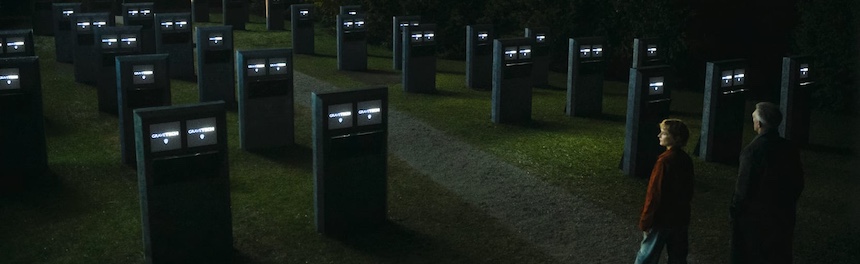
Next Door to Prestige 9: If the World is On Fire

Time does not exist, but it controls us anyway.

That homily comes from One Battle After Another, as the secret password to the question “What time is it?” And it lands, as it’s meant to, as a strain of meaningless New Age nonsense. Leonardo DiCaprio groans. The audience laughs.

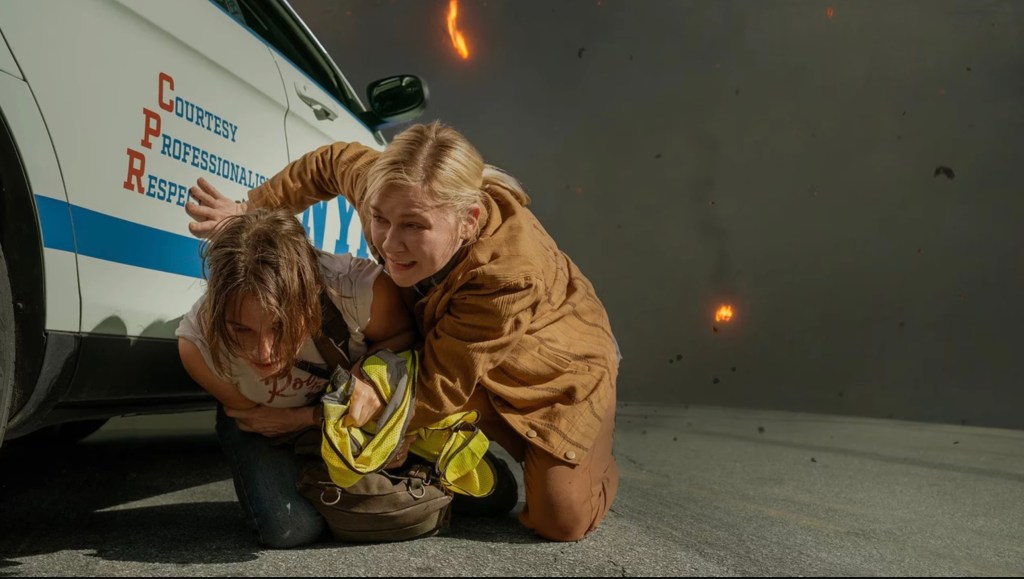
“Time”, at last, seems to have turned for Paul Thomas Anderson, at least where the Academy Awards are concerned. After 30 years of Oscar-worthy work but nary a win, One Battle After Another is set to get him at least one, possibly three. He’s a virtual lock for Best Adapted Screenplay, and he’s a predicted favorite for Picture and Director, even if a Sinners upset is still in the cards. But as Oscar night kicks off, the relationship of Anderson’s film to the current moment—its own answer to the question “What time is it?”—is something that I’ve been fascinated by since I first saw it. Especially since it began filming well before the last election, with its third act still largely “TBD”. And even more so since Anderson himself, whose films are rarely topical, let alone programmatic, has seemed so hesitant about fronting such a political contender.

“Who wants to see a movie about the world on fire if the world is on fire?” Anderson said to Sight & Sound. “I don’t.” The project, a father-daughter epic inspired by Thomas Pynchon’s Vineland, was a bucket-list idea that he had been publicly kicking around for well over a decade. When asked what got him to finally tackle it now, he denied that the current political climate had anything to do with it. A closer reason may be the one he gave on The Big Picture podcast: that it was time to get to work because “we’re not getting any younger.”

Time controls us indeed. In a better time, or a road-not-taken, how would One Battle After Another have played? Strange as it may sound, I think that it might be more easily understood—or rather, understood not for its timely qualities but its timeless ones. I won’t be surprised if at least one presentation at the Oscars tonight makes the movie sound like a kind of Stanley Kramer-esque issue film; elements of one are there for the asking. But closer to the heart of the movie is how it uses a dystopian cartoon of America to explore “being political” in the abstract: the pros and cons of radical idealism, its paradoxes, its generational dynamics, its futility, its necessity. And if everything is going to flow from there, did it just happen to land in an America that was well on its way to becoming a dystopian cartoon on its own?

“Happen” is too passive a verb, and it would discount Anderson’s looser-than-usual process of assembling collaborators and feeling their way through the material. Crucial elements of the finished “TBD” third act have been credited to discovering locations and building off of decisions made by the actors. I don’t know what other endings were planned or considered. But it’s worth noting that the ending we got scales back the film’s most ambivalent dialectics—the fetishistic codependence of radical and reactionary, the contrast between good parent/bad revolutionary and bad parent/good revolutionary—to offer its audience a more unambiguous kick of energy. Nothing more than it can deliver, or that pretends to know more than it does. Just hope for everyone who deserves it. Whether Anderson is jousting with the outside world or the outside world has invaded his own, the sentiment does not feel like bullshit.

So future generations seeking to suss out the vibe of our era could do worse than to look at One Battle After Another. Or, for that matter, at any of the 2025 films that very much were made for/by people who want to see a movie about the world on fire if the world is on fire. Quite a few new releases this year were eager to have their finger on the pulse, and they were sometimes telling in their failure as well as their success. Surely there’s a spiritual kinship between One Battle‘s mounting freakout and the conspiracy theorists of The Shrouds, Bugonia, and Eddington? Or the doom-scroll editing style of 28 Years Later? Or the vague but overwhelming apocalypse of Sirat, in which the western world tries to get in one last rave before WWIII? Weapons imbues its suburban horror plot with a free-floating metaphorical dread that suggests several things at once, from COVID to school shootings to a generally decaying social fabric. And with all due respect to Amy Madigan’s chipper, demented Aunt Gladys—if she wins tonight, I won’t be mad—the weakness of Weapons is when it comes time to replace that dread, that paranoid sense of something, with a concrete explanation.

Aspirations to relevance can most certainly be found. A better question is how many people are actually watching. Existential fears about the state of the industry have become traditional, and they always seem worse during Oscar season. Just this week, a Pew poll found that nearly half of Americans hadn’t even gone to the movies at all in the previous year. So before I get to my top 10, here a few stray notes about new releases, some serious and some frivolous, that say something to me about 2025. If not about the world, then about moviegoing.

  • A Minecraft Movie. Though it’s since been narrowly edged out by Zootopia 2, for most of 2025 America’s biggest box office hit was this video game adaptation, which drastically outpaced tracking to give a beleaguered Warner Bros. a sleeper they didn’t know they had. Weirdly, of all films, I thought of Easy Rider: young people turning up in unexpected droves to see their subculture on the big screen. And as with Easy Rider, I suspect they’ll have some explaining to do, not just to their elders but their youngers. I actually liked the film more than I expected; it has a thoughtful empathy for why gamers game that goes beyond any particular IP. But along with Deadpool & Wolverine (the #2 film of 2024) and even Barbie (the #1 film of 2023), it creates a trend line for meme-era cinema that I’m not hugely optimistic about. That is, each is a big event movie where an implicit, ironic joke is how crazy it is that someone would even bother to make a movie of this at all.
  • That hesitance may be one reason I found myself so happy to go along with Mission: Impossible – The Final Reckoning. It’s hard to think of a film that rips so many plot holes per minute of screen-time, or that’s so light on its feet that it gets away with it. The use of Tom Cruise’s “last movie star” persona has a messianic self-regard worthy of Chaplin in Limelight, but its belief in cliffhanger logic amounts to a weird kind of aesthetic idealism. When it works, it’s old school, and all its digital-age anxieties contrast with fundamentals from far longer ago than the 1990s. (At one point, the villain jumps into a biplane and shouts “Catch me if you can!” He might as well have tied the heroine to the railroad tracks.)
  • Speaking of which, the best argument that the star system still exists—not just that we have famous actors, but that an actor’s fame can drive box office—can be found in the success of Marty Supreme. And as Timothee Chalamet’s Oscar frontrunner status rose and fell, the chance that he may simply have been too thirsty for it, in a role too uncomfortably similar to his own press junket, is a compelling narrative of its own.
  • On the festival circuit, Radu Jude’s body of work has become unmissable, even if the individual parts are tossed off. Something similar could have been said about Jean-Luc Godard in the sixties, a comparison plenty of others have leapt at, both for the general style and for being defiantly present-tense. And if the main difference is that Jude’s world is more sclerotic, more resistant to change, that’s either Jude vs Godard, Romania vs France, or the 2020s vs the 1960s.
  • And last but not least, a shout-out to Kelly Reichardt’s The Mastermind, which misses my top 10 but may have the best ending of the year. As a film about sleepwalking through history, enamored by art and not thinking too much about anything else, it snaps shut on a line of dialogue that only gets more haunting as the credits roll. “Wait! There’s been a mistake!”

Without further ado, my Top 10 (technically 11) of 2025:
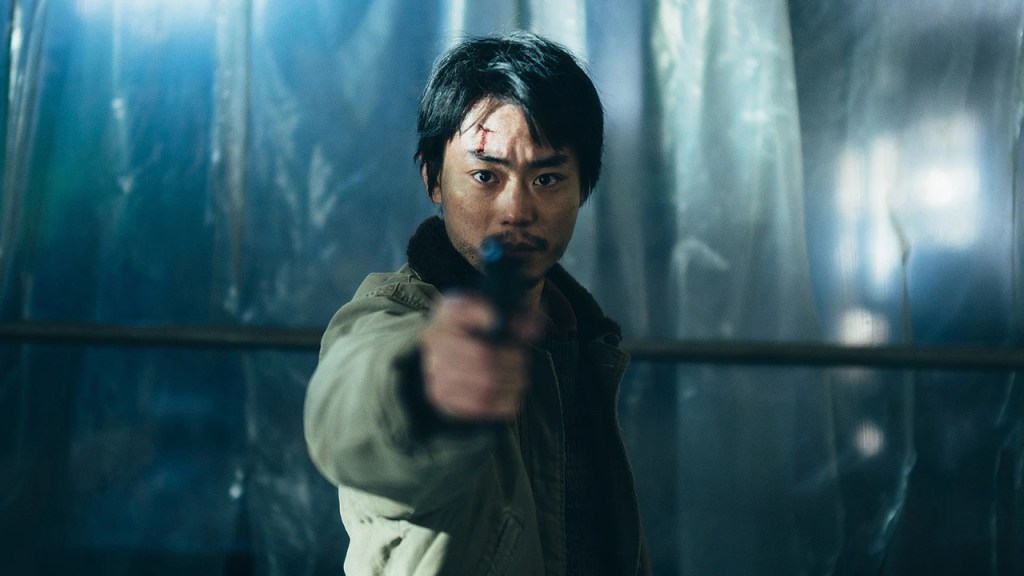
10. Cloud (Kiyoshi Kurosawa, Japan)

Kiyoshi Kurosawa’s films take their time coming to the US, and considering that I was one of only two people at the Nuart, it’s likely to stay that way. But since Cloud‘s subject is capitalism in the age of the internet, there’s something fitting about watching it both in public and virtually alone—and with movie theater speakers to rattle you. As it escalates from paranoia to action and from banality to insanity, there’s joy in seeing it stretch a metaphor to the breaking point. Does it go too far? Probably. But no matter. Few directors today are so adept at rendering their fears in formal terms.
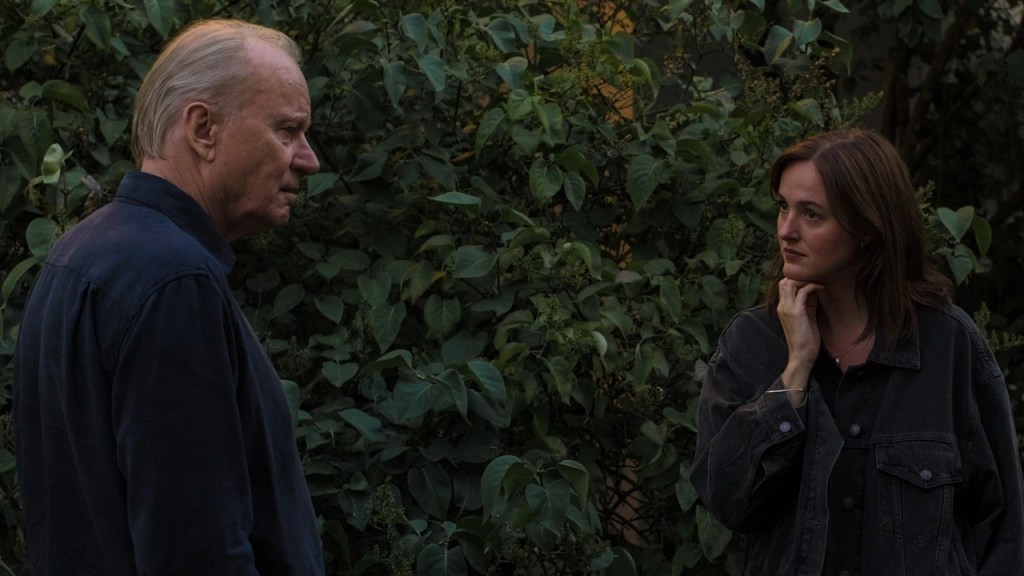

9. Sentimental Value (Joachim Trier, Norway) + Dreams (Dag Johan Haugerud, Norway)

Two arthouse highlights from Norway, connected only in that both are studies of people who work their way through personal dilemmas using fiction. Sentimental Value is the flashier and more sensational; I’ll confess that there’s something to the critique that Trier is too ingratiating towards both his audience and his industry colleagues. But its tangle of life and art is a warm, witty hedge maze to walk, with nuances tucked into little corners and every actor nailing the assignment. Dreams, the Golden Bear winner at Berlinale, might be even better. Its elements are familiar: first love, coming of age, coming out. But they find a more interesting home in the ambiguous space between what’s fantasized about and what actually occurs, and how each side of that divide is viewed differently by us as audiences, to say nothing of us as people. It’s often quite funny, too. And not just because it compares Flashdance to a Nuremberg rally.
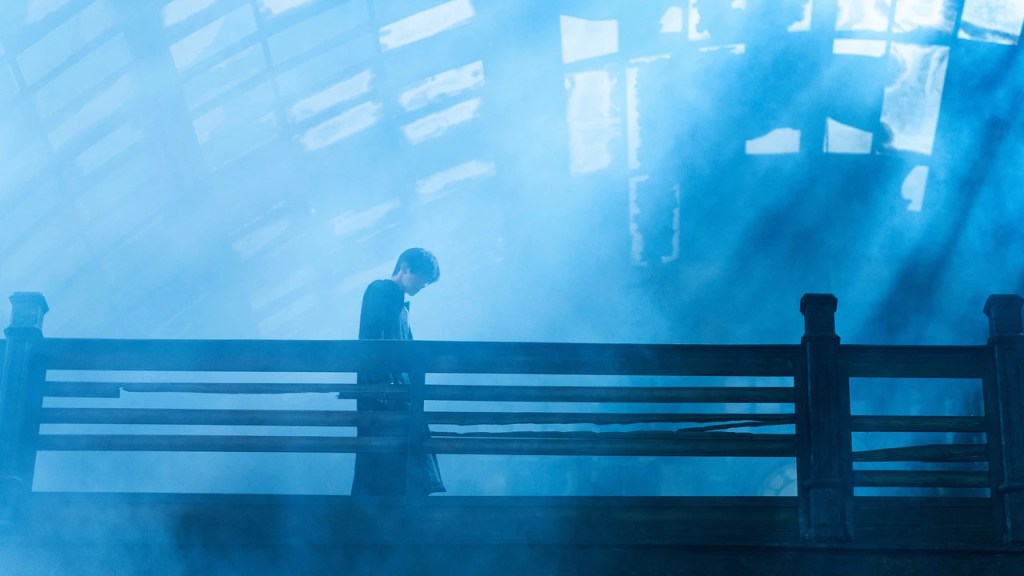
8. Resurrection (Bi Gan, China)

Not the first reincarnation anthology, or even the first to star Shu Qi. But Bi Gan’s six-course meal—a strikingly arty blockbuster in China, a strikingly deluxe arthouse film over here—makes an electrifying argument for maximalism as the essence of moviemaking. Forget plot. As themes plus style, its self-reflexive odyssey never loses the thread, touching on cinema as comfort, as nightmare, as spirituality, as opportunism, as a way to live out wish-fulfillment or make social statements or record the natural world. The sheer grandiosity can trigger your disbelief, but its abundance means that if something isn’t entirely to your taste, something completely different isn’t far behind. If you’re up for a trip from the Lumiere Brothers to Wong Kar-wai, the relish it takes is infectious.
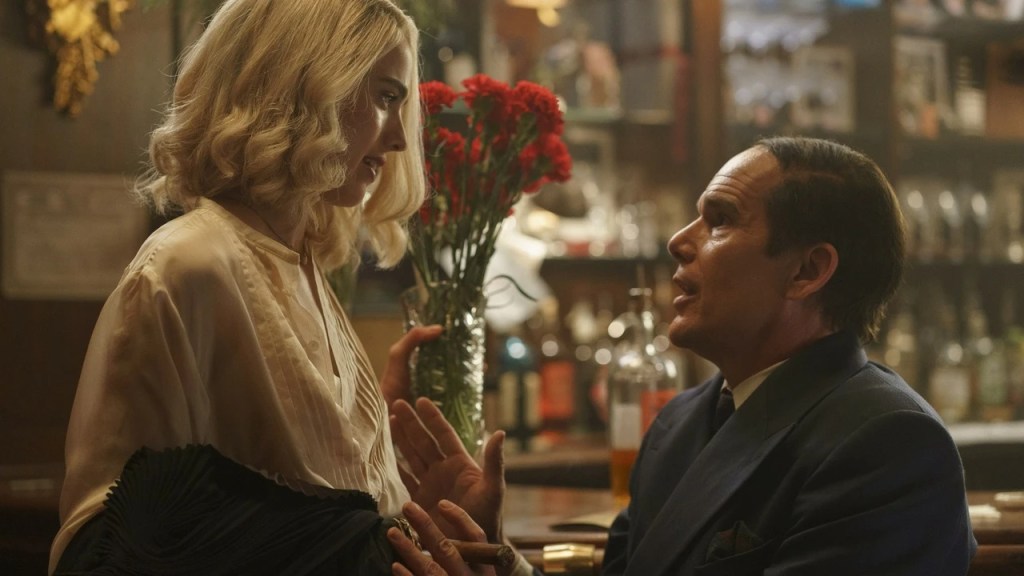
7. Blue Moon (Richard Linklater, US)

Considering that you have no memories of Ethan Hawke where he’s short or bald, he disappears into the role quickly. And especially considering that there’s only one scene where he’s not the main focus, he carries it with ease, delivering page after page of brilliant dialogue and bringing out the ache in everything his character actively tries to hide: that his best work is behind him, that he never cured what ails him, that he’s too old for Margaret Qualley, and that if he makes peace he can savor what’s left. It’s one of the year’s finest tragicomic creations. And a memento mori as lively as every memento mori should be.
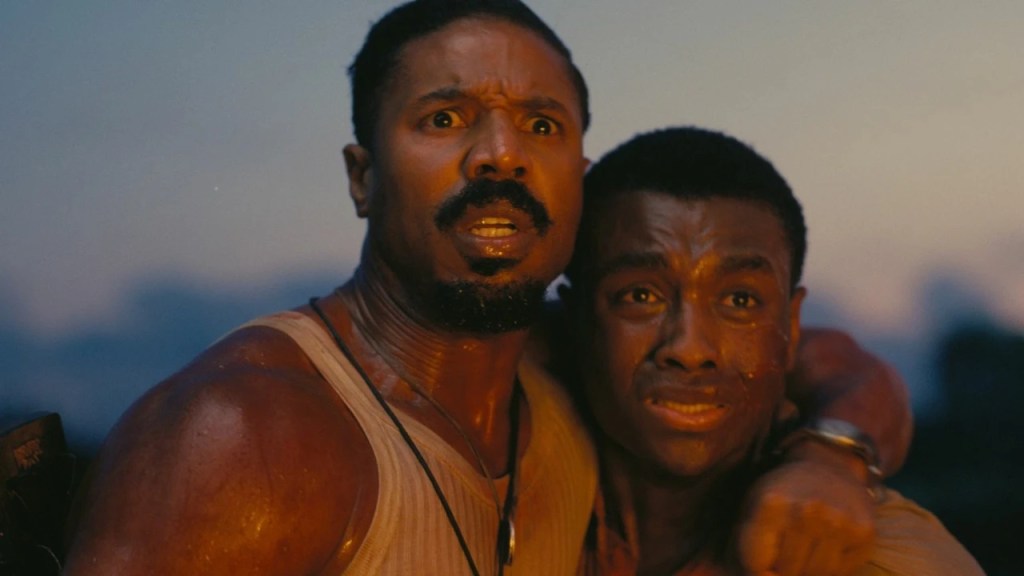
6. Sinners (Ryan Coogler, US)

Ryan Coogler’s genre-bending tentpole was praised so much so fast that I suppose some backlash was inevitable; I’ve met a few people this Oscar season who chased the hype and felt disappointed. But Sinners isn’t going anywhere, and whenever I revisit it, its plateaus bother me less and its peaks delight me more. Quite apart from the principle of the thing—a blockbuster that’s not based on prior IP, that isn’t soaked in hip detachment, that takes its time to develop mood and character, and that’s very much about something—its craft and vision are robust. If the responses to social deprivation include religion and outlawry, somewhere in between lies a wealth of American music.
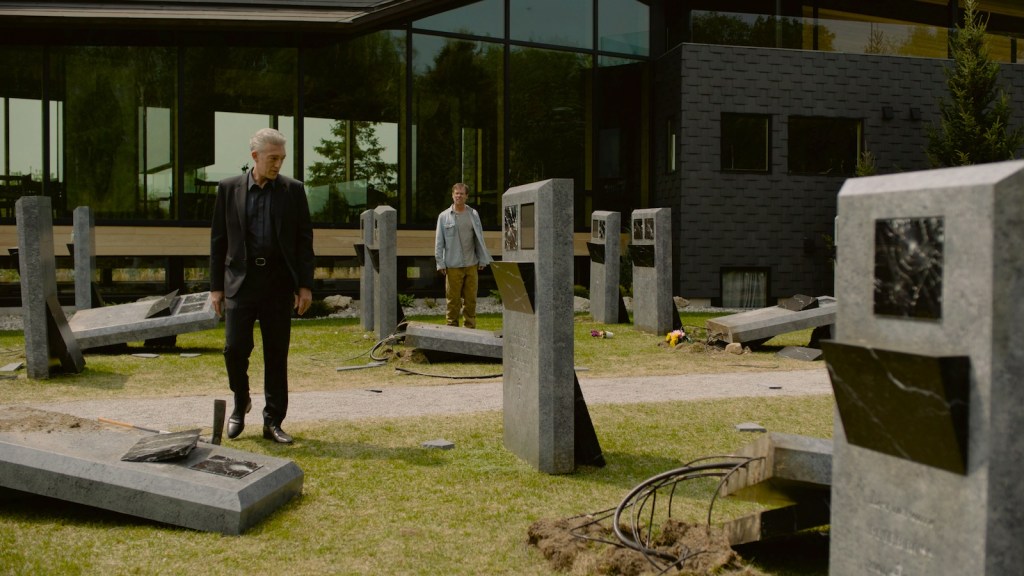
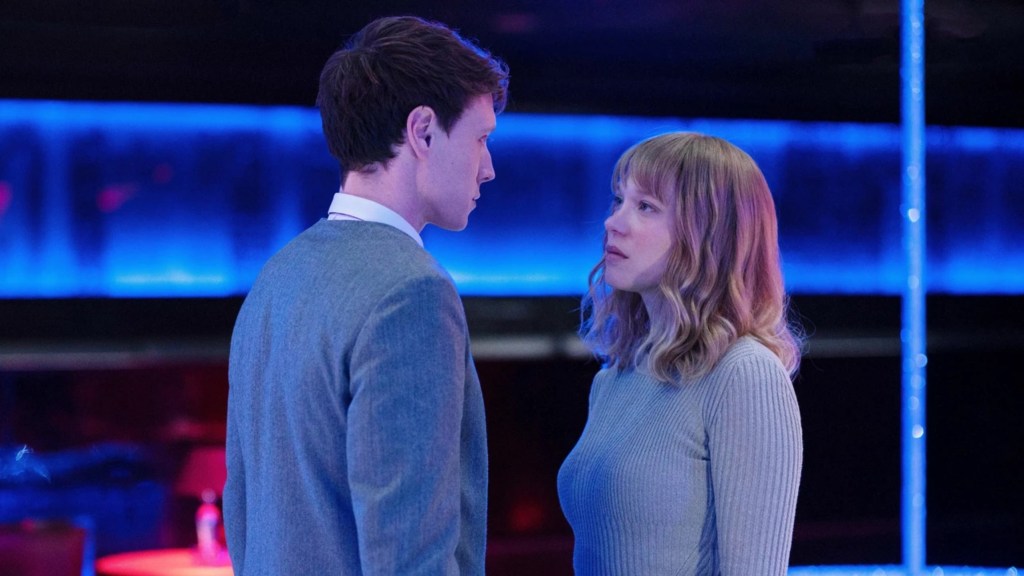
5. The Shrouds (David Cronenberg, Canada/France)

Another film that demanded a revisit. My initial gut reaction was that this was the least engaging David Cronenberg film in decades. But his films were always so much more for the head, and The Shrouds quickly got stuck in mine. Its opening act (soulful, morbidly witty) shows a sci-fi conceptualist undiminished. And as it gambles on tangents and dead ends, what it amounts to is less a paranoia thriller than a film about the role paranoia plays in processing unstable times—a theme for 2025 if anything is. Other brain-ticklers: the use of dream states, and how Cronenberg’s latest “futuristic” vision is uncommonly filled with signifiers of the present, be they topical, self-referential, or totally mundane. The weirdest, funniest product placement Tim Horton’s ever got.
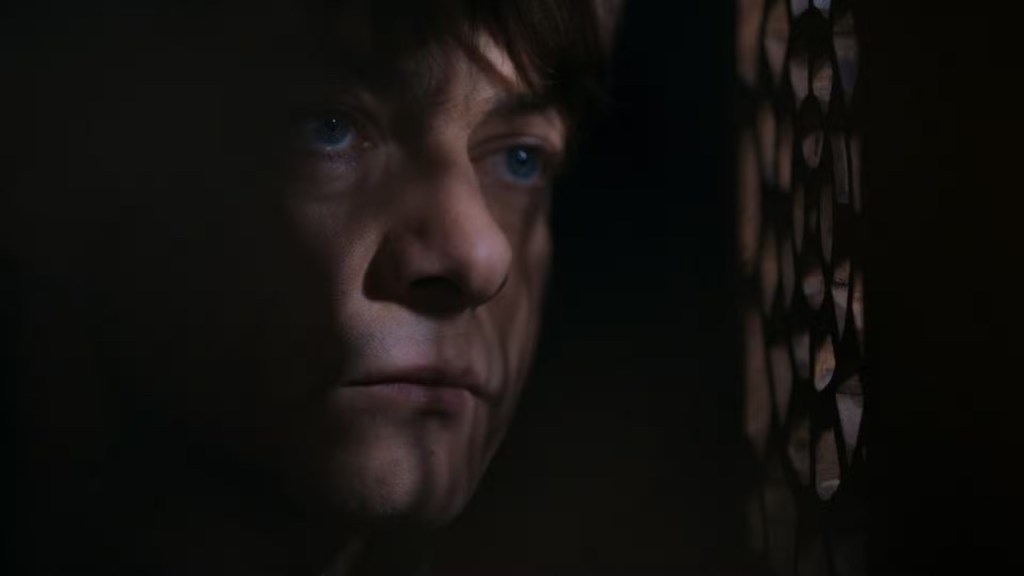
4. Misericordia (Alain Guiraudie, France)

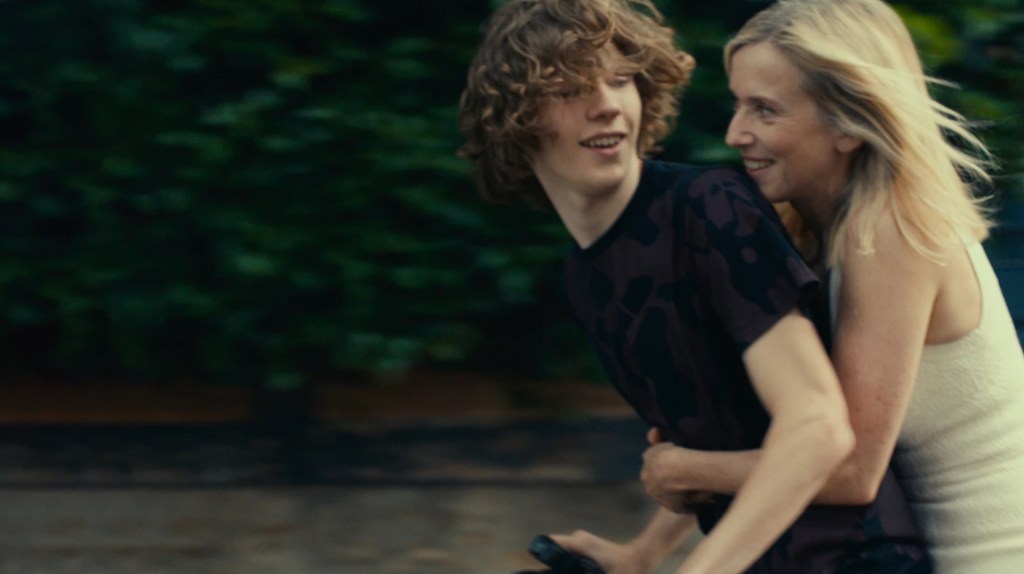
The opening car ride feels like something more: a trip to the past, or to some recess of the subconscious. The instant unease is exquisite. And as you wonder if everything is going according to plan, or if there’s even a plan at all, Guiraudie’s murder story can get away with withholding answers, sometimes indefinitely, because he’s an exceptional director. The film gets so much from its eerie autumn imagery that you can hear them hurrying to get every shot before the leaves fall. And it might slowly dawn on you that its whole world is somehow empty except for the main characters. A Freudian noir, and one that lingers.
3. Henry Fonda For President (Alex Horwath, Germany/Austria)

After playing Berlinale in 2024, Horwath’s epic video essay had a limited release last Spring and has popped up at a few festivals and cinematheques since. But as of now, it’s still unavailable to buy or rent on demand, so cheers to Le Cinema Club for giving it a week-long run online for cinephiles to catch up on one of the year’s very best. Using a beloved Old Hollywood persona to explore a century or more of American ups and downs, it’s truly an outstanding work documentary construction. A crash course in how we got here that’s not just insightful, impassioned, and enthralling, but proof of what any repertory hound could tell you: that movies, even “old” ones, exist in dialogue with the world outside the theater.
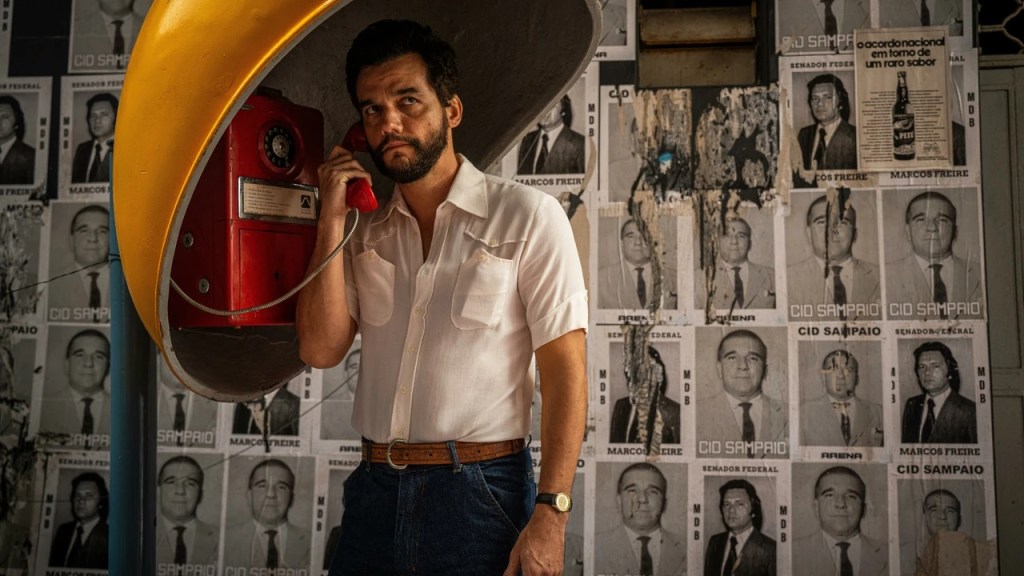
2. The Secret Agent (Kleber Mendonça Filho, Brazil/France)

The opening scene of this political thriller dances around a corpse abandoned in the road, covered up as tastefully as possible but still a rotting reminder for the public square. So you can credit Kleber Mendonça Filho for picking pungent metaphors—and one of the film’s most fruitful is “the movies” themselves, because how better to get at collective memory and scary scenes you close your eyes for? It lands. Even at two and a half hours, it doesn’t run out of revelations, and even the big swings that don’t quite work leave you productively unmoored. A key touch: its structure, which draws out the helplessness of any story that unfolds in the past tense.
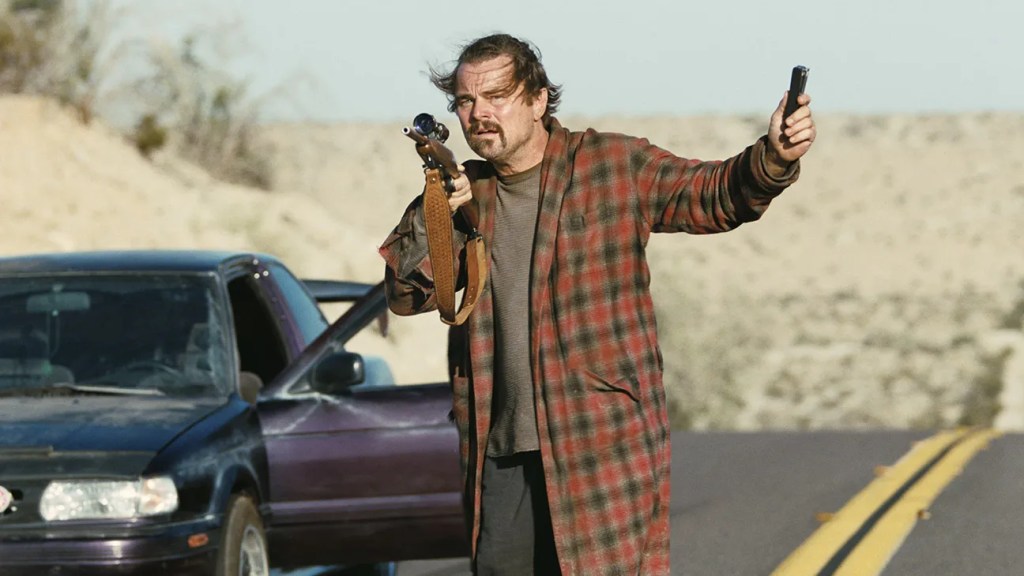
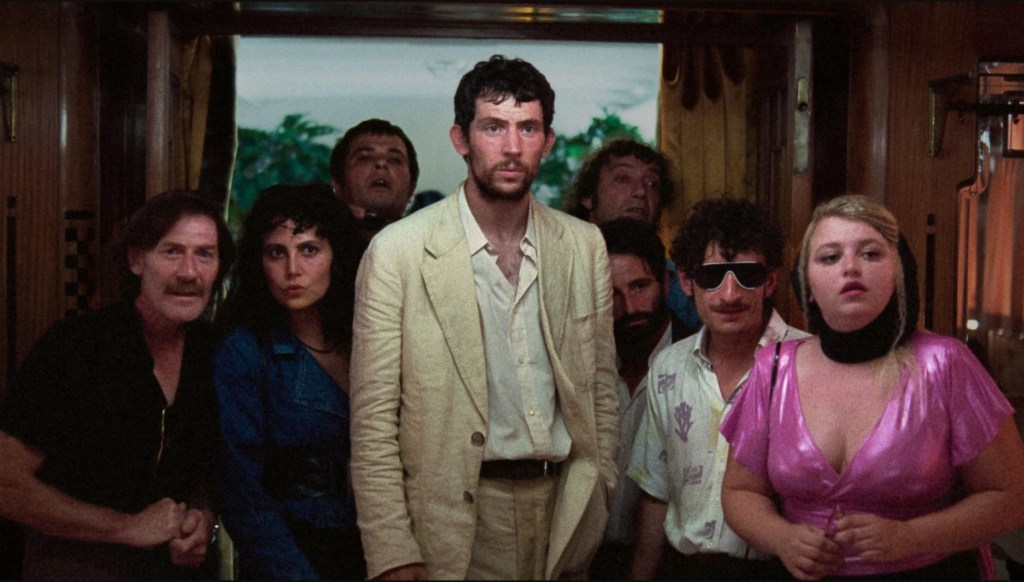
1. One Battle After Another (Paul Thomas Anderson, US)

The rare P.T. Anderson film to put it all on the surface; I suspect thornier films like The Master and Inherent Vice will have secrets to give up for much longer. But if what you see is what you get, what you get is some of the most dazzling filmmaking of the decade—a sterling case of imagination and engagement running in tandem. Its creation of an America that’s both speculative and grounded is downright tactile. There are scenes where I’d swear you can feel the California air. And from its action to its performances to its earnest hopes for Zoomers, the effect is alarming but ultimately a rush. Special notice to Sean Penn’s sexually repressed slapstick and the hilarious serenity of Benicio Del Toro. Regardless of how the Oscars go tonight, I foresee a long future of it being revived at repertory festivals here in LA. In fact, that future may have already begun.

*****

The Honor Roll: 15 more films that made movie-going worthwhile this year…

Afternoons of Solitude (Albert Serra, Spain/France)

Bugonia (Yorgos Lanthimos, US/UK)

The Empire (Bruno Dumont, France)

Hamnet (Chloe Zhao, US/UK)

I Only Rest in the Storm (Pedro Pinho, Portugal/France)

It Was Just an Accident (Jafar Panahi, Iran/France)

Kontinental ’25 (Radu Jude, Romania)

Marty Supreme (Josh Safdie, US)

The Mastermind (Kelly Reichardt, US)

No Other Choice (Park Chan-wook, South Korea)

The Phoenician Scheme (Wes Anderson, US)

Presence (Steven Soderbergh, US)

The Smashing Machine (Benny Safdie, US)

Sorry, Baby (Eva Victor, US)

Weapons (Zach Cregger, US)
Next Door to Prestige 8: Damage Control

This Oscar season, with LA recovering from the wildfires, Trumpists and tech bros taking over the federal government, and any annual event confronting whether/how to pretend that everything is normal, somewhere in the back of my mind I’ve kept a small secret.

I did not hate Emilia Perez.

Granted, I didn’t love it, and even “really liked” would be an exaggeration. But then, as now, I thought it worked just fine as pure spectacle, capable of snowplowing scrutiny if not withstanding it. Seeing it at the Nuart rather than on Netflix surely helped. And after I tottered home, I was surprised that my 3-out-of-5 Letterboxd rating was higher than anyone else’s in my network. When it got 13 Oscar nominations—a record for any non-English language film, and almost the highest of any film ever—there was chatter that the Academy was on track to make its most embarrassing self-congratulation since Crash. Going into the big night, Emilia Perez‘s Letterboxd average, derived from 430,000 online cinephiles, is 2.1 out of 5 stars—slightly below Howard the Duck.

There were reasons the backlash came swift, and before Karla Sofia Gascon’s Twitter history scuttled most of its Oscar hopes. (More on that in a minute). Indeed, a degree of skepticism was warranted right from its debut at Cannes. It’s bad enough that “visionary” has become such an overused word in movie marketing; Netflix running an ad campaign with the term “renegade auteur” was a new level of cringeworthy. Especially if that “renegade auteur” is Jacques Audiard, a director who, at least from my American perspective, always seemed like a perfectly respectable, mild, bourgeois, well-schooled, middle-of-the-road arthouse quantity, and not someone known for biting the hand that feeds. So Emilia Perez right away drew the well-earned wariness of a certain kind of festival hype: novelty acts that are sold as daring, important, groundbreaking, etc., when most of what they seek is attention. Which, for a lot of cinephiles, is irritating enough. And then there’s all the ways it felt touristic, and thus angered a lot of the people it presumed to speak for.

As far as I can tell, Audiard’s trans musical is divisive at best in the trans community. And as a film that freely uses stereotypes about Mexico, but is written and directed by Europeans, filmed in France, and stars actresses from Spain and the United States, its Academy love has pissed off our southern neighbors in a way that “The Gulf of America” could only dream of. Audiard ended up having to bow out of a Q&A in Mexico City, and a Mexican crowd-funded response film—”Johanne Sacreblu”, a musical about France starring no actual French people—is available on YouTube for any connoisseurs of cinematic trash-talking.

Suffice it say, Emilia Perez is in a much weaker position now than when the Academy nominated it, and certainly than when I went to the Nuart last fall. Even the prize for Best International Film is up in the air. But if I’ve lingered on a film that doesn’t make my top 10, it’s because it isn’t every Oscar night that a streaming service causes such a ruckus. Or offers such an array of case studies.

For one, there’s a serendipitous lesson in how Emilia Perez is up for a record number of Oscars the same weekend that Francis Ford Coppola’s Megalopolis was up for the Golden Raspberries, when any critical consensus on the two (or lack thereof) doesn’t quite jibe with that polarity. Both arrived from Cannes with a carnival barker’s pitch of bold artists doing things that just aren’t done. Both were derisively excerpted on social media as examples of crazy, self-evidently bad ideas for a movie—never mind that those excerpts are much more natural, and more self-aware, in their full context. And neither can be sensibly championed without heavy asterisks.

But the question of why Emilia Perez fit the Academy while Megalopolis attracted the Razzies is a brand proposition worth mulling, and may have something to do with the fact that Megalopolis a) was doomed from the start to lose a lot of money, b) is far off from any notion of contemporary trendiness, and c) is close enough to Hollywood that charges of pretension and egomania stick to it more than they would to a “foreign” “art film”. (In defending Megalopolis against accusations of self-indulgence, Time critic Stephanie Zacharek asked, “haven’t we had enough movies that are audience-indulgent?” The question was rhetorical—and Deadpool & Wolverine hadn’t even come out yet).

Megalopolis isn’t in my top 10 either. But it comes a lot closer than Emilia Perez and is already lasting longer. Despite the negative reviews, its unlikely fusions—silent-era techniques and CGI, personal essay films and massive blockbusters—are a heady, stimulating response to a timid cinematic ecosystem. Jonathan Rosenbaum once spoke of the importance of “the cinema of personal obsession.” And my own preference, hardly unique, for Megalopolis over Emilia Perez comes from how Coppola’s film feels genuinely obsessive while Audiard’s feels like the work of a social dilettante.

And last but not least, there’s the politics of the Karla Sofia Gascon affair. With her nomination, she became the first openly trans actress to be up for an Oscar. But if Emilia Perez was divisive before, it became a PR catastrophe after Gascon’s old Tweets resurfaced: a cascade of toxic reactionary sludge about everything from Muslim immigrants to China to (of all things) the Academy’s own recent diversity efforts. Netflix retooled their campaign, scrubbing her from their For Your Consideration ads, and Audiard distanced himself. It wasn’t until this week that Netflix confirmed she’d be attending the ceremony. If her nomination had been meant to represent something simple—a trailblazer—any symbolism of the saga is now a good deal messier, but so much more indicative of our times that maybe the sanest reaction is to just want the whole damn thing to be over with. (I suspect that’s where a lot of the Academy is). As clusterfucks go, it was a fitting coda to 2024: what was intended as a feel-good but mostly toothless left-of-center moment got caught up in the western world’s lurch towards nativism, opening up a chaotic power vacuum in the process.

At the Oscars at least, that power vacuum looks likely to be filled by Sean Baker’s Anora, which picked an ideal moment for a burlesque comedy about how the American dream is more accessible to Russian oligarchs. Conclave, which gathered momentum at the BAFTAs and the SAG Awards, could be a spoiler as the more traditional candidate. A common line on The Brutalist was that people were sold on the first half but colder on the second.

I could say the same for Anora. For that matter, I could say the same about such festival hits as All We Imagine As Light and Evil Does Not Exist: that the launch and the buildup were more satisfying than the destination. Which is fair enough, I suppose. In early 2025, compiling a list of the “best of” anything for the last 12 months felt a bit like salvage. But worthy contenders abounded, and the list below has films I value as much anything to come out this decade—a mixture of old verities and new experiments, festival riches and intelligent pop, big statements and miniaturist gems, familiar icons and young upstarts.

As we accelerate into what’s already a new season in hell, “don’t lose your capacity to feel shock” is a good piece of advice. “Take comfort in the things you don’t hate” is another.

My Top 10 of 2024:

10. All We Imagine As Light (Payal Kapadia, India)

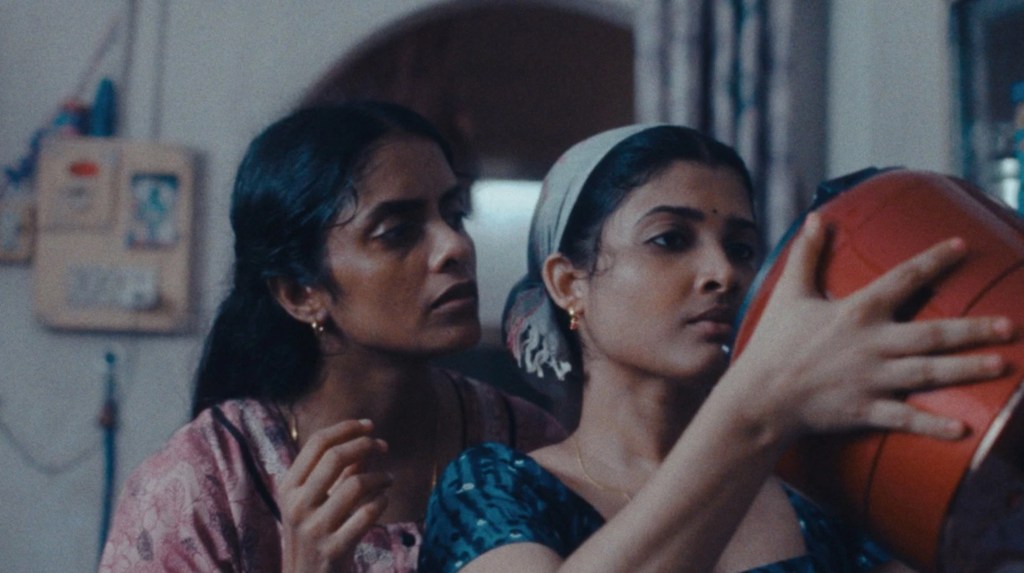
Payal Kapadia’s feature debut landed at or very near the top of a lot of critic’s lists. So take its relatively low placement on mine less as certainty that we have a new arthouse classic than that we have a new director (one under 40) who’s capable of one. There’s so much in All We Imagine As Light to love, and Kapadia’s eye is undeniable. She gets beautiful, naturalistic performances from her cast. She builds suspense without leaning on sensationalism. She makes the personal political, and vice-versa. And she turns “light” into such a lucid running metaphor that she hardly needs to put it into a speech: the fluorescent or overcast mediation of the crowded city, paired with music that evokes neither happiness nor melancholy, but a kind of serenity.

9. The Brutalist (Brady Corbet, US/UK)

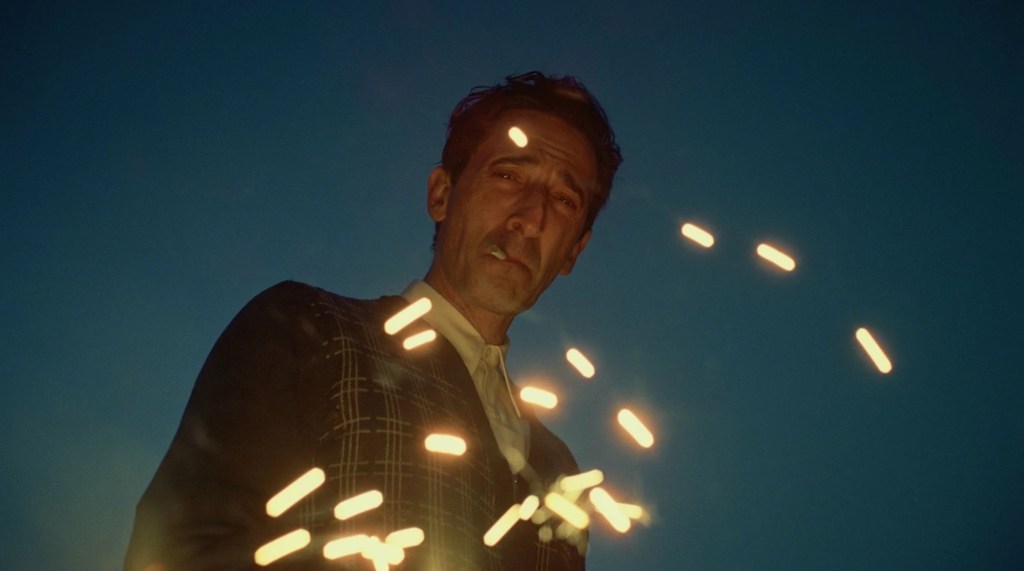
Does Corbet touch a hot-button issue without taking a clear stance on it? Is the third-act shock too much? Are its characters remotely as well-rendered as its most elaborate shots? Did they set out to film a magnum opus before they’d fully conceived of one? In short, is Corbet the Director let down by Corbet the Writer, never mind Corbet the Interview Subject? It’s been a while since we’ve had a swing at an American epic where such questions were worth debating, and admittedly not all the answers trend in Corbet’s direction. But there are reasons to favor The Brutalist beyond the 70mm principle of the thing. The narrative hook and sheer physical craft of it all. The transporting defamiliarization of America. The squirming, implacable sense of being an unwanted stranger. (Casting Adrien Brody has made people leap toward The Pianist, but a closer Polanski comparison is The Tenant). And most of all, the surprising ways that certain themes get left suspended—including by the epilogue, whose final touch projects back on the movie, opens the context, and niggles away at you.

8. A Traveller’s Needs (Hong Sang-soo, South Korea)

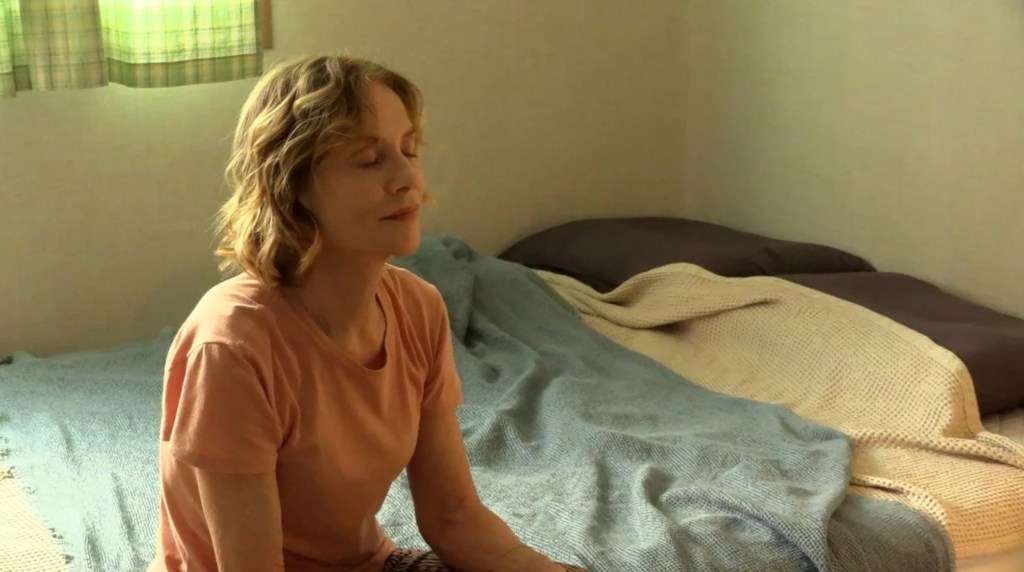
“You’ll love your true emotion expressed in a foreign language.” Moving back and forth between three languages—four, if you count music—Hong Sang-soo’s latest gets the most out of its multilingual nature, serving up a story about connections and separations, about perceptions of strangers, about what people hide or reveal. Charming and non-academic for a director who isn’t always, and buoyed by a poker-faced Isabelle Huppert, it adds another sneaky installment to his sketchbook of the big themes that are lying around in plain sight. “Dandelions” and “magpies” for sure.

7. Hard Truths (Mike Leigh, UK)

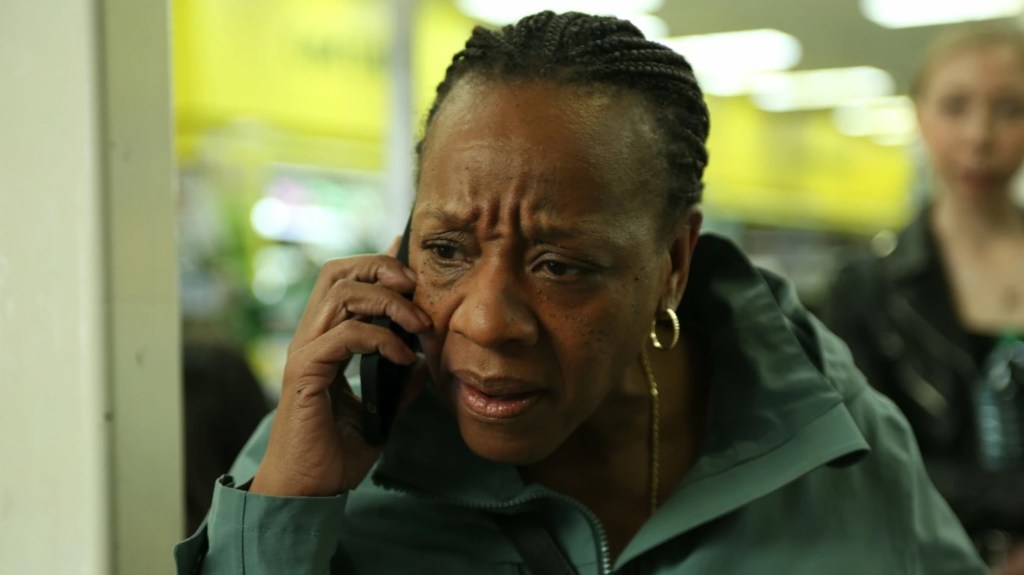
It’s a mystery why so many festivals passed on the new Mike Leigh film when you’d think he’d be set for life. True, it asks you to spend 100 minutes in the orbit of the most disagreeable wretch in Britain—but the trip is abrasive, funny, and ultimately heartbreaking in all the right ways. As the antiheroine hurtles judgmental invective at everyone in her life, at times she even makes a point that’s no less correct, or more incorrect, than one of Leigh’s desperate optimists. But Leigh’s hard truth, as ever, is that happiness is what you actively make it. And in Marie Jean-Baptiste, we got an Oscar-level acting showcase that’s less about surface transformation than revealing something human. The Academy passed too.

6. Last Summer (Catherine Breillat, France)

Catherine Breillat’s return to the director’s chair finds her in a less transgressive mode—at least, as much as a drama about sexual impropriety could allow. But if explicitness is scaled back, implications are not, and despite its pared-down plot they may be stuck in your mind the next day. Whether any character is sympathetic keeps twisting, scrambling any labels or messaging while staying totally coherent. One irony of which is that, while Breillat has controversially defined herself as “anti-MeToo”, she’s offered an unsettling, crystalline rendering of the conditions—the hypocrisy, the denial, the protection of one’s own—in which the dam burst.

5. I Saw the TV Glow (Jane Schoenbrun, US)

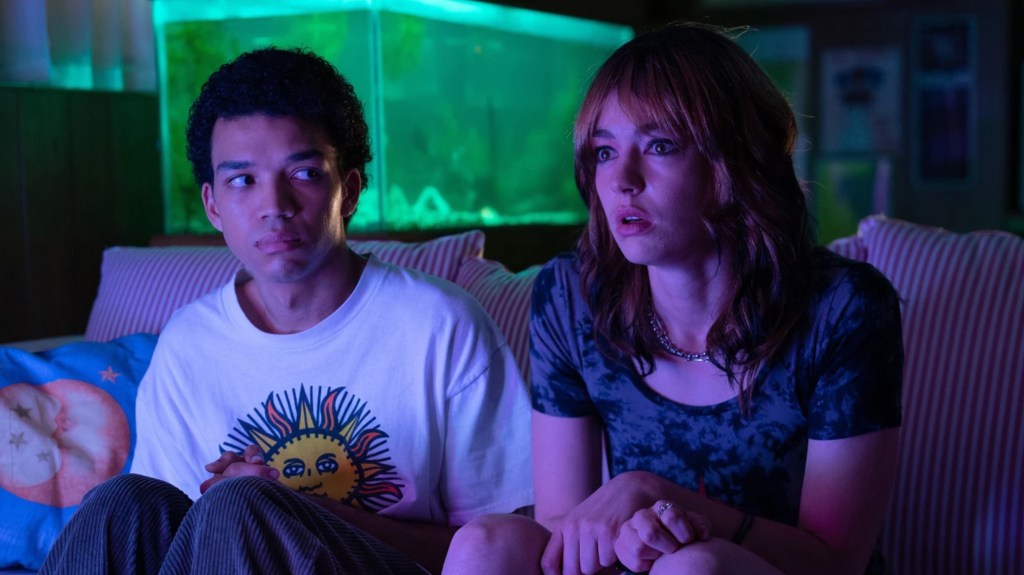
A true scare: the 1990s—their Lisa Frank colors, Smashing Pumpkins needle-drops, pre-VOD television, pre-internet fandom—are now fit for a period piece. But Jane Schoenbrun finds such fresh, vivid use for them. This is like if Todd Haynes did a Halloween sequel: suburban horror where a Queer-coded gaze picks up undercurrents beneath “normal” culture. Tragic and genuinely freaky. And unlike a lot of the current crop of “elevated horror”, it’s not elevated over moving fast and having fun.

4. Furiosa: A Mad Max Saga (George Miller, Australia/US)

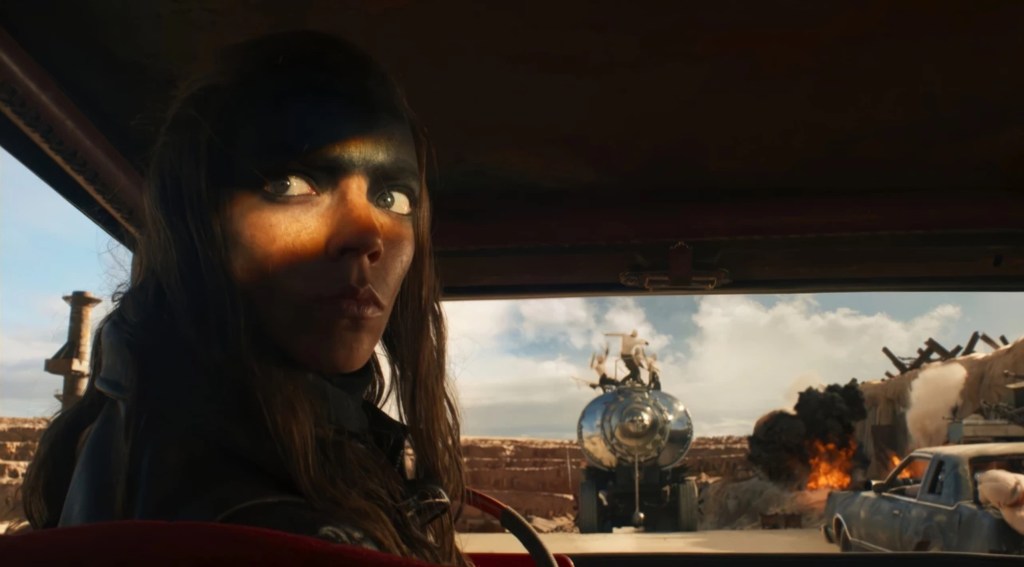
In its play for non-stop action, Fury Road left context and psychology mostly just gestured at. But the word “saga” isn’t in this prequel’s title for show: Furiosa feels like a history being recounted more than a story being told, and all its methodical world-building is a true twist for a series whose M.O. was always to drop you into the middle of the most gonzo shit imaginable. Which is not to say either method is better, just that Miller is trying something new and pulling it off. The action is superb. The arc is meaningful. No franchise blockbuster this year did better by any metric, except box office.

3. Grand Tour (Miguel Gomes, Portugal)

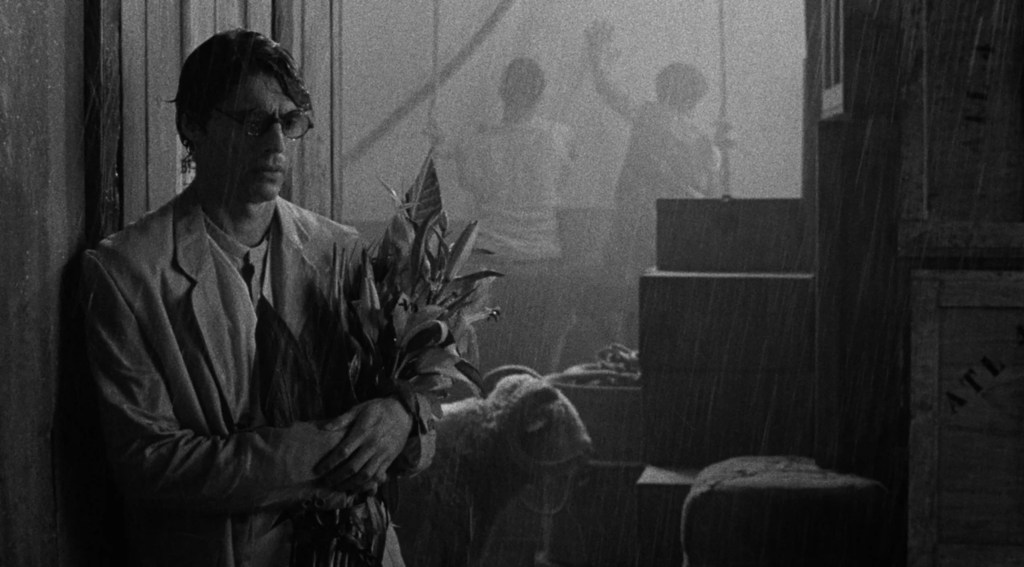
Few movie experiences of 2024 were as bewitching as being a stowaway on Miguel Gomes’ ship. The dissolution of barriers is exquisite: Grand Tour toggles between dream and reality, past and present, black-&-white and color, Sternbergian studio sets and documentary footage, and a half dozen all-knowing narrators. And it does so without obeying any logic but its own, with an utterly focused continuity of purpose. Perhaps it can collapse such planes of existence because “Molly” and “Mr. Abbott” are an eternal story on all of them. And Gomes understands better than most that being “a story” (no more and no less) encompasses a lot.

2. La Chimera (Alice Rohrwacher, Italy)

Rohrwacher excels at a kind of casual, earthy magic. The naturalistic photography feels like all its beauty was simply found, that none had to be juiced by filmmakers, and that shots were determined by the position of the sun. But “natural” is not the same as “realistic”, and the enchantment of La Chimera is its certainty that something extraordinary exists. As romantic metaphors go, wondering what treasure is undiscovered beneath your feet is a good one. As “outer” and “inner” blur together, the film chases it to a conclusion more tragic than expected. But no less honest. Or magical.

1. The Beast (Bertrand Bonello, France)

Bertrand Bonello’s latest is one of those films where a big part of the suspense is what on earth it’s all about. So ideally, you should go in knowing nothing—just curiosity about why there are those of us who found it the movie of the year. But if you need a pitch, it’s a time-bending sci-fi romance in a French New Wave vein; one virtue is that it gives an idea of what it must have been like to see something like Alphaville or La Jetée when it was new, before the future became the past. But the true arc of its love story belongs to love itself, and only romanticism could power its ultimate sense of horror. Bonus: intentional digital tics that make watching it at home on your streaming system uncannily appropriate.

*****

The Honor Roll: 15 more films that made movie-going worthwhile this year…

Anora (Sean Baker, US)

Caught By the Tides (Jia Zhangke, China)

Chime (Kiyoshi Kurosawa, Japan)

Evil Does Not Exist (Ryusuke Hamaguchi, Japan)

The First Omen (Arkasha Stevenson, US)

Here (Robert Zemeckis, US)

Inside the Yellow Cocoon Shell (Phạm Thiên Ân, Vietnam/Singapore)

It’s Not Me (Leos Carax, France)

Janet Planet (Annie Baker, US)

Love Lies Bleeding (Rose Glass, US)

Megalopolis (Francis Ford Coppola, US)

Nickel Boys (RaMell Ross, US)

No Other Land (Basel Adra, Hamdan Ballal, Yuval Abraham and Rachel Szor, Palestine/Norway)

A Real Pain (Jesse Eisenberg, US/Poland)

The Substance (Coralie Fargeat, US/UK/France)

THE ROUND-UP: Ten Contenders

The Round-Up is a collection of capsule reviews for new releases that filled up my notebook but never got a full dive and will miss my year-in-review.

Anora (Sean Baker)

Last year, few pitches were more enticing than a fusion of 30s Hollywood and 70s Hollywood. From the former, Anora takes a screwball romance and a view of obscene wealth that’s somewhere between satire and fairytale. From the latter, it gets grit, carnality, disillusionment. And for the first hour or so, it just might be the best filmmaking of 2024—a year which Baker can claim without any deference to the 30s or the 70s or any time but his own. But the turn it takes halfway is a hazard. The screen becomes busier (more action! more comedy!) while most of what’s compelling about the film slows down. And the last scene, truthful though its point may be, leaves an odd aftertaste. It’s the least explicit sex scene in a film that’s not exactly shy. But for the first time, it feels like an exploitation artist is jerking a response.

✬✬✬✬✩

*****

Janet Planet (Annie Baker)

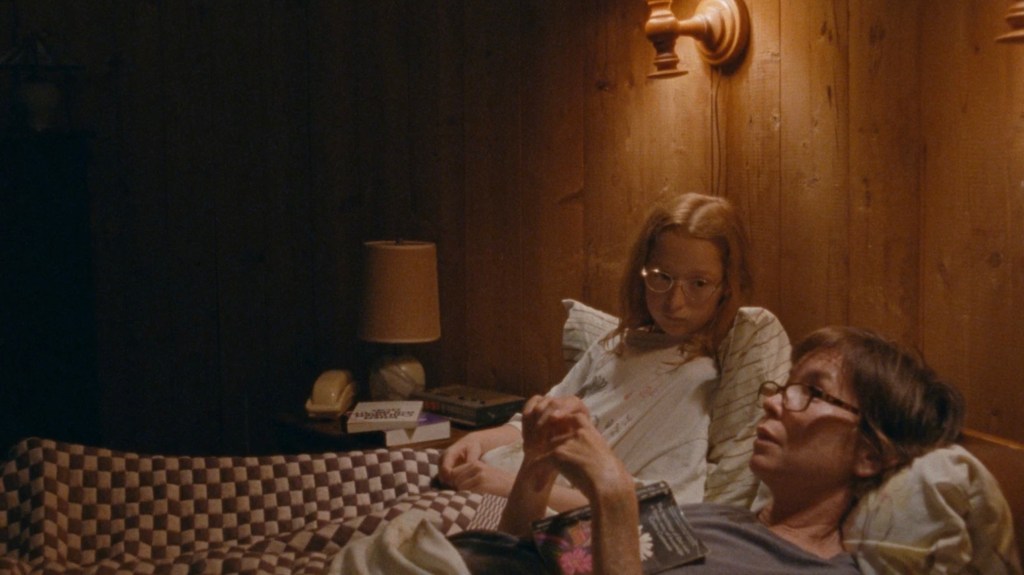
At the height of Oscar season, with showy, fussy performances coming out of the woodwork, one of 2024’s best films is a reminder that acting can be so unaffected that it hardly seems like acting. This kooky coming-of-age photo album—Lady Bird on the set of The Wicker Man?—has warmth enough to suggest that no American is too far removed from its unconventional design for living, or some equivalent. It finds an askew but organic visual scheme to match its subjects. It’s smart enough not to get too explicit about its point; like its heroine, the viewer is just dropped in and invited to observe. And if it’s a lot like Aftersun but not quite as potent, it also ends where Aftersun should have.

✬✬✬✬✩

*****

Civil War (Alex Garland)

The dissonance was there in the marketing: trailers that hawked a terrifying premonition of our not-too-distant future, while also promising the “best combat ever”. I was curious if it was as crass and exploitative as all that, and sure enough it starts producing irritants within the first minute. But when it zooms in on its characters and focuses on the role of media image-makers during civil unrest, it’s not bad and pretty interesting—possibly even self-aware about its own cold technical expertise. When it tries to rattle you with half-assed speculative fiction, it really is rather vapid. God help the needle drops.

✬✬✬✩✩

*****

The Apprentice (Ali Abbasi)

To some extent, any dramatization was bound to fizzle for the same reason Ron DeSantis did: Trump has an authentic mania that can’t be faked. Still, even if taken as a foolhardy big swing, it’s hard to say what Abbasi’s film is trying to accomplish. Certainly there’s value in examining Trump’s origins; it helps show the method to the madness for anyone who’s wondered if the unhinged tweets and election denialism are a thought-out strategy. But its insights are cursory, and doused in cartoon sarcasm. Which it seems to think is new news—and thus carries itself with the swagger of unearned scandal.

✬✬✩✩✩

*****

Love Lies Bleeding (Rose Glass)

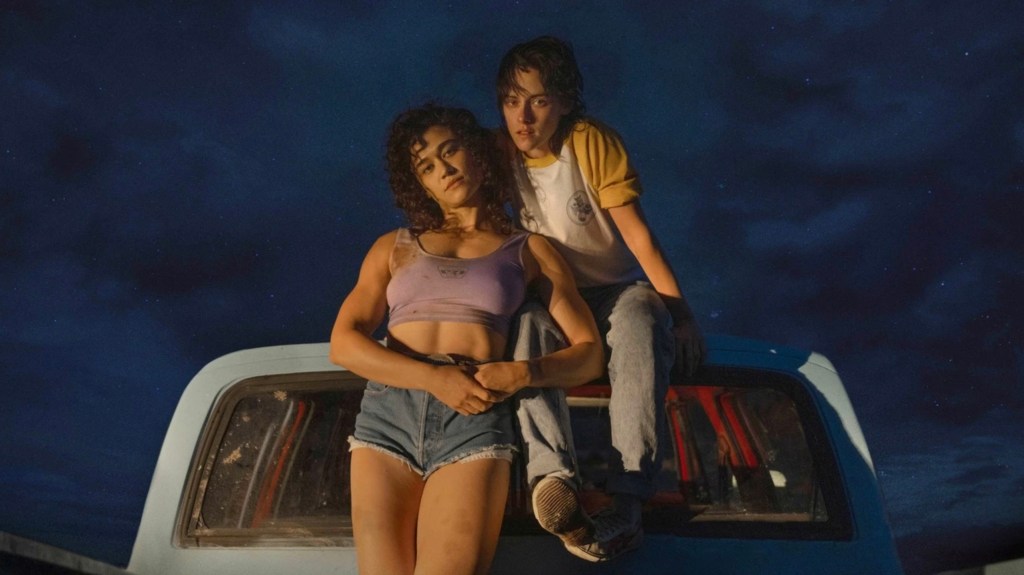
John Waters’s favorite film of 2024, and he’s not trolling: this neo-drive-in noir about self-described “muscle chicks” in a frenzy of steroids, gay sex, and murder has more cinematic energy and redeeming social value than most of this year’s Oscar nominees. So you can tease out its topsy-turvy gender pandemonium, and the way its heroines have to adopt the right amount of masculinity to neither take shit nor turn into monsters. Or you can hold on to the year’s most unpredictable thriller. For John Waters, do both. Even if its climactic big swing is either too insane or just insane enough. Not sure myself.

✬✬✬✬✩

*****

Here (Robert Zemeckis)

Considering the built-in limitations of its gimmick, this has dazzling spectacle and artful staging from the start. Splitting the difference between academic and sentimental, and not a home run as either, it telegraphs its beats shamelessly and may leave you with the glum feeling that it’s impossible to live, love, or lose in any way that isn’t a total cliche. But it’s neither insincere nor vapid, and don’t mistake it for tidy. By the time Alan Silvestri is ladling on the final syrup, it’s up for debate whether it’s a heartwarming family story, a bleak catalog of problems we’ll never fix, or a surrender to quintessentially American maladies. Probably all of the above. And an inventive use of new tech to boot. One in which you can sense a team engaging with the pros and cons and getting genuinely energized by the possibilities.

✬✬✬✬✩

*****

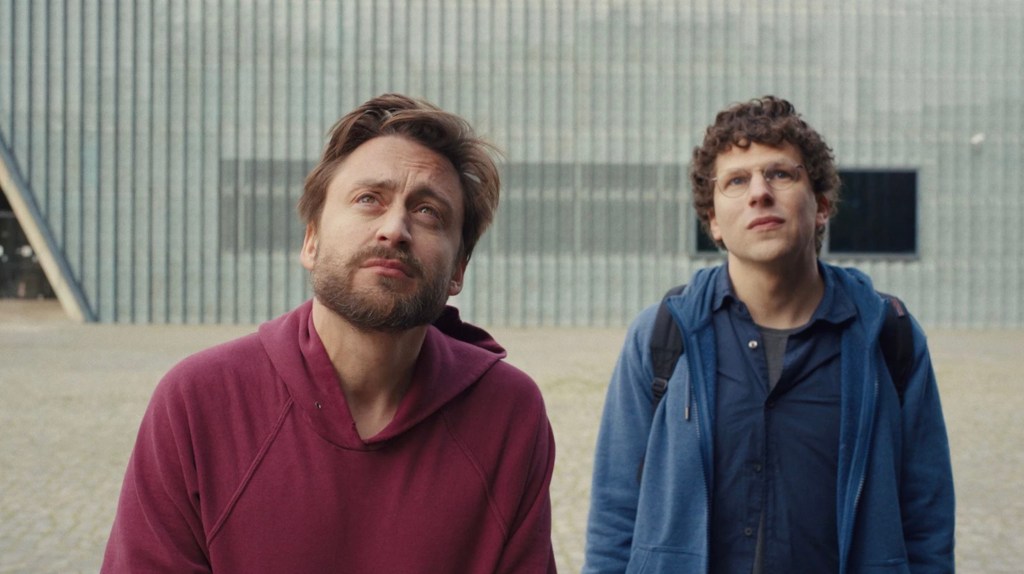
A Real Pain (Jesse Eisenberg)

The comically uptight and the comically irresponsible—the archetypes still work, and always will. Especially if you have Eisenberg (uptight in his sleep), and Culkin, who has strong Oscar odds due to a terrific performance, an established body of work, and good old-fashioned category fraud. (He’s a co-lead, and don’t let the Academy tell you otherwise). Granted, their odd-couple act may simple hit a plateau and hang there. But themes are invited to hang with it: American identity, the Holocaust/antisemitism from a third-generation perspective, and comedy as a defense mechanism for both individuals and a group. Cheers to an ending that, while appearing almost bathetically simple, has thorny, free-floating implications for all of the above.

✬✬✬✬✩

*****

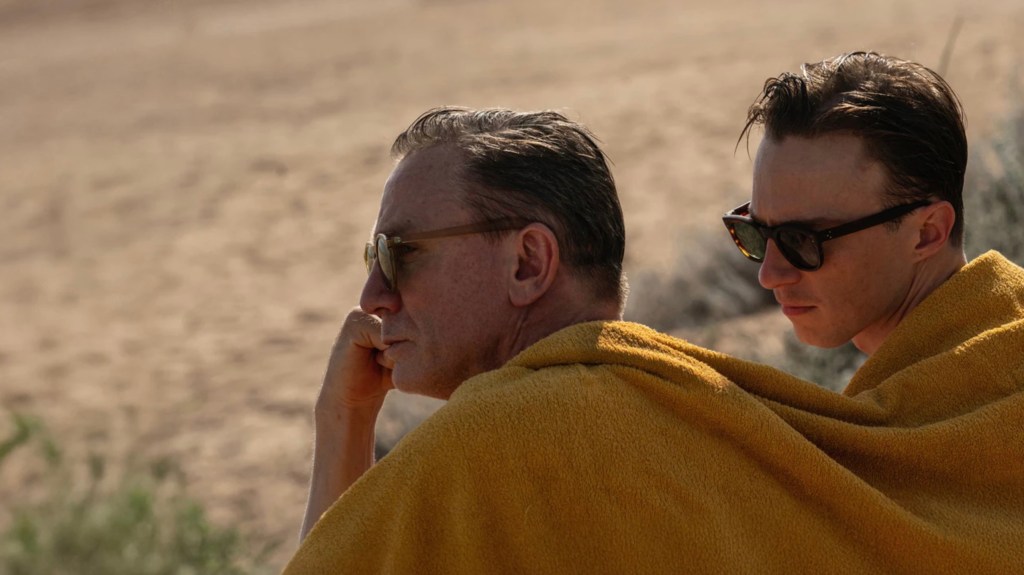
Queer (Luca Guadagnino)

Daniel Craig must have the most interesting post-Bond career of any former 007—no one else even comes close. Still, I can see why Queer had a hard time generating urgency at the box office and with the Academy. Its first half is weighed down, and in a sure sign of social progress, a Hollywood star doing explicit gay sex scenes isn’t the scandal it was in the days of Brokeback Mountain. But Queer is lived-in where Brokeback felt play-acted, and its aesthetic vividly renders gay outlawry as both a colorful wonderland and an exile to the gutter. A mixed bag in total, but Craig is deeply moving. Love is a drug.

✬✬✬✬✩

*****

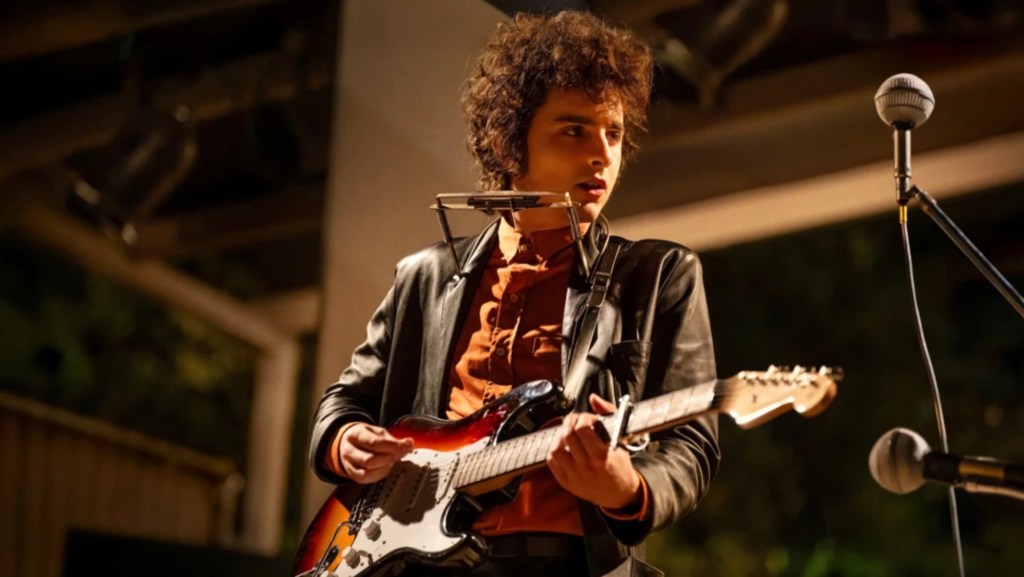
A Complete Unknown (James Mangold)

As a skeptic of both musician biopics and Timothee Chalamet, the first half brought down my defenses and the second put them back up. The opening act finds a nice tension between the normal biopic grammar (witnesses standing agape at a Great Man) and unease at the Great Man’s careerism. It’s at its best, and its most complex, when dangling his sincerity as a question mark even as it turns the concert hall spotlight into a halo. But it still winds up conventional print-the-legend stuff in the end, neither factual nor particularly imaginative, just a glossy diorama touched by Bohemian Rhapsody-isms that were unbecomingly corny of Queen—a band where corn was always the point. And compared to I’m Not There, it’s not only formulaic/pious, but politically absent-minded.

✬✬✬✩✩

*****

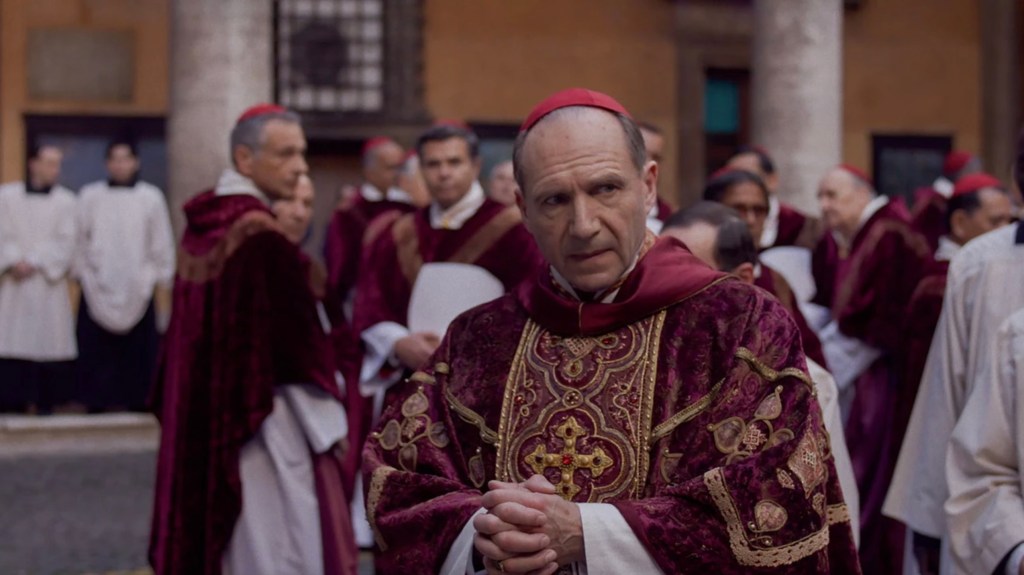
Conclave (Edward Berger)

Considering that Conclave‘s subjects include the sins of Catholic leadership and what role the church should play in the political climate of 2024, the fact that it’s caused less of a stir than The Da Vinci Code makes me wonder if its key line comes when one cardinal tells another, “The trick is to offend no one.” That is, it generates more smoke than fire. But you get a crackling procedural, full of intrigue and fine acting, and at least one genuinely cinematic idea: the way the outside world is implied but never shown. Its final twist is indeed a lot. But it certainly risks offending someone—possibly multiple someones, for multiple reasons. And it justifies the final shot.

✬✬✬✩✩

*****