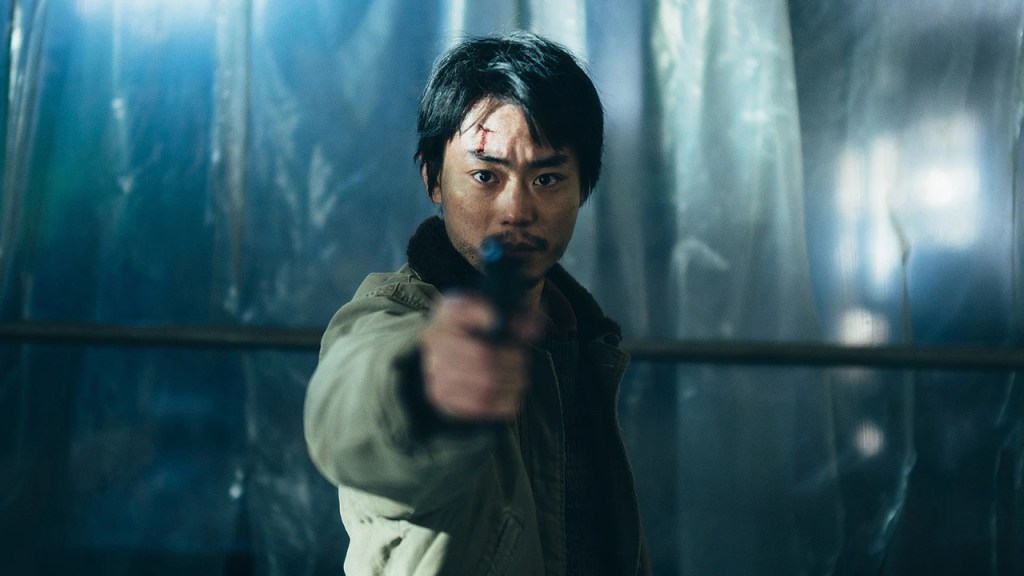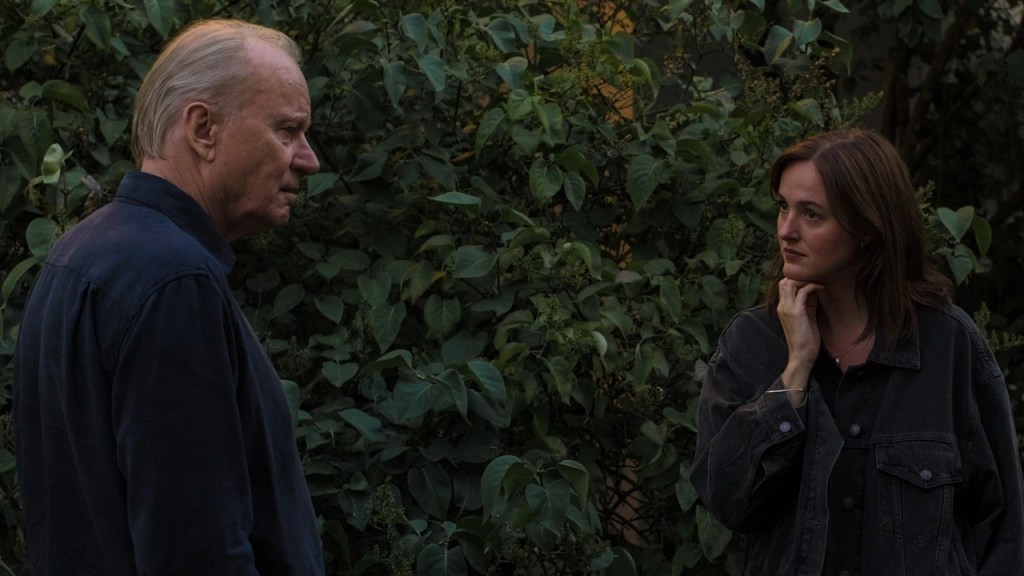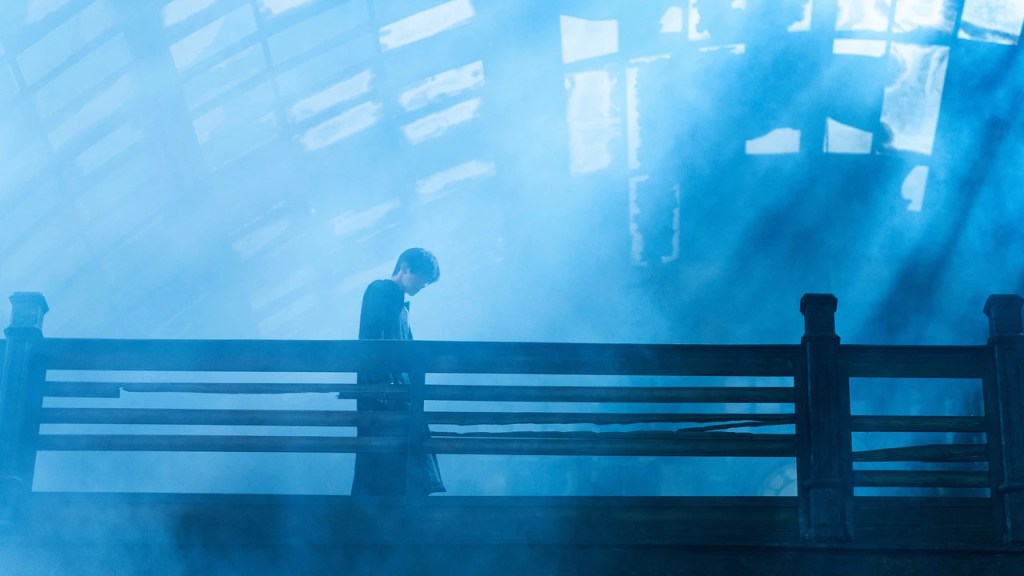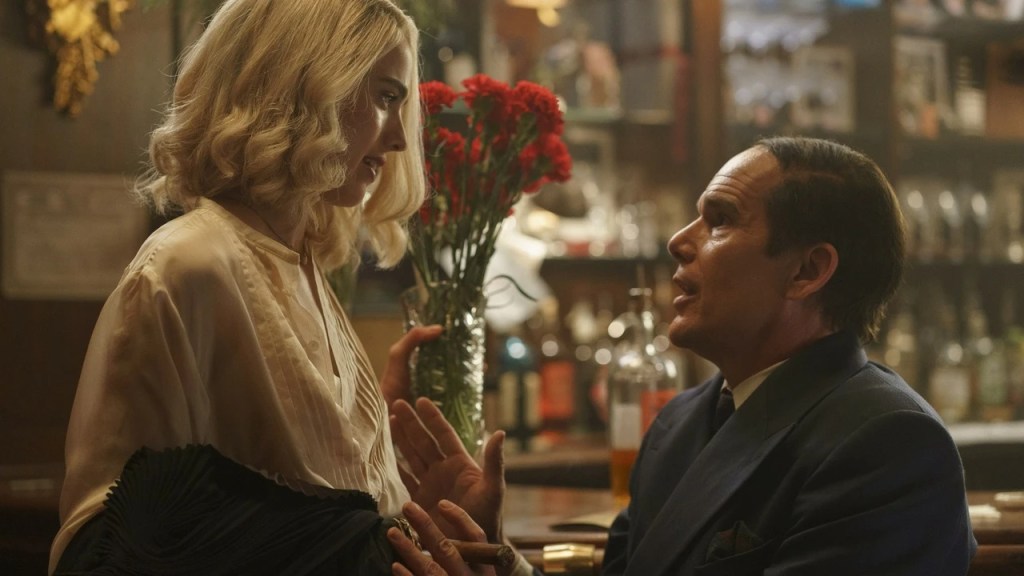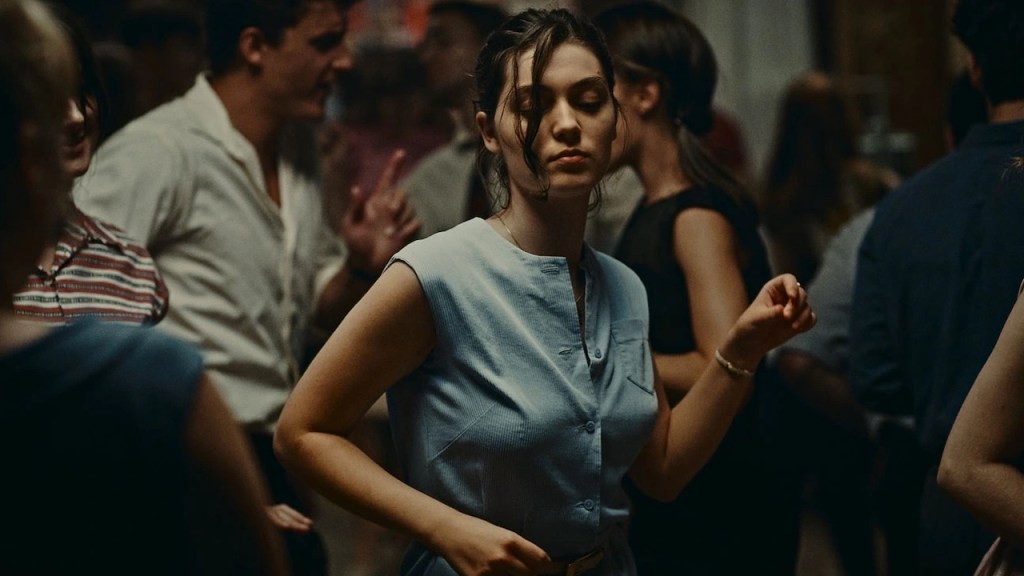
Next Door to Prestige 8: Damage Control

This Oscar season, with LA recovering from the wildfires, Trumpists and tech bros taking over the federal government, and any annual event confronting whether/how to pretend that everything is normal, somewhere in the back of my mind I’ve kept a small secret.

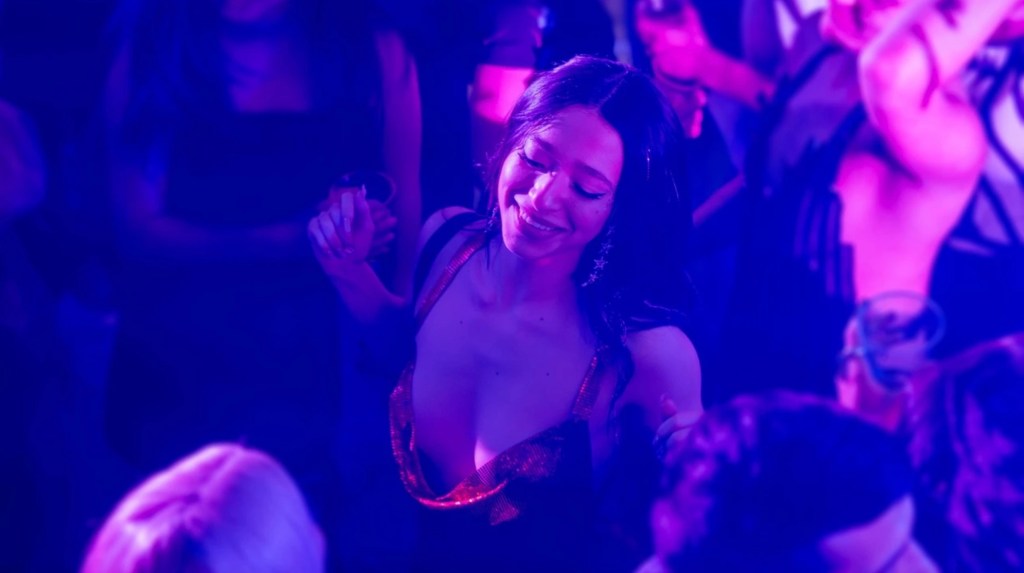
I did not hate Emilia Perez.

Granted, I didn’t love it, and even “really liked” would be an exaggeration. But then, as now, I thought it worked just fine as pure spectacle, capable of snowplowing scrutiny if not withstanding it. Seeing it at the Nuart rather than on Netflix surely helped. And after I tottered home, I was surprised that my 3-out-of-5 Letterboxd rating was higher than anyone else’s in my network. When it got 13 Oscar nominations—a record for any non-English language film, and almost the highest of any film ever—there was chatter that the Academy was on track to make its most embarrassing self-congratulation since Crash. Going into the big night, Emilia Perez‘s Letterboxd average, derived from 430,000 online cinephiles, is 2.1 out of 5 stars—slightly below Howard the Duck.

There were reasons the backlash came swift, and before Karla Sofia Gascon’s Twitter history scuttled most of its Oscar hopes. (More on that in a minute). Indeed, a degree of skepticism was warranted right from its debut at Cannes. It’s bad enough that “visionary” has become such an overused word in movie marketing; Netflix running an ad campaign with the term “renegade auteur” was a new level of cringeworthy. Especially if that “renegade auteur” is Jacques Audiard, a director who, at least from my American perspective, always seemed like a perfectly respectable, mild, bourgeois, well-schooled, middle-of-the-road arthouse quantity, and not someone known for biting the hand that feeds. So Emilia Perez right away drew the well-earned wariness of a certain kind of festival hype: novelty acts that are sold as daring, important, groundbreaking, etc., when most of what they seek is attention. Which, for a lot of cinephiles, is irritating enough. And then there’s all the ways it felt touristic, and thus angered a lot of the people it presumed to speak for.

As far as I can tell, Audiard’s trans musical is divisive at best in the trans community. And as a film that freely uses stereotypes about Mexico, but is written and directed by Europeans, filmed in France, and stars actresses from Spain and the United States, its Academy love has pissed off our southern neighbors in a way that “The Gulf of America” could only dream of. Audiard ended up having to bow out of a Q&A in Mexico City, and a Mexican crowd-funded response film—”Johanne Sacreblu”, a musical about France starring no actual French people—is available on YouTube for any connoisseurs of cinematic trash-talking.

Suffice it say, Emilia Perez is in a much weaker position now than when the Academy nominated it, and certainly than when I went to the Nuart last fall. Even the prize for Best International Film is up in the air. But if I’ve lingered on a film that doesn’t make my top 10, it’s because it isn’t every Oscar night that a streaming service causes such a ruckus. Or offers such an array of case studies.

For one, there’s a serendipitous lesson in how Emilia Perez is up for a record number of Oscars the same weekend that Francis Ford Coppola’s Megalopolis was up for the Golden Raspberries, when any critical consensus on the two (or lack thereof) doesn’t quite jibe with that polarity. Both arrived from Cannes with a carnival barker’s pitch of bold artists doing things that just aren’t done. Both were derisively excerpted on social media as examples of crazy, self-evidently bad ideas for a movie—never mind that those excerpts are much more natural, and more self-aware, in their full context. And neither can be sensibly championed without heavy asterisks.

But the question of why Emilia Perez fit the Academy while Megalopolis attracted the Razzies is a brand proposition worth mulling, and may have something to do with the fact that Megalopolis a) was doomed from the start to lose a lot of money, b) is far off from any notion of contemporary trendiness, and c) is close enough to Hollywood that charges of pretension and egomania stick to it more than they would to a “foreign” “art film”. (In defending Megalopolis against accusations of self-indulgence, Time critic Stephanie Zacharek asked, “haven’t we had enough movies that are audience-indulgent?” The question was rhetorical—and Deadpool & Wolverine hadn’t even come out yet).

Megalopolis isn’t in my top 10 either. But it comes a lot closer than Emilia Perez and is already lasting longer. Despite the negative reviews, its unlikely fusions—silent-era techniques and CGI, personal essay films and massive blockbusters—are a heady, stimulating response to a timid cinematic ecosystem. Jonathan Rosenbaum once spoke of the importance of “the cinema of personal obsession.” And my own preference, hardly unique, for Megalopolis over Emilia Perez comes from how Coppola’s film feels genuinely obsessive while Audiard’s feels like the work of a social dilettante.

And last but not least, there’s the politics of the Karla Sofia Gascon affair. With her nomination, she became the first openly trans actress to be up for an Oscar. But if Emilia Perez was divisive before, it became a PR catastrophe after Gascon’s old Tweets resurfaced: a cascade of toxic reactionary sludge about everything from Muslim immigrants to China to (of all things) the Academy’s own recent diversity efforts. Netflix retooled their campaign, scrubbing her from their For Your Consideration ads, and Audiard distanced himself. It wasn’t until this week that Netflix confirmed she’d be attending the ceremony. If her nomination had been meant to represent something simple—a trailblazer—any symbolism of the saga is now a good deal messier, but so much more indicative of our times that maybe the sanest reaction is to just want the whole damn thing to be over with. (I suspect that’s where a lot of the Academy is). As clusterfucks go, it was a fitting coda to 2024: what was intended as a feel-good but mostly toothless left-of-center moment got caught up in the western world’s lurch towards nativism, opening up a chaotic power vacuum in the process.

At the Oscars at least, that power vacuum looks likely to be filled by Sean Baker’s Anora, which picked an ideal moment for a burlesque comedy about how the American dream is more accessible to Russian oligarchs. Conclave, which gathered momentum at the BAFTAs and the SAG Awards, could be a spoiler as the more traditional candidate. A common line on The Brutalist was that people were sold on the first half but colder on the second.

I could say the same for Anora. For that matter, I could say the same about such festival hits as All We Imagine As Light and Evil Does Not Exist: that the launch and the buildup were more satisfying than the destination. Which is fair enough, I suppose. In early 2025, compiling a list of the “best of” anything for the last 12 months felt a bit like salvage. But worthy contenders abounded, and the list below has films I value as much anything to come out this decade—a mixture of old verities and new experiments, festival riches and intelligent pop, big statements and miniaturist gems, familiar icons and young upstarts.

As we accelerate into what’s already a new season in hell, “don’t lose your capacity to feel shock” is a good piece of advice. “Take comfort in the things you don’t hate” is another.

My Top 10 of 2024:

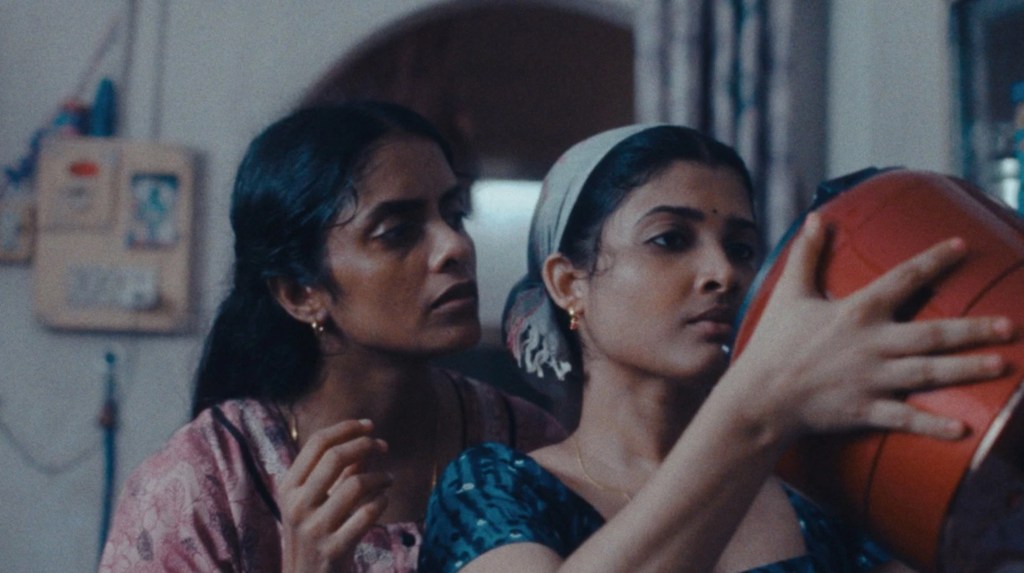
10. All We Imagine As Light (Payal Kapadia, India)

Payal Kapadia’s feature debut landed at or very near the top of a lot of critic’s lists. So take its relatively low placement on mine less as certainty that we have a new arthouse classic than that we have a new director (one under 40) who’s capable of one. There’s so much in All We Imagine As Light to love, and Kapadia’s eye is undeniable. She gets beautiful, naturalistic performances from her cast. She builds suspense without leaning on sensationalism. She makes the personal political, and vice-versa. And she turns “light” into such a lucid running metaphor that she hardly needs to put it into a speech: the fluorescent or overcast mediation of the crowded city, paired with music that evokes neither happiness nor melancholy, but a kind of serenity.

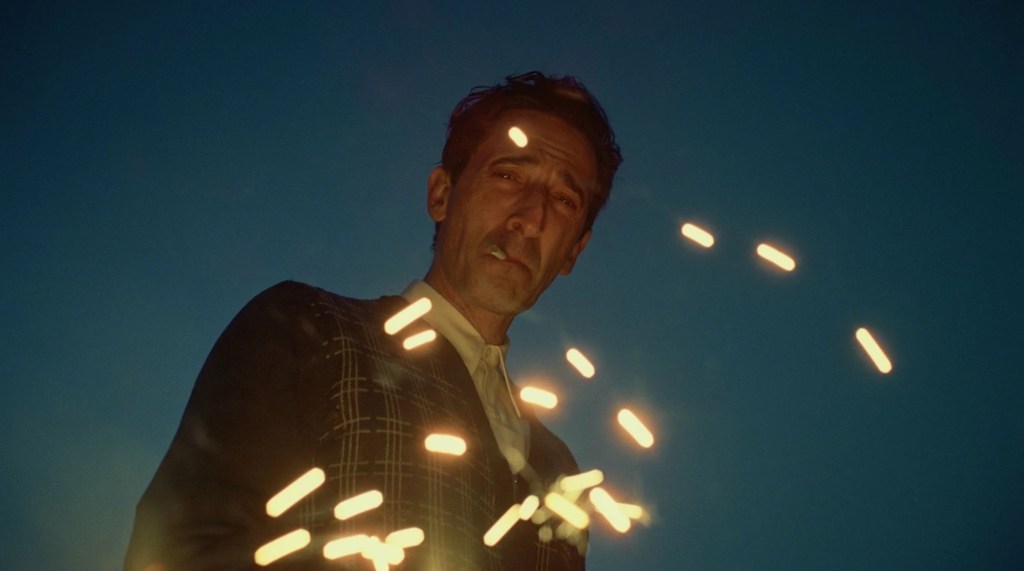
9. The Brutalist (Brady Corbet, US/UK)

Does Corbet touch a hot-button issue without taking a clear stance on it? Is the third-act shock too much? Are its characters remotely as well-rendered as its most elaborate shots? Did they set out to film a magnum opus before they’d fully conceived of one? In short, is Corbet the Director let down by Corbet the Writer, never mind Corbet the Interview Subject? It’s been a while since we’ve had a swing at an American epic where such questions were worth debating, and admittedly not all the answers trend in Corbet’s direction. But there are reasons to favor The Brutalist beyond the 70mm principle of the thing. The narrative hook and sheer physical craft of it all. The transporting defamiliarization of America. The squirming, implacable sense of being an unwanted stranger. (Casting Adrien Brody has made people leap toward The Pianist, but a closer Polanski comparison is The Tenant). And most of all, the surprising ways that certain themes get left suspended—including by the epilogue, whose final touch projects back on the movie, opens the context, and niggles away at you.

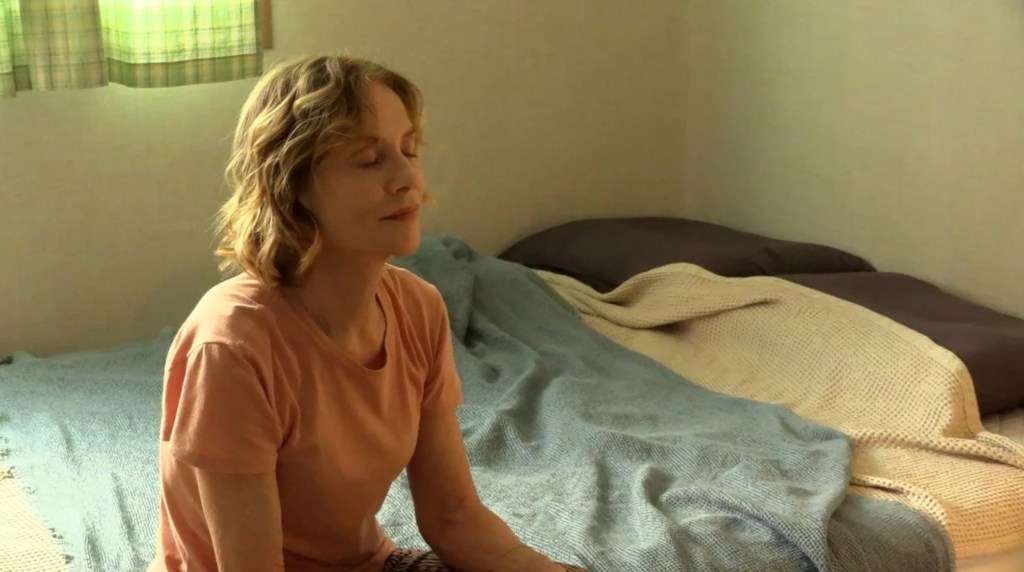
8. A Traveller’s Needs (Hong Sang-soo, South Korea)

“You’ll love your true emotion expressed in a foreign language.” Moving back and forth between three languages—four, if you count music—Hong Sang-soo’s latest gets the most out of its multilingual nature, serving up a story about connections and separations, about perceptions of strangers, about what people hide or reveal. Charming and non-academic for a director who isn’t always, and buoyed by a poker-faced Isabelle Huppert, it adds another sneaky installment to his sketchbook of the big themes that are lying around in plain sight. “Dandelions” and “magpies” for sure.

7. Hard Truths (Mike Leigh, UK)

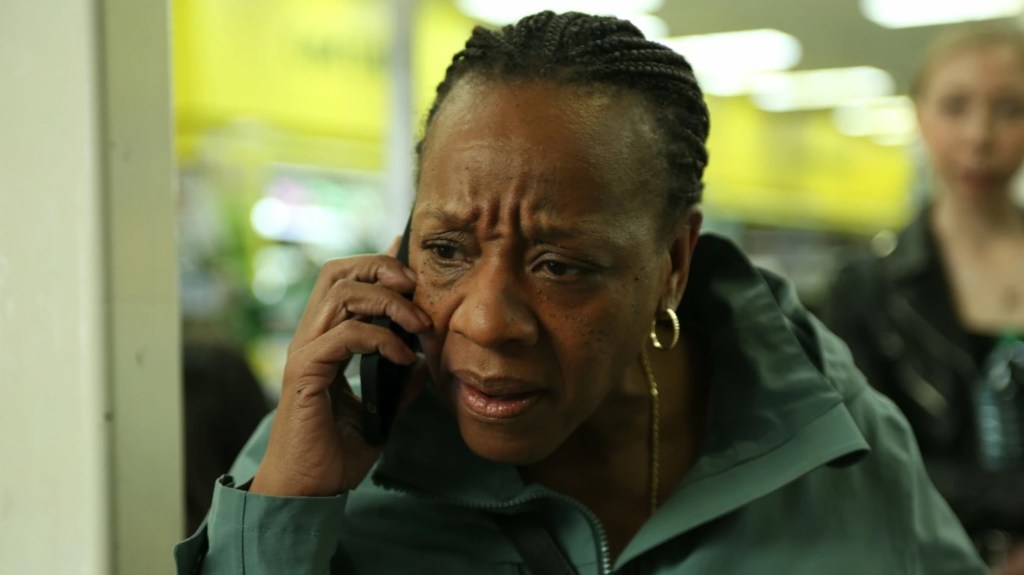
It’s a mystery why so many festivals passed on the new Mike Leigh film when you’d think he’d be set for life. True, it asks you to spend 100 minutes in the orbit of the most disagreeable wretch in Britain—but the trip is abrasive, funny, and ultimately heartbreaking in all the right ways. As the antiheroine hurtles judgmental invective at everyone in her life, at times she even makes a point that’s no less correct, or more incorrect, than one of Leigh’s desperate optimists. But Leigh’s hard truth, as ever, is that happiness is what you actively make it. And in Marie Jean-Baptiste, we got an Oscar-level acting showcase that’s less about surface transformation than revealing something human. The Academy passed too.

6. Last Summer (Catherine Breillat, France)

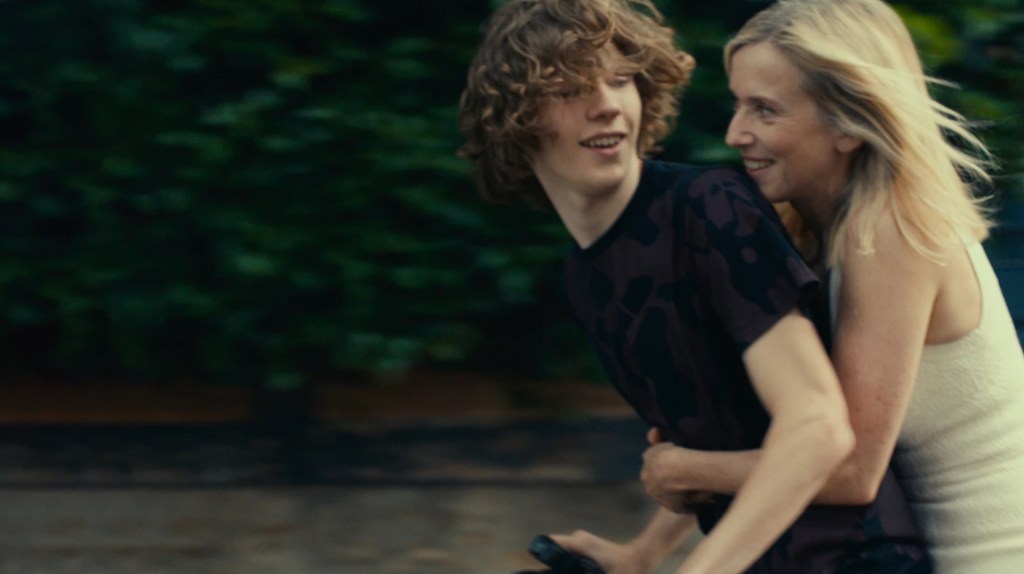
Catherine Breillat’s return to the director’s chair finds her in a less transgressive mode—at least, as much as a drama about sexual impropriety could allow. But if explicitness is scaled back, implications are not, and despite its pared-down plot they may be stuck in your mind the next day. Whether any character is sympathetic keeps twisting, scrambling any labels or messaging while staying totally coherent. One irony of which is that, while Breillat has controversially defined herself as “anti-MeToo”, she’s offered an unsettling, crystalline rendering of the conditions—the hypocrisy, the denial, the protection of one’s own—in which the dam burst.

5. I Saw the TV Glow (Jane Schoenbrun, US)

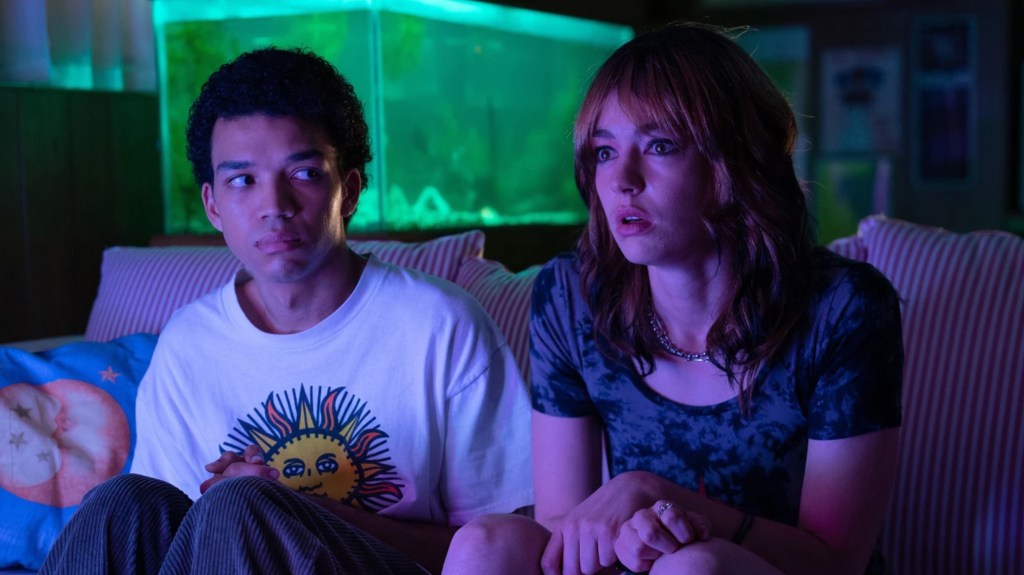
A true scare: the 1990s—their Lisa Frank colors, Smashing Pumpkins needle-drops, pre-VOD television, pre-internet fandom—are now fit for a period piece. But Jane Schoenbrun finds such fresh, vivid use for them. This is like if Todd Haynes did a Halloween sequel: suburban horror where a Queer-coded gaze picks up undercurrents beneath “normal” culture. Tragic and genuinely freaky. And unlike a lot of the current crop of “elevated horror”, it’s not elevated over moving fast and having fun.

4. Furiosa: A Mad Max Saga (George Miller, Australia/US)

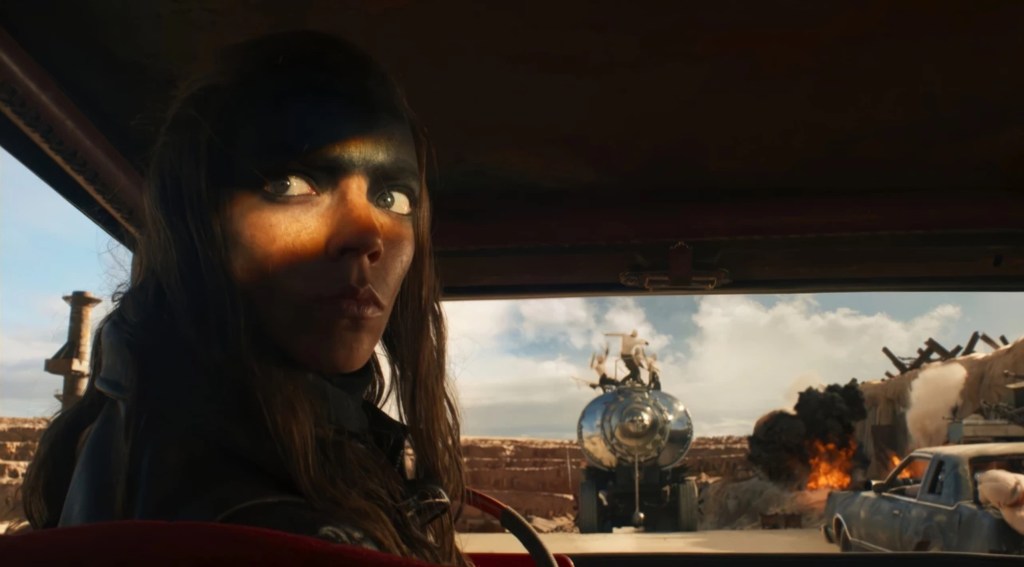
In its play for non-stop action, Fury Road left context and psychology mostly just gestured at. But the word “saga” isn’t in this prequel’s title for show: Furiosa feels like a history being recounted more than a story being told, and all its methodical world-building is a true twist for a series whose M.O. was always to drop you into the middle of the most gonzo shit imaginable. Which is not to say either method is better, just that Miller is trying something new and pulling it off. The action is superb. The arc is meaningful. No franchise blockbuster this year did better by any metric, except box office.

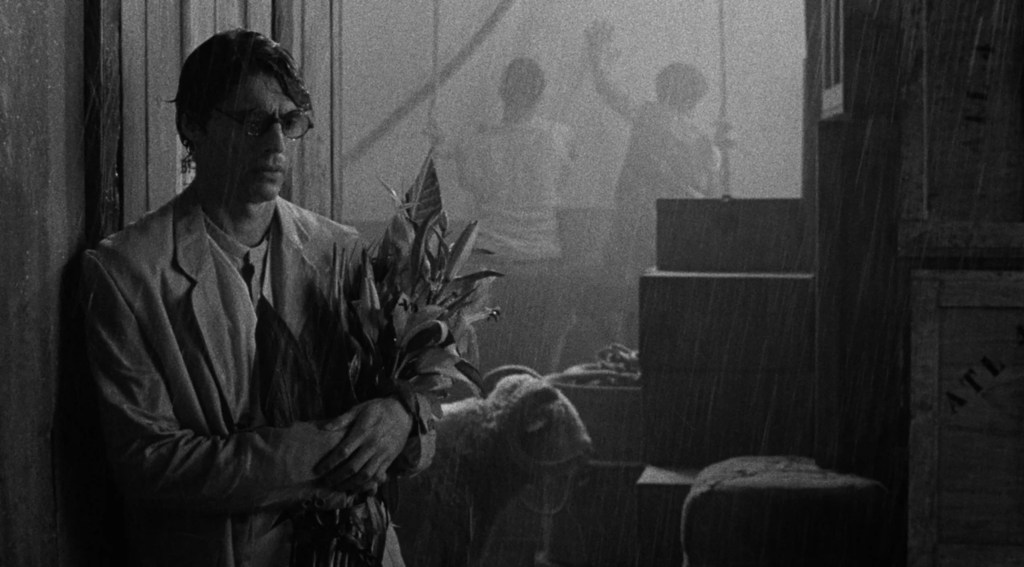
3. Grand Tour (Miguel Gomes, Portugal)

Few movie experiences of 2024 were as bewitching as being a stowaway on Miguel Gomes’ ship. The dissolution of barriers is exquisite: Grand Tour toggles between dream and reality, past and present, black-&-white and color, Sternbergian studio sets and documentary footage, and a half dozen all-knowing narrators. And it does so without obeying any logic but its own, with an utterly focused continuity of purpose. Perhaps it can collapse such planes of existence because “Molly” and “Mr. Abbott” are an eternal story on all of them. And Gomes understands better than most that being “a story” (no more and no less) encompasses a lot.

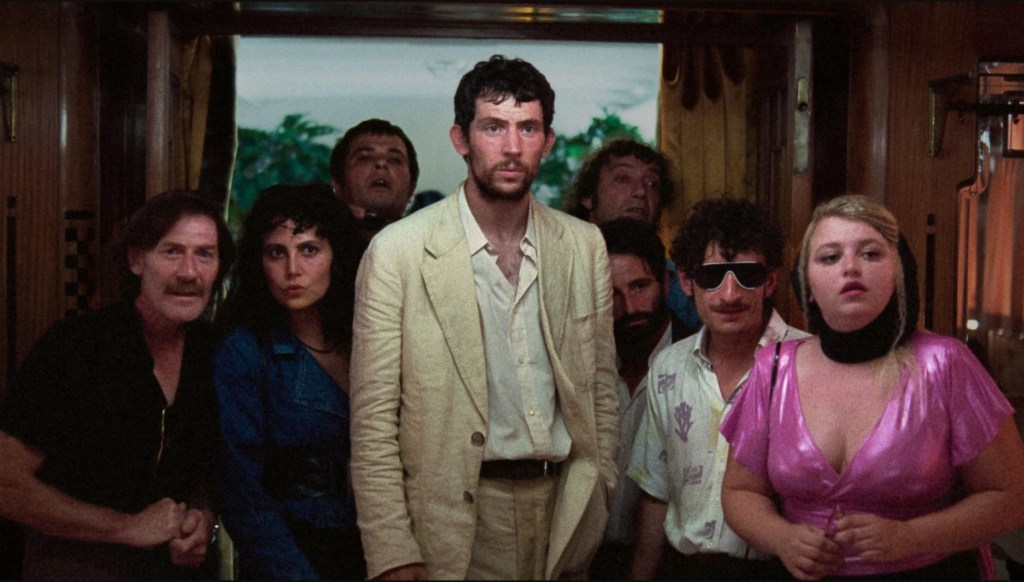
2. La Chimera (Alice Rohrwacher, Italy)

Rohrwacher excels at a kind of casual, earthy magic. The naturalistic photography feels like all its beauty was simply found, that none had to be juiced by filmmakers, and that shots were determined by the position of the sun. But “natural” is not the same as “realistic”, and the enchantment of La Chimera is its certainty that something extraordinary exists. As romantic metaphors go, wondering what treasure is undiscovered beneath your feet is a good one. As “outer” and “inner” blur together, the film chases it to a conclusion more tragic than expected. But no less honest. Or magical.

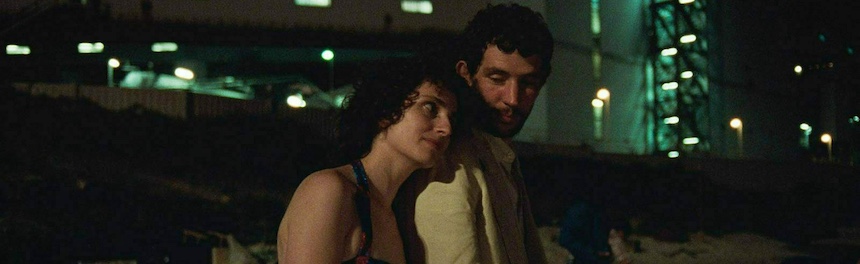
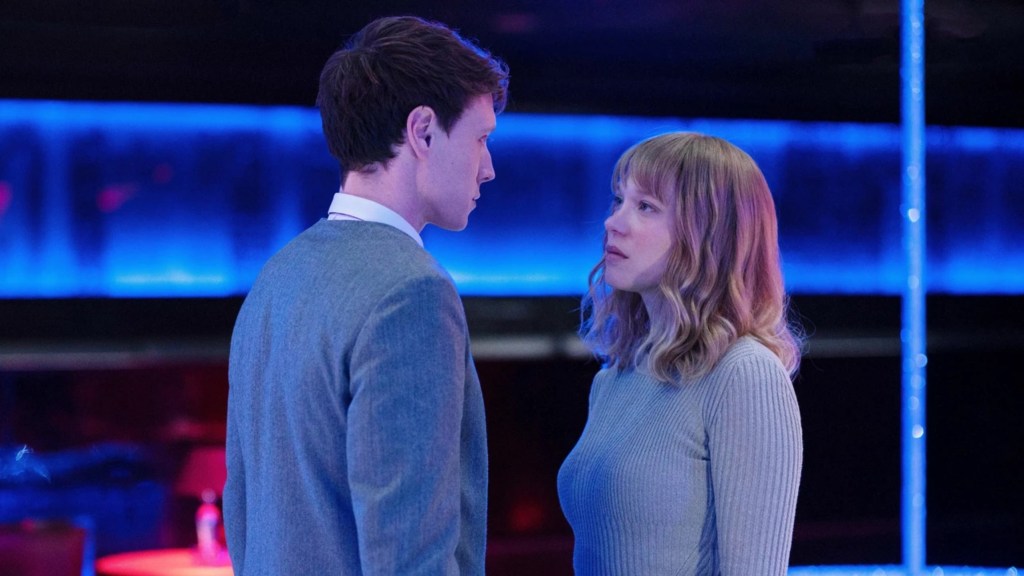
1. The Beast (Bertrand Bonello, France)

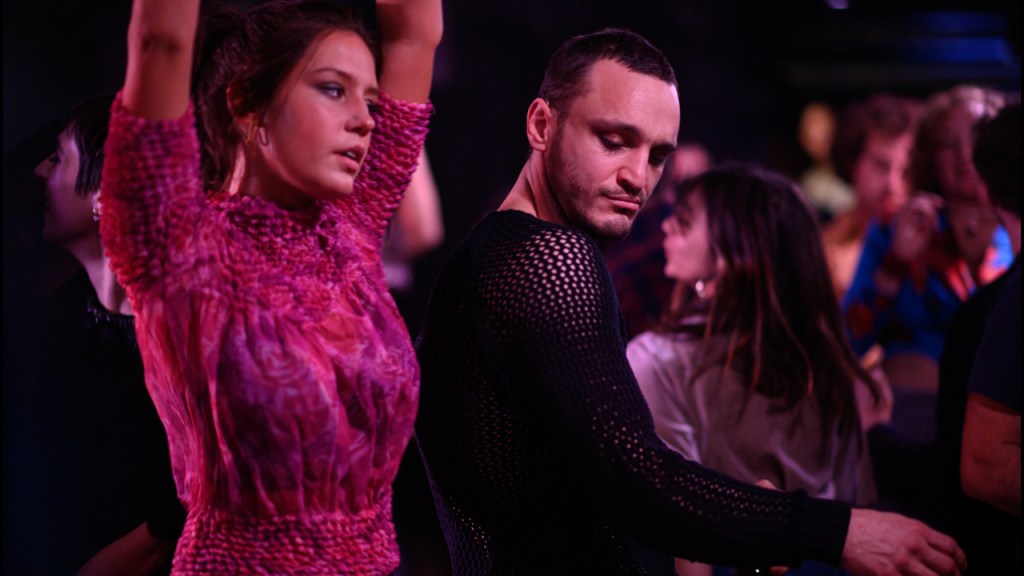
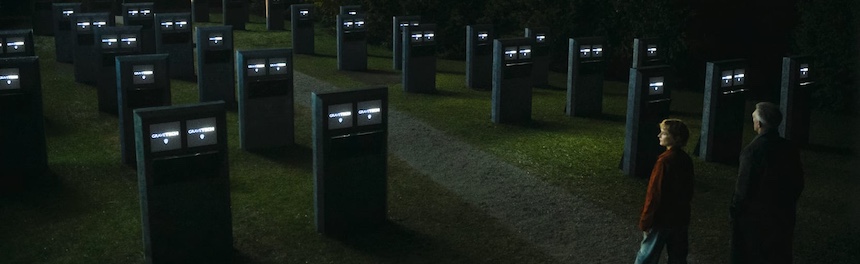
Bertrand Bonello’s latest is one of those films where a big part of the suspense is what on earth it’s all about. So ideally, you should go in knowing nothing—just curiosity about why there are those of us who found it the movie of the year. But if you need a pitch, it’s a time-bending sci-fi romance in a French New Wave vein; one virtue is that it gives an idea of what it must have been like to see something like Alphaville or La Jetée when it was new, before the future became the past. But the true arc of its love story belongs to love itself, and only romanticism could power its ultimate sense of horror. Bonus: intentional digital tics that make watching it at home on your streaming system uncannily appropriate.

*****

The Honor Roll: 15 more films that made movie-going worthwhile this year…

Anora (Sean Baker, US)
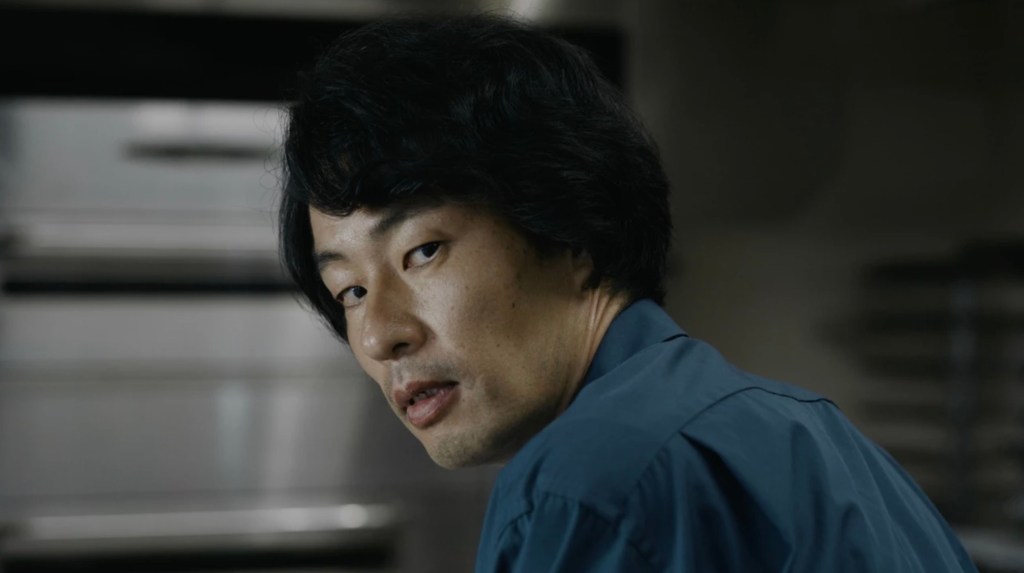
Caught By the Tides (Jia Zhangke, China)

Chime (Kiyoshi Kurosawa, Japan)

Evil Does Not Exist (Ryusuke Hamaguchi, Japan)

The First Omen (Arkasha Stevenson, US)

Here (Robert Zemeckis, US)

Inside the Yellow Cocoon Shell (Phạm Thiên Ân, Vietnam/Singapore)

It’s Not Me (Leos Carax, France)

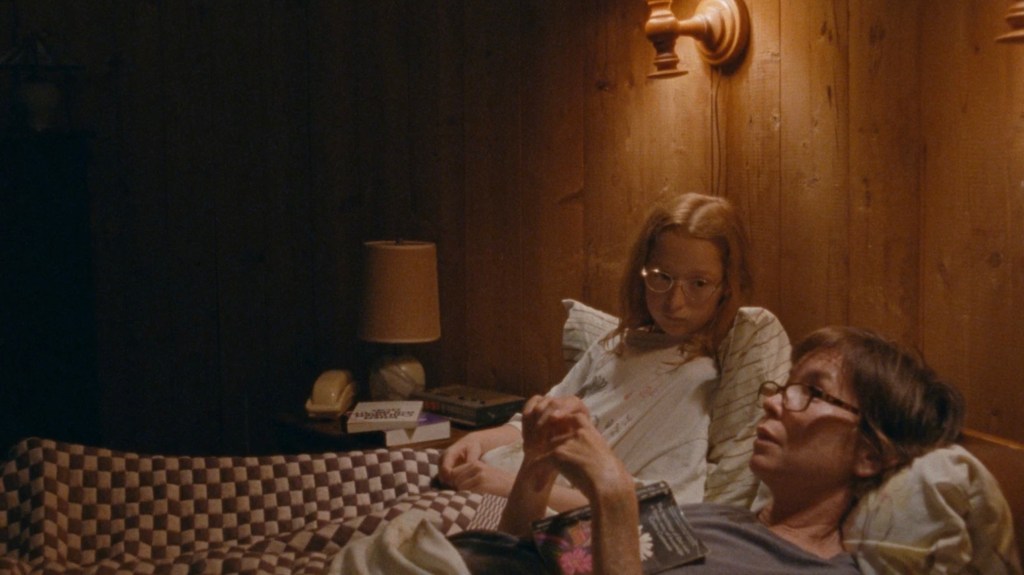
Janet Planet (Annie Baker, US)
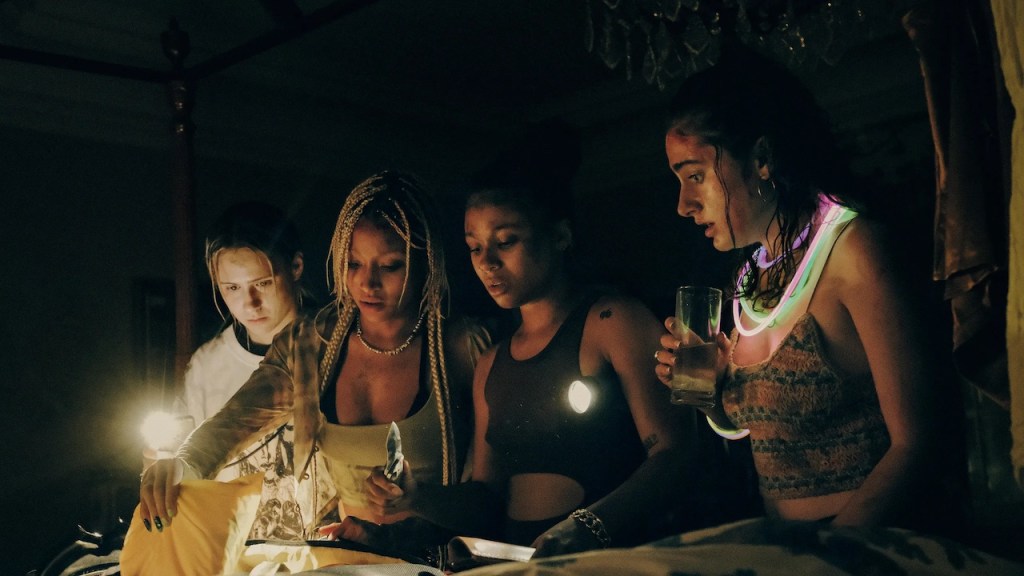
Love Lies Bleeding (Rose Glass, US)

Megalopolis (Francis Ford Coppola, US)
Nickel Boys (RaMell Ross, US)
No Other Land (Basel Adra, Hamdan Ballal, Yuval Abraham and Rachel Szor, Palestine/Norway)

A Real Pain (Jesse Eisenberg, US/Poland)

The Substance (Coralie Fargeat, US/UK/France)

THE ROUND-UP: Ten Contenders

The Round-Up is a collection of capsule reviews for new releases that filled up my notebook but never got a full dive and will miss my year-in-review.

Anora (Sean Baker)

Last year, few pitches were more enticing than a fusion of 30s Hollywood and 70s Hollywood. From the former, Anora takes a screwball romance and a view of obscene wealth that’s somewhere between satire and fairytale. From the latter, it gets grit, carnality, disillusionment. And for the first hour or so, it just might be the best filmmaking of 2024—a year which Baker can claim without any deference to the 30s or the 70s or any time but his own. But the turn it takes halfway is a hazard. The screen becomes busier (more action! more comedy!) while most of what’s compelling about the film slows down. And the last scene, truthful though its point may be, leaves an odd aftertaste. It’s the least explicit sex scene in a film that’s not exactly shy. But for the first time, it feels like an exploitation artist is jerking a response.

✬✬✬✬✩

*****

Janet Planet (Annie Baker)

At the height of Oscar season, with showy, fussy performances coming out of the woodwork, one of 2024’s best films is a reminder that acting can be so unaffected that it hardly seems like acting. This kooky coming-of-age photo album—Lady Bird on the set of The Wicker Man?—has warmth enough to suggest that no American is too far removed from its unconventional design for living, or some equivalent. It finds an askew but organic visual scheme to match its subjects. It’s smart enough not to get too explicit about its point; like its heroine, the viewer is just dropped in and invited to observe. And if it’s a lot like Aftersun but not quite as potent, it also ends where Aftersun should have.

✬✬✬✬✩

*****

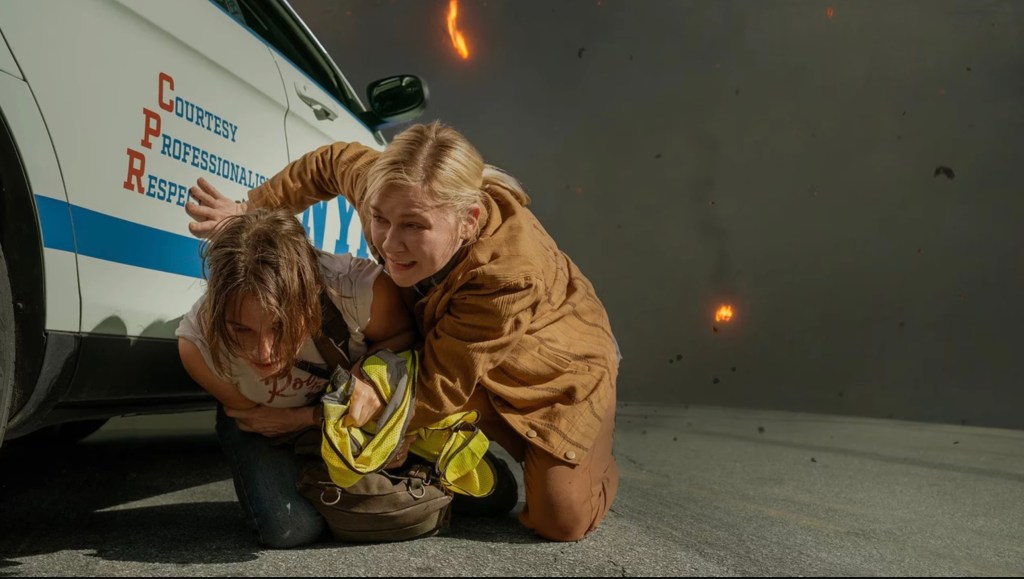
Civil War (Alex Garland)

The dissonance was there in the marketing: trailers that hawked a terrifying premonition of our not-too-distant future, while also promising the “best combat ever”. I was curious if it was as crass and exploitative as all that, and sure enough it starts producing irritants within the first minute. But when it zooms in on its characters and focuses on the role of media image-makers during civil unrest, it’s not bad and pretty interesting—possibly even self-aware about its own cold technical expertise. When it tries to rattle you with half-assed speculative fiction, it really is rather vapid. God help the needle drops.

✬✬✬✩✩

*****

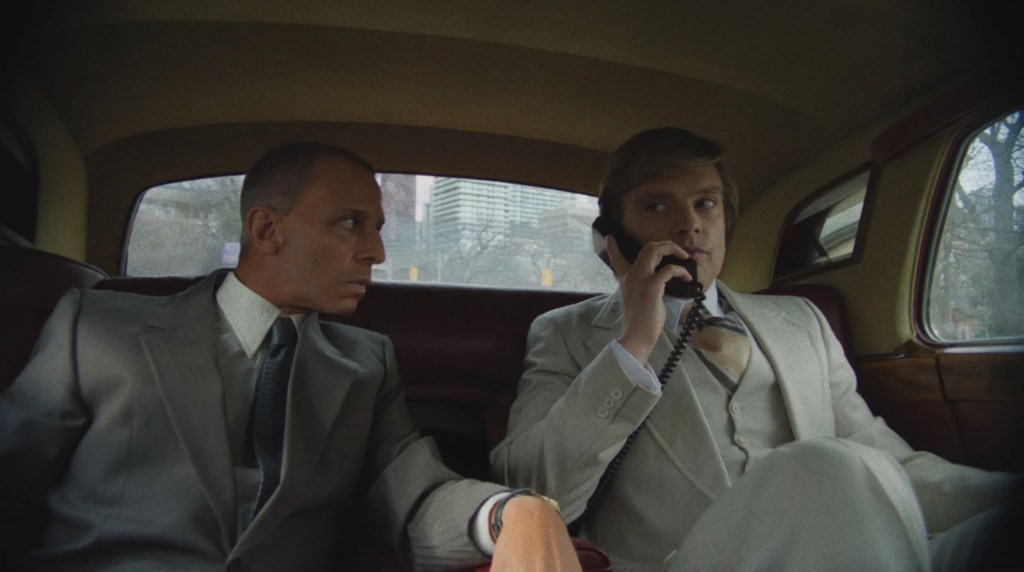
The Apprentice (Ali Abbasi)

To some extent, any dramatization was bound to fizzle for the same reason Ron DeSantis did: Trump has an authentic mania that can’t be faked. Still, even if taken as a foolhardy big swing, it’s hard to say what Abbasi’s film is trying to accomplish. Certainly there’s value in examining Trump’s origins; it helps show the method to the madness for anyone who’s wondered if the unhinged tweets and election denialism are a thought-out strategy. But its insights are cursory, and doused in cartoon sarcasm. Which it seems to think is new news—and thus carries itself with the swagger of unearned scandal.

✬✬✩✩✩

*****

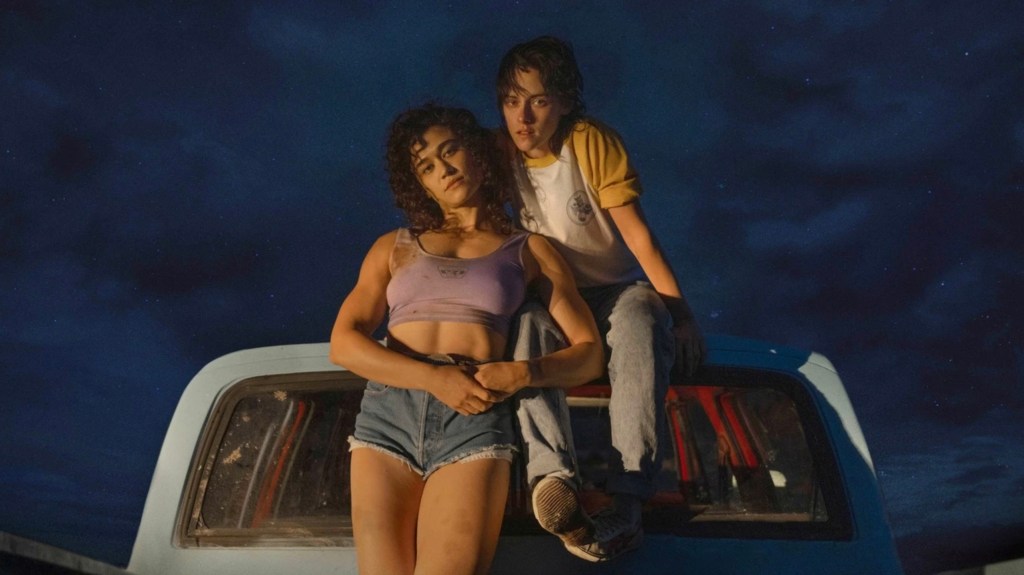
Love Lies Bleeding (Rose Glass)

John Waters’s favorite film of 2024, and he’s not trolling: this neo-drive-in noir about self-described “muscle chicks” in a frenzy of steroids, gay sex, and murder has more cinematic energy and redeeming social value than most of this year’s Oscar nominees. So you can tease out its topsy-turvy gender pandemonium, and the way its heroines have to adopt the right amount of masculinity to neither take shit nor turn into monsters. Or you can hold on to the year’s most unpredictable thriller. For John Waters, do both. Even if its climactic big swing is either too insane or just insane enough. Not sure myself.

✬✬✬✬✩

*****

Here (Robert Zemeckis)

Considering the built-in limitations of its gimmick, this has dazzling spectacle and artful staging from the start. Splitting the difference between academic and sentimental, and not a home run as either, it telegraphs its beats shamelessly and may leave you with the glum feeling that it’s impossible to live, love, or lose in any way that isn’t a total cliche. But it’s neither insincere nor vapid, and don’t mistake it for tidy. By the time Alan Silvestri is ladling on the final syrup, it’s up for debate whether it’s a heartwarming family story, a bleak catalog of problems we’ll never fix, or a surrender to quintessentially American maladies. Probably all of the above. And an inventive use of new tech to boot. One in which you can sense a team engaging with the pros and cons and getting genuinely energized by the possibilities.

✬✬✬✬✩

*****

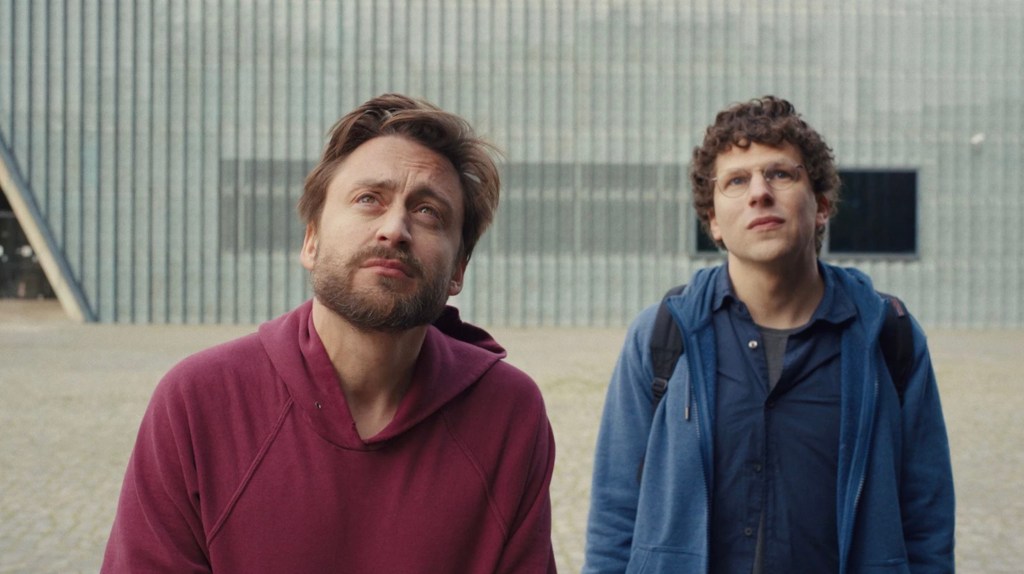
A Real Pain (Jesse Eisenberg)

The comically uptight and the comically irresponsible—the archetypes still work, and always will. Especially if you have Eisenberg (uptight in his sleep), and Culkin, who has strong Oscar odds due to a terrific performance, an established body of work, and good old-fashioned category fraud. (He’s a co-lead, and don’t let the Academy tell you otherwise). Granted, their odd-couple act may simple hit a plateau and hang there. But themes are invited to hang with it: American identity, the Holocaust/antisemitism from a third-generation perspective, and comedy as a defense mechanism for both individuals and a group. Cheers to an ending that, while appearing almost bathetically simple, has thorny, free-floating implications for all of the above.

✬✬✬✬✩

*****

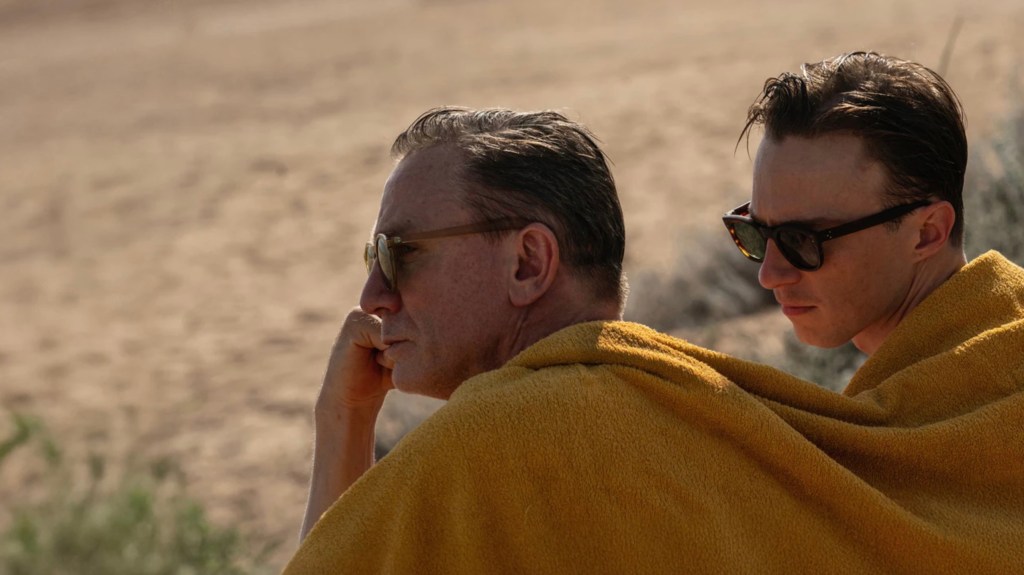
Queer (Luca Guadagnino)

Daniel Craig must have the most interesting post-Bond career of any former 007—no one else even comes close. Still, I can see why Queer had a hard time generating urgency at the box office and with the Academy. Its first half is weighed down, and in a sure sign of social progress, a Hollywood star doing explicit gay sex scenes isn’t the scandal it was in the days of Brokeback Mountain. But Queer is lived-in where Brokeback felt play-acted, and its aesthetic vividly renders gay outlawry as both a colorful wonderland and an exile to the gutter. A mixed bag in total, but Craig is deeply moving. Love is a drug.

✬✬✬✬✩

*****

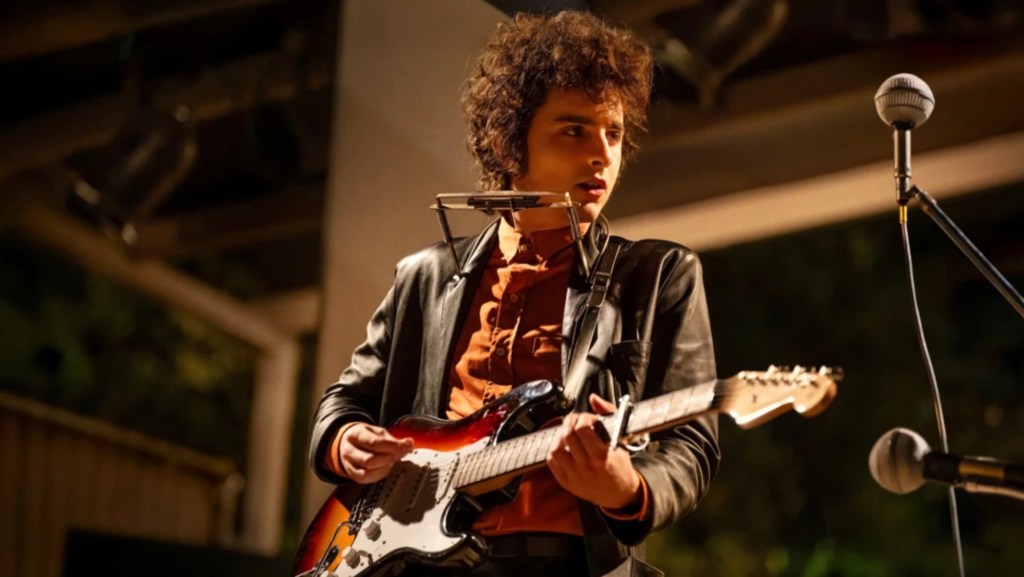
A Complete Unknown (James Mangold)

As a skeptic of both musician biopics and Timothee Chalamet, the first half brought down my defenses and the second put them back up. The opening act finds a nice tension between the normal biopic grammar (witnesses standing agape at a Great Man) and unease at the Great Man’s careerism. It’s at its best, and its most complex, when dangling his sincerity as a question mark even as it turns the concert hall spotlight into a halo. But it still winds up conventional print-the-legend stuff in the end, neither factual nor particularly imaginative, just a glossy diorama touched by Bohemian Rhapsody-isms that were unbecomingly corny of Queen—a band where corn was always the point. And compared to I’m Not There, it’s not only formulaic/pious, but politically absent-minded.

✬✬✬✩✩

*****

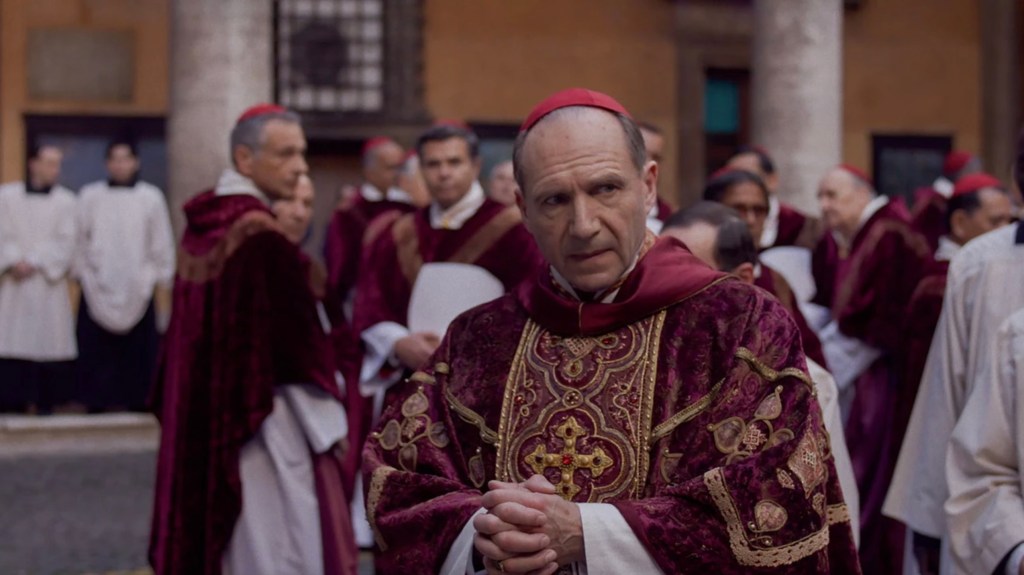
Conclave (Edward Berger)

Considering that Conclave‘s subjects include the sins of Catholic leadership and what role the church should play in the political climate of 2024, the fact that it’s caused less of a stir than The Da Vinci Code makes me wonder if its key line comes when one cardinal tells another, “The trick is to offend no one.” That is, it generates more smoke than fire. But you get a crackling procedural, full of intrigue and fine acting, and at least one genuinely cinematic idea: the way the outside world is implied but never shown. Its final twist is indeed a lot. But it certainly risks offending someone—possibly multiple someones, for multiple reasons. And it justifies the final shot.

✬✬✬✩✩

*****


THE ROUND-UP: Horrors

The Round-Up is a collection of capsule reviews for new releases that filled up my notebook but never got a full dive and will miss my year-in-review. This batch goes to (some of) 2024’s horror films—the genre where what take seriously and what you greet with irony are most likely meet a contemporary audience where they live.

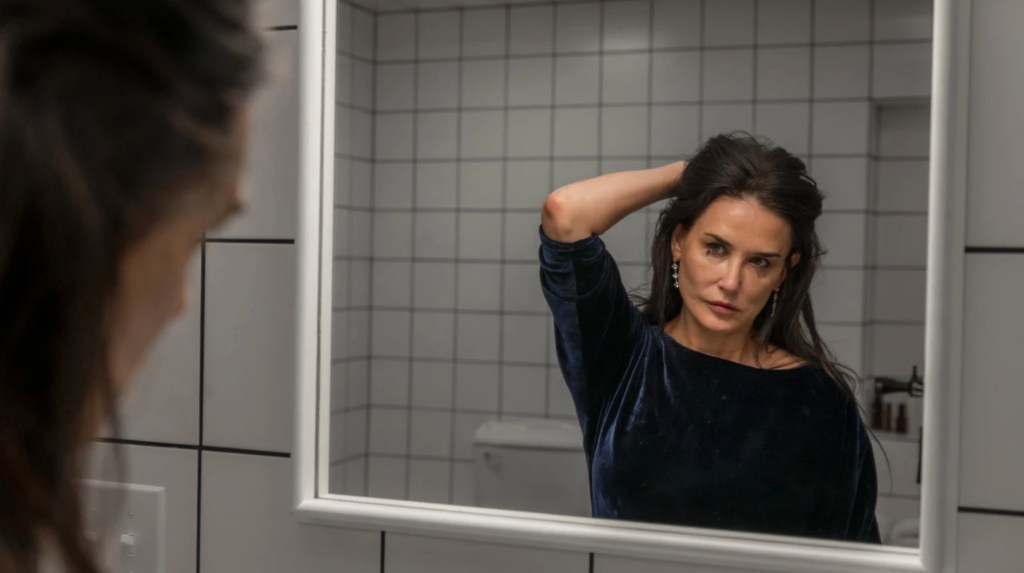
The Substance (Coralie Fargeat)

Weak stomach that I have, I can only account for when I dared to look, which I’d estimate at about 80-90%. But just because The Substance has the least subtle editing of 2024 doesn’t mean it can’t have fun—or find subtleties—in beating a metaphor into the ground. And a worthy metaphor it is: the “you are one” concept of the same biology belonging to the young self and old self, the public and the private, the side that feels empowered by being looked at and the side worn down by it. Grant that the rules of horror, parody, and Angeleno solipsism allow for everyone other than the heroine to be a caricature, and the act of looking becomes a character unto itself. The Substance sends up a sexual gaze but won’t deny its fascination. It’s about women looking at themselves as much as men looking at women. (That men are ridiculous and shallow is less Fargeat’s conclusion than her jumping-off point). Its production design turns the bathroom—that place of hygiene, maintenance, and beautification—into an Orwellian torture chamber. And if its nods to Kubrick are just fandom, its Hitchcock quotations mean something.

✬✬✬✬✩

*****

Chime (Kiyoshi Kurosawa)

Kiyoshi Kurosawa is back in horror mode after the pandemic, and there may be no director better at probing how insanity is contagious. Chime neither as rich as Cure nor as prophetic as Pulse. But it’s as aesthetically forceful as either of them, and arguably more visceral. Certainly, it’s just as in tune with the idea that a plague of madness can only unlock what was already there to begin with. And its final stylistic pivot opens an untidy world of interpretation. Since it was originally released as an NFT, many thanks to Beyond Fest in LA for making it available to people who want nothing to do with them.

✬✬✬✬✩

*****

Nosferatu (Robert Eggers)

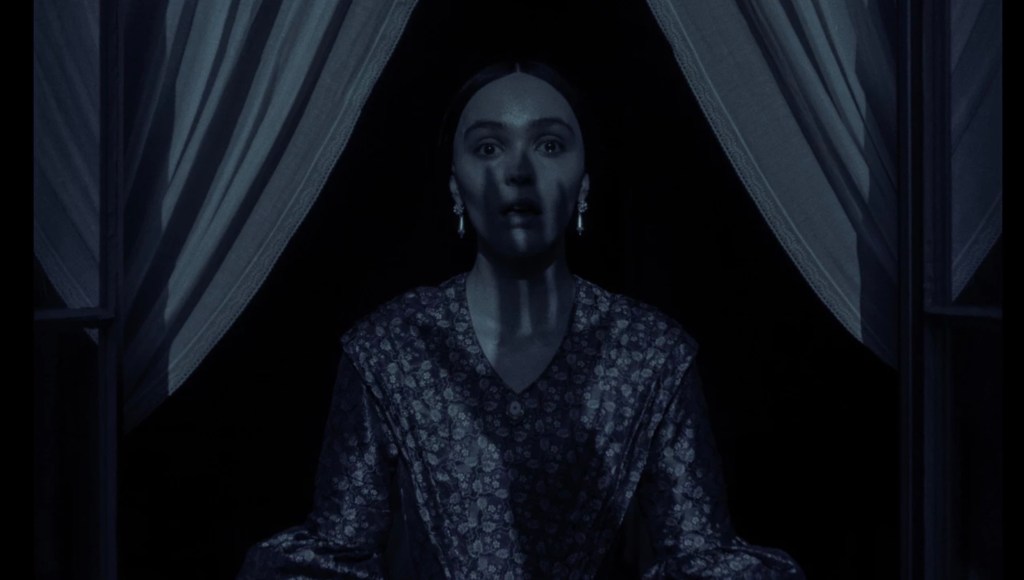
For the tale at its most elemental and suggestive, there’s Murnau. To hone in on the theme of mortality, there’s Herzog. For the baroque extravaganza, there’s Coppola. What does Eggers add? His fetishistic notion of authenticity—a distraction as often as not. And greatly expanding the role of the Lily-Rose Depp character, even if the new material and the old material aren’t quite seamless. But the effort Eggers puts into choreographing shots pays off elegantly, sometimes rapturously, at a time when so many super-productions barely try. And it’ll make fine thesis material on how the sexual anxiety of the horror genre has gone from Victorian repression to post-repression trauma. Somehow, the most recent telling might be the most puritanical.

✬✬✬✩✩

*****

The First Omen (Arkasha Stevenson)

“The miracle of life can be a messy business”—not exactly a new theme in horror, but unless human anatomy fundamentally changes, it’s one that will always resonate in the right hands. That principle goes for The First Omen as a whole. Almost none of it is new, and it bows reverently before its ancestors: not just The Omen, but Rosemary’s Baby, 70s gialli, and Possession. But it does right by them, with dramatic and atmospheric command such that the shocks shock and the build-up might be even worse. Even the twist (easy to see coming) still flies because it’s grounded in a theme. And thankfully, they pass up the chance to recreate a CGI Gregory Peck.

✬✬✬✬✩

*****

Trap (M. Night Shyamalan)

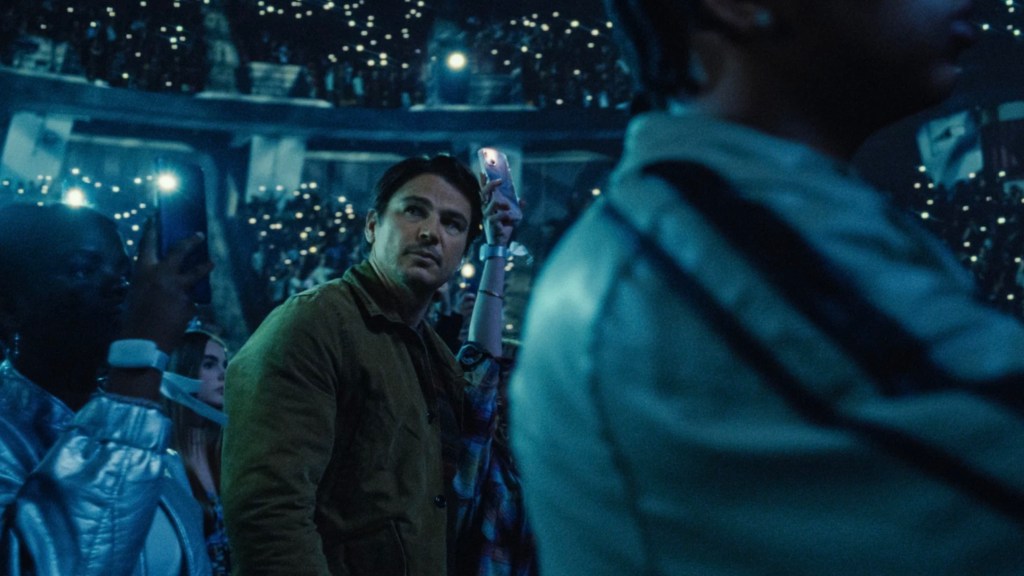
The opening act cheekily suggests that a dorky dad at a Gen-Z concert is so out of place he might as well be a hunted criminal. And if M. Night casting himself as a Christ figure in Lady in the Water was cringe, saying “to me, my daughter is Taylor Swift” is a meta touch whose sweetness I can get behind. Human interaction still seems ported from another dimension—its combination of wacky and soulful a language only Night-heads speak—and the third act is a mess as either plot or metaphor. But its quirks are also what power its humor and unpredictability. It has thematic resonance, it has cinematic ideas. Compared to Inside Out 2 or Deadpool & Wolverine—2024’s biggest hits—I not only respect it more, I had more fun.

✬✬✬✩✩

*****

Alien: Romulus (Fede Alvarez)

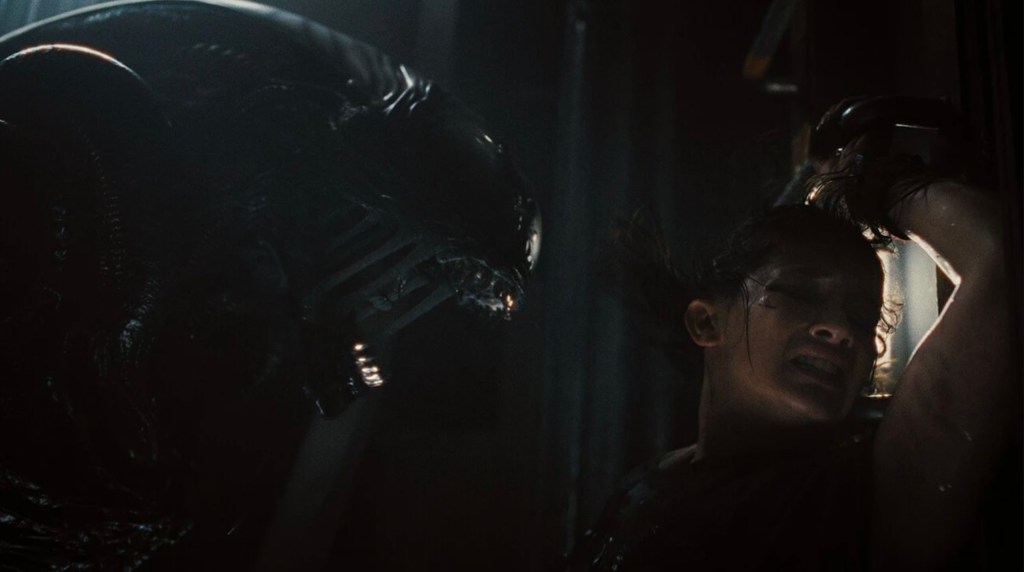
Kind of a perfect but by no means unique representative of our current era of legacy franchise professionalism. It got some artful pizzazz when it does its own thing: the direction is strong, there’s an interesting subtext around David Jonsson’s android character, and Cailee Spaeny is a fine addition to the pantheon of heroines who won’t take shit from Xenomorphs. But as long as it’s so beholden to the look, beats, musical themes, direct quotations, and even the credit font of original—not to mention torn in half trying to coherently tie it into the prequels—it’s the first real Alien film to never feel like an act of exploration or expansion.

✬✬✩✩✩

*****

THE ROUND-UP: Latecomers

The Round-Up is a collection of capsule reviews for new releases that filled up my notebook but never got a full dive and will miss my year-in-review. This batch goes to 2023 festival releases that arrived for American audiences in 2024.

Hit Man (Richard Linklater)

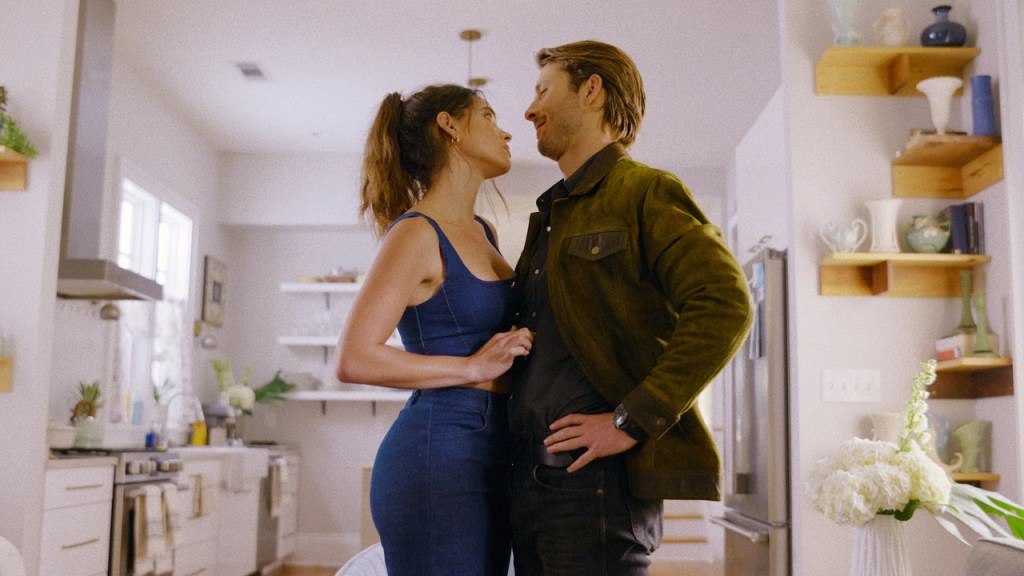
Feels like something’s missing, but that something isn’t chemistry or a point. Linklater’s defining films tend to have little use for plot, certainly nothing like murder. So Hit Man‘s joy lies in the movie/life disconnect of its central casting: right away, Glen Powell comes on like a mutant hybrid, part Linklater type (shaggy, perceptively idle philosophy dork) and part…well, Glen Powell type (newly minted movie star, Top Gun hotshot, romancer of Sydney Sweeney, etc.). How it turns that identity crisis into a romantic metaphor is fun and truthful, if slight. So maybe what’s “missing” is that it stretches its fun and truth so thin that it often feels like it’s barely trying. But it gets laughs or raises alarm in a lot of the right places. And since Netflix scarcely went theatrical, it’ll be up to a future rep house to double-bill it with Charade.

✬✬✬✩✩

*****

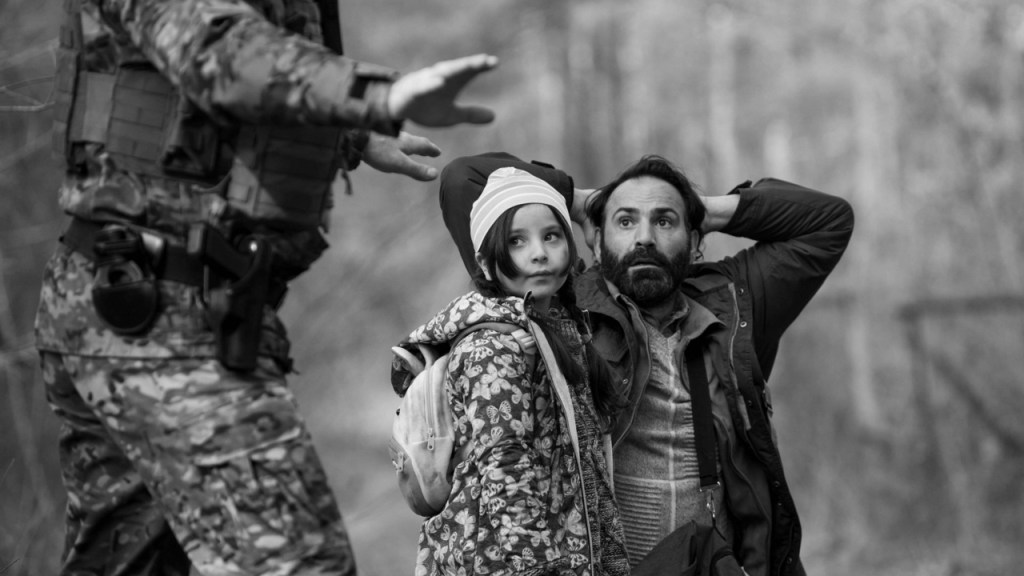
Green Border (Agnieszka Holland)

Visceral from the start—Holland and company’s camera nails the balance of chaos and control that social realists the world over aspire to. But it doesn’t become interesting until it starts sprouting multitudes, fragmenting in a way that’s as close to Paisan (for the better) as Babel (for the worse). It’s at its best when it sees a humanitarian disaster as a story no single person can claim; when it focuses too long on a Polish hero’s political conversion, it’s awfully tidy—and proof positive of how something that seems so “arthouse” in America might have its eye on the mainstream in its homeland. So in the name of fragmentation, note how it gives you two endings: the tidy, sentimental one, and a coda so bitterly ironic it jumps to life.

✬✬✬✬✩

*****

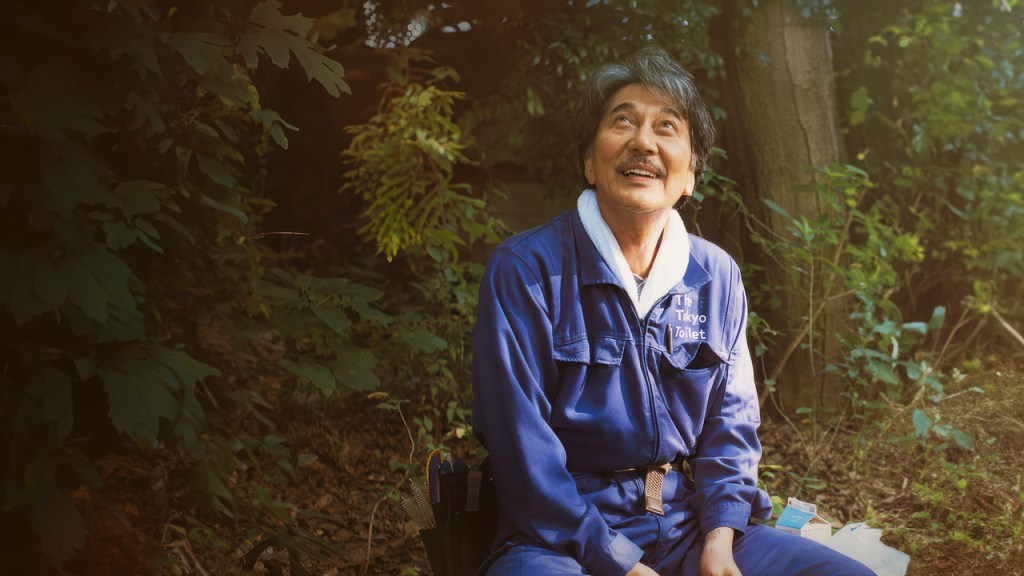
Perfect Days (Wim Wenders)

There’s something inherently welcome today about the concept of everyday serenity as seen from one of the most thankless/anonymous jobs imaginable—a manifesto, of sorts, on public spaces, artistic sensibilities, post-COVID humility, and keeping your eyes open. It’s a sign of integrity that it never explicitly psychologizes its hero, but nonetheless locates happiness, pain, and protest in his lifestyle. But the encounters he has and the world Wenders builds around him feel cursory—Jim Jarmusch’s Paterson, just as “minimal”, has much more abundance. Here, Wenders’ writing works less hard than his playlist. And even that feels designed to remind you of what you already know even so.

✬✬✬✩✩

*****

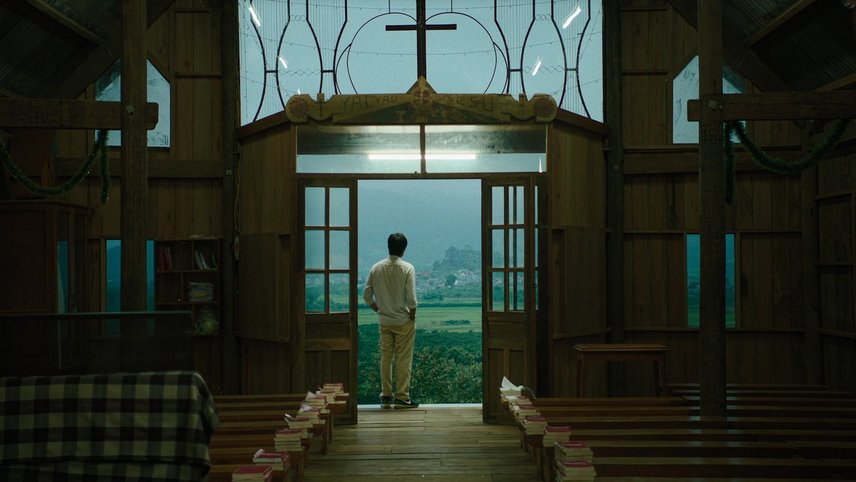
Inside the Yellow Cocoon Shell (Phạm Thiên Ân)

In which the Cannes prize for Best First Film goes to a movie confronting the end of life. Something of that age gap is its essence: as its young hero walks, smokes, mopeds, and dreams his way through exquisite long takes, it occurs to me that this may be the first time I’ve seen such an earnest religious inquiry from someone of my generation, not Bresson’s, Tarkovsky’s, Malick’s, or Apichatpong’s. It borrows generously from such sources. But it understands them, and it has an experience to add. Whether director Pham Thien An becomes his own man, time will tell. But time is something he has. Skill, too.

✬✬✬✬✩

*****

Evil Does Not Exist (Ryusuke Hamaguchi)

Perhaps no 2024 release gets more out of its title: whether the sentiment is bitter irony or humanist commitment can twist as you go, particularly since the structure (so attuned to the idea of “upstream” vs “downstream”) ensures that someone who’s a corporate stooge in one scene might become sympathetic in the next. So by the ending, its methodical eco-parable has accumulated the grandeur and control of a great film. But as for the ending, I’m in the camp that balks at it. It’s too coy on a literal level, too blunt on a metaphorical one, and such a gut-punch that it betrays the film’s subtlety. But see it.

✬✬✬✬✩

*****

Next Door to Prestige 7: Material World

Back in July, with the “Barbenheimer” phenomenon clear on the horizon but yet to make landfall, the New Yorker ran a profile on Mattel’s hopes for a cinematic universe, and a quote from Greta Gerwig’s agent jumped out. “Greta and I have been very consciously constructing a career,” her agent said. “Her ambition is to be not the biggest woman director, but a big studio director.”

It was chum in already bloody waters for discourse about what we expect from filmmakers today. And it begged the question why the term “big studio director” (their italics, not mine) would cause such an allergic reaction. For one, it’s not as if Lady Bird and Little Women—two films I adore—were radical micro-budget rejections of the mainstream, their virtues irreplicable if you sign with Warner Bros. And for another, cinephile culture never tires of evaluating and reclaiming even the most obscure projects that “big studio directors” like Ford, Hitchcock, Spielberg, etc., ever signed.

So perhaps the best answer was provided by Variety critic Guy Lodge, who suggested that the knee-jerk response wasn’t to the scale of Gerwig’s ambition, but to the fact that, in our current era, “big studio director” is a much narrower job description than it used to be. In the 21st century, is a big studio director just someone to add flavor to a preexisting franchise that would largely be the same no matter what? Are they a temporary steward of someone else’s valuable IP?

Though it will be trivia by this time next year, if not already, an unexpected use of intellectual property was the oddball Hollywood trend of early 2023. Last year introduced itself as the year of the “brand biopic”, with studios offering up the true (or “true”) stories behind Air Jordans, BlackBerries, Tetris, and Flamin’ Hot Cheetos all within a span of a few months. I don’t attribute it to anything more than coincidence, but it was enough to feed commentary about the sign of the times, with audiences as consumers and products as our protagonists. And in that respect, Barbie represented a culmination that was artistic as well as commercial. After all, if the subject of Gerwig’s film is childhood expectations hitting a wall of adult experience—and why not? a male-centered version of that idea has been Wes Anderson’s hobbyhorse for the last 25 years—then doesn’t the consumer baggage baked into the Barbie brand represent not a compromise, but an opportunity? At least if done right?

So because it misses my top 10, a brief word about the biggest hit of 2023—but by no means an attempt to have the last one. You have to go back to American Sniper, of all films, to find a time when a year’s box office champ was such a hydra of discourse. For what it’s worth, Richard Brody called Barbie better than Kubrick, or at least better than 2001: A Space Odyssey. The clerk at the video store down the street from me called it a disingenuous way to revitalize a toy line with lip service to contemporary politics. Where you fall in that continuum is up to you. For my money, it’s the least and the messiest of Gerwig’s solo-directed features; it says too much directly that it should trust an audience to figure out on their own, and it does so with an arch, is-it-cynical? wink that’s no substitute for her observational warmth.

But the lines that it drew among critics, and why, could surprise you. And the fact that Richard Brody—not to mention Jonathan Rosenbaum—came out swinging heavily in the pro-Barbie camp is heartening to me either way. Here, at last, was a nine-figure Hollywood juggernaut with enough life and novelty in its aesthetics and ideological intent to be worth asking esteemed old-school Godardians to weigh in at all. (Its closest box office competition was The Super Mario Bros. Movie, a pleasant, colorful film about which there’s nothing interesting to say, except that it was the one movie I saw during the WGA strike where it really does feel like artificial intelligence could be trained to write it).

So is Barbie an uncommonly daffy mega-budget project from an ascendent filmmaker with cinephile cred and something to say? Yes. Is it a carefully modulated IP love-fest in which a Gen Z skeptic learns to stop worrying and love the brand? Also yes. And I don’t think either half of that identity would have become a billion dollar movie phenomenon on its own. So in a flush but chaotic time for film—a year of historic strikes and AI concerns; when it got harder to fall back on “what works”; when even Marvel drastically underperformed; when Warner Bros. was canning films for the tax write-off; when Swifties and Sound of Freedom culture warriors routed tentpoles like Mission: Impossible, Transformers, The Fast and the Furious, Indiana Jones, Pixar, and what’s left of the Justice League—Gerwig’s film is a lesson in just how much the two sides can get out of one another. I’m already curious to see her upcoming take on Narnia, which calls for the storybook sincerity of Little Women at a Barbie scale.

As for his part in the summer’s big event, Christopher Nolan, generally fatalistic on-screen, took an optimistic tack about the future of studio filmmaking. “I’ve just made a three-hour film about Robert Oppenheimer, which is R-rated and half in black-and-white, and it made a billion dollars,” he said in an interview. “Of course I think films are doing great.” In his native UK, it’s even his highest-grossing film, Batman be damned.

Nolan is expected to win big at the Oscars tonight, and from the pinnacle of a press junket has encouraged people to see the success of films like Barbie and Oppenheimer as reasons not to forget an audience’s desire “to be surprised…to see something they did not know they wanted.” God knows if that’s the lesson that was received, and if so, whether it will last. 2023 certainly offers plenty of dollars-and-cents arguments to the contrary.

Still, it’s hard to be cynical on what’s undoubtedly the most dynamic Oscar night since before the pandemic. More than any year since 2019, this year’s Best Picture crop has a confluence of popular and critical relevance to (for now, anyway) fend off the nastiest thoughts that the Academy’s own job description has become keeping up appearances. And of course, as per tradition, the Academy’s radar doesn’t cover the half of it. 2023 was a good one, in this respect if not in any other. And it’s a matter of consternation and personal shame that I didn’t get to see The Boy and the Heron or Godzilla Minus One, two contenders from abroad that launched surprise conquests of the American box office, in time to make this list.

But if I had to nominate a throughline for the year, I wouldn’t go with the IP exploitation or box office surprises. I’d go with the role of artistic invention in processing the world around you—a theme that over 12 months united Wes Anderson, Kelly Reichardt, Christian Petzold, Aki Kaurismaki, and, blessedly, the return of Victor Erice.

All cause for comfort. But as Oppenheimer heads towards its certain Best Picture win, it’ll cap another of 2023’s most notable trends, and one that any movie buff would be remiss not to notice: the theme of complicity. Several of the very best films of year—rewarded by critics, festival juries, ticket buyers, and tonight the Academy—are anxious portraits of characters trying to compartmentalize or justify the very material harm they’re involved in. Like brand biopics, another sign of the times? Or like brand biopics, another coincidence?

Without further ado, my 10 favorites of 2023:

10. Afire (Christian Petzold, Germany)

This Berlinale gem has a subject fit for both comedy and tension: an uptight sad-sack who gets needled by the happiness and positive energy of the people around him, all while a forest fire looms over their vacation paradise. It’s the sort of thing that Joseph Losey or Roman Polanski might have tackled 60 years ago, almost certainly with a more vivid visual style. But their films would be dark or bitter, and Petzold is after something warmer: the idea that to create good art, you have to observe the world, and if you do, how could you not find much to love? In that sense, ride along, and make peace with the giant third act tone shifts. Embracing melodrama and unreality could be a way of life.

9. Showing Up (Kelly Reichardt, US)
Kelly Reichardt’s previous film, the revisionist western First Cow, was one of the most acclaimed films of 2020, though I personally found it to be a rather flavorless kind of nutrition. But her new film, a comedy about middle-aged artists, is lived-in and unaffected in ways First Cow wasn’t—and in the end, it may be just as much of a western itself. Isn’t this what the genre was always about? Those makeshift communities forged west of the Mississippi? And how our “freedom to be free” ethos is both a point of pride and a crushing burden? As a study of all-American pressures, even for those who shun the rat race as much as humanly possible, it goes from mundane to droll to moving. And it evokes the golden age of Sundance: those observant spotlights on regions, geographic and psychological, that Hollywood never noticed.

8. Trenque Lauquen (Laura Citarella, Argentina)
The few, the brave, the 50 or so people who showed up to the Aero on a Saturday night for a 4-hour arthouse heavyweight. Evoking Antonioni (existential disappearance), Rivette (cryptic conspiracy), Lynch (the paranormal secrets of a small town), and Ruiz (fantastical shaggy-dog labyrinths), this sprawling thriller about a missing woman is the sort of film where each explanation sprouts another mystery. It’s worth the lift, right down to the way its structural freedom offers two natural endpoints. It all depends on if you think cinema’s trope of disappearing women, from Picnic at Hanging Rock to The Vanishing, is transcendent or earthly.

7. Fallen Leaves (Aki Kaurismaki, Finland)

“Fallen leaves” have nothing left to do but wither and get swept away, and that’s the metaphor for Kaurismaki’s middle-aged lonely-hearts. It’s a stark comic vision of 2023—an arid land where no seed can grow—and one running joke is how its inhabitants are so burnt-out that they have no energy for wit or niceties: they just announce their feelings as tersely and antisocially as possible. You can see its destination coming: a tentative love affair bringing cause for hope. But it still snuck up on me how euphoric it is in the end. And how it uses cinema itself as a north star without turning its back on the outside world.

6. May December (Todd Haynes, US)

“Deeply uncomfortable!” trumpeted the trailer, backed into a corner trying to market a film that’s premised on a huge transgression but aspires to fascinate or even, dare they say it…entertain? So to start, you get a study of how Hollywood perversity feeds on the perversity of Anytown, USA. Then you get a question: to what end? The words “understand” and “truth” keep coming up, but as you wonder if this cold war between divas will escalate into Baby Jane territory, its moral disorientation (uncomfortable indeed) suggests art is just taboos with guard rails, and show-biz is less suited to “truth” than surfaces. Final coup: disavowing tidy explanations for what’s underneath.

5. Do Not Expect Too Much From the End of the World (Radu Jude, Romania)

To call something “Godardian” nowadays risks making it sound like a throwback to 1960s chic. But Radu Jude proves himself Godardian in the purest, most adventurous and forward-looking sense. Full of mile-markers of our foul era (the war in Ukraine, Viktor Orban, COVID, Andrew Tate, a red-pilled Elon Musk, the assisted suicide of Godard himself), no film this year better probed the question of how cinema should meet the moment—or if that whole high-minded idea deserves the jaded side-eye of a gig worker who knows what not to expect. Unapologetically rooted in Romanian pride and shame, its satire should resonate with anyone who thinks that the “-isms” hanging over our fates—authoritarianism, capitalism, nihilism—are currently much dumber than we remember from history class.

4. Asteroid City (Wes Anderson, US)

With time, it’s become clear that Wes Anderson’s films have gotten more and more like Max Fisher’s plays from Rushmore: hermetic hand-crafted maximalism that induces incredulous laughter, but stays whimsically distanced from its nominal setting. Thus Anderson can place a movie in 1930s Eastern Europe or 1960s France much like how Fischer wrote a play about the Vietnam War—i.e., without suggesting that either one of them (Wes or Max) has or needs meaningful experience on the subject. This has led skeptics to see Anderson as a nostalgic stylist, an overgrown kid with little to say and less that you can feel. But then you must note the role that those plays had in Max Fisher’s life—the way he used playwriting to address his problems—and metaphorical possibilities open up. So it’s significant that framing devices have gotten more prominent in Anderson’s films. And here, such games enrich what may be his most successfully grand-scaled film. Look close, and he’s far from repeating himself. This is his COVID movie, his parenthood movie, and his movie about why his movies are the way they are. And it contains his most salient critique of contemporary America, despite, in a literal sense, venturing nowhere near it.

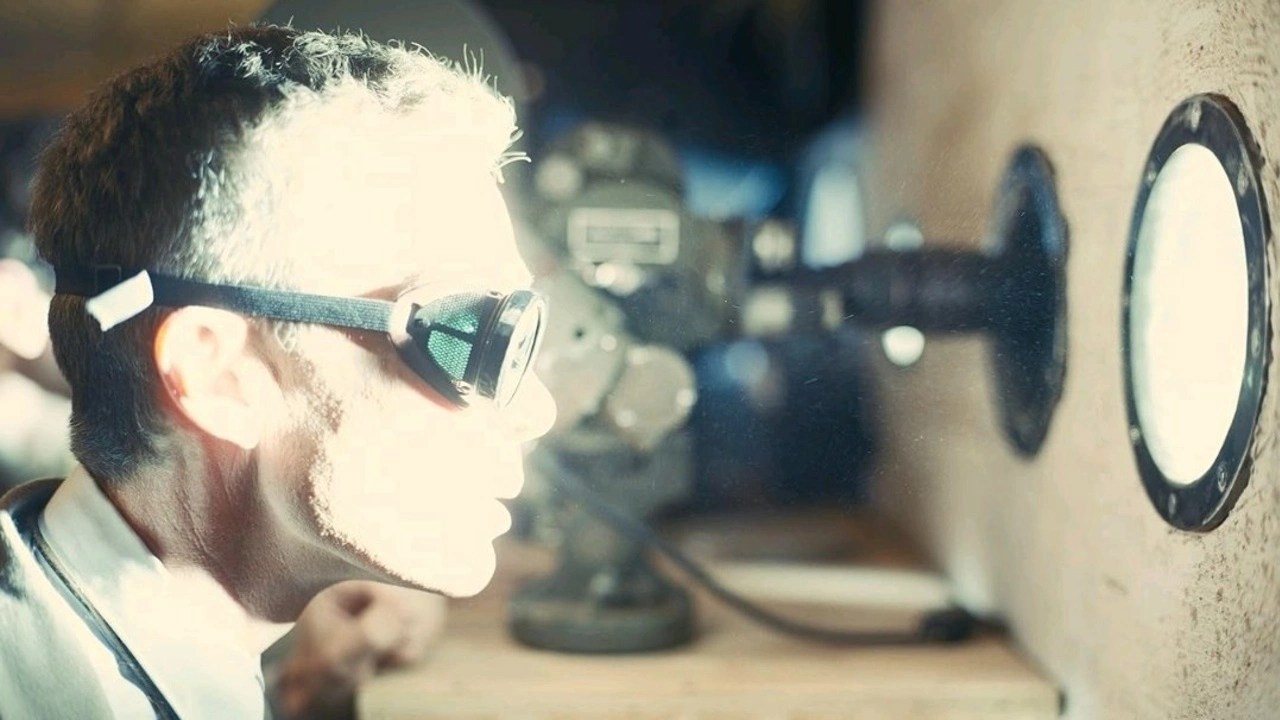
3. Oppenheimer (Christopher Nolan, US/UK)

Perhaps Nolan’s magnum opus. Which is not to say it’s his most unflawed film, but that future generations pressed for time will be able to judge his legit claims to being a major film artist—and his limitations as a writer—in one unified package. So to start, give the skeptics their due. The language Nolan speaks is fluent tentpole, with all the hand-holding and incongruous comic asides it entails. He can’t transport you to another era as convincingly via dialogue and performance as he does via soundscapes and pictures. The opposite sex still eludes him, and Oppenheimer is now the frontrunner for the most embarrassing sex scene of the 2020s. But he has a purposeful embrace of contradiction that’s rare and welcome in the multiplex, and far more thoughtful than the hits that Steven Spielberg and Oliver Stone scored with such material. And he’s accumulated a mastery of atmosphere and momentum along the way. Oppenheimer‘s visual and narrative rush functions as overload without tipping into incoherence, and the non-linear structure moves from gimmickry to a genuine distrust of resolution—a way to put victories and defeats side by side, without offering the release of either. A real triumph of blockbuster filmmaking.

2. The Zone of Interest (Jonathan Glazer, UK/Poland)

Material like this calls for a filmmaker to be a thinker as well as a technocrat, and since Glazer’s skill as the latter was never in doubt, I went in curious about the former and came out floored by what he did with it. It may not have much new to say about the atrocity in question (a tall order), but it has plenty to say about the representation of such atrocities in 2023, and the “safe” abstractions provided by space and time. With de-familiarization as its method, it’s the rare “Holocaust drama” that aspires to be as unresolved and present-tense as the most ambitious Holocaust documentaries. As pure experiential cinema, it’s chilling and hypnotic, a dry heave of a horror show. And intellectually, its coda is far from tidy. One possible implication: we only ever rescue the past.

1. Killers of the Flower Moon (Martin Scorsese, US)

Scorsese’s latest is an outstanding saga of American schizophrenia: religious values and abject greed, the contextualizing of westerns as essentially murder stories, and DiCaprio in full stammer mode as a man too dumb/callow to tell if he loves a woman or wants to kill her for her property. Lily Gladstone is as good as they say, and in a theater Robbie Robertson’s music adds to the vibe of a waking nightmare, where even the sunniest scenes have a cloud of terrorization. As Apple ate the cost of a bold theatrical push, there was a lot of foofaraw about its runtime. Personally, I support bringing back intermissions—why half-ass it? throw in overtures too—but I’m honestly not sure where you would put one in Killers of the Flower Moon without breaking that spell. As for its ending, does it land as humility or presumptuousness? It’s a debate worth having, especially because the film welcomes it. But when Scorsese throws on a present-day non-fiction coda, as so many social issue Oscar-season dramas tend to do, it doesn’t tie the film is neat little bow. In fact, just the opposite.

*****

The Honor Roll: 14 more films that made movie-going worthwhile this year:

All of Us Strangers (Andrew Haigh, UK)

Anatomy of a Fall (Justine Triet, France)

Barbie (Greta Gerwig, US)

Close Your Eyes (Victor Erice, Spain)

Ferrari (Michael Mann, US)

The Holdovers (Alexander Payne, US)

The Killer (David Fincher, US)
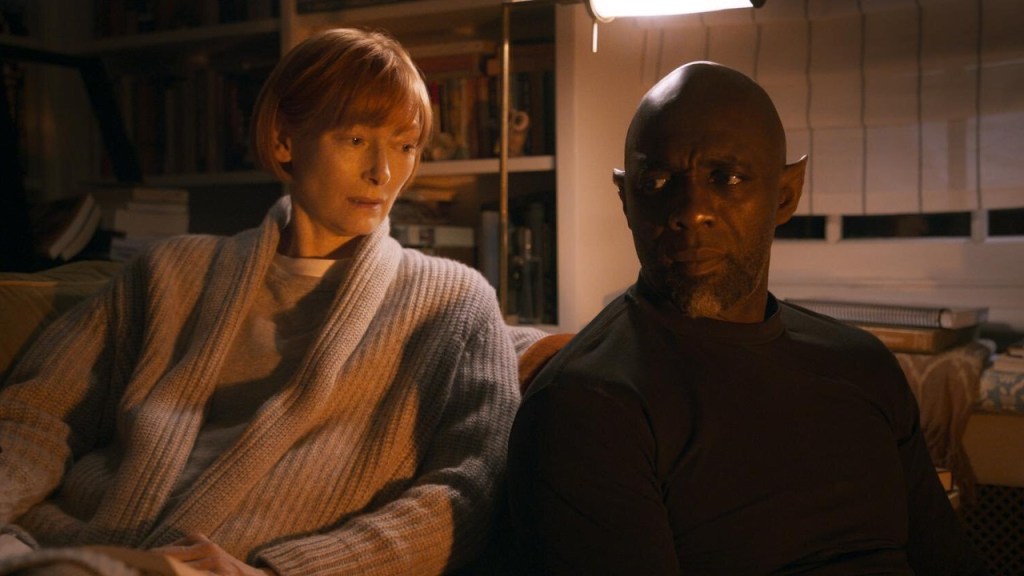
Monster (Hirokazu Koreeda, Japan)

Poor Things (Yorgos Lanthimos, US/UK/Ireland)

Spider-Man: Across the Spider-verse (Joaquim Dos Santos, Kemp Powers & Justin K. Thompson, US)

The Taste of Things (Trần Anh Hùng, France)

Unrest (Cyril Schäublin, Switzerland)

The Wonderful Story of Henry Sugar (Wes Anderson, US)

Youth (Spring) (Wang Bing, China/France)

THE ROUND-UP: 15 Contenders

The Round-Up is a collection of capsule reviews for new releases that filled up my notebook but never got a full dive. As awards season comes to a close, here’s a speed run of some highlights from the last year that’ll miss my year in review.

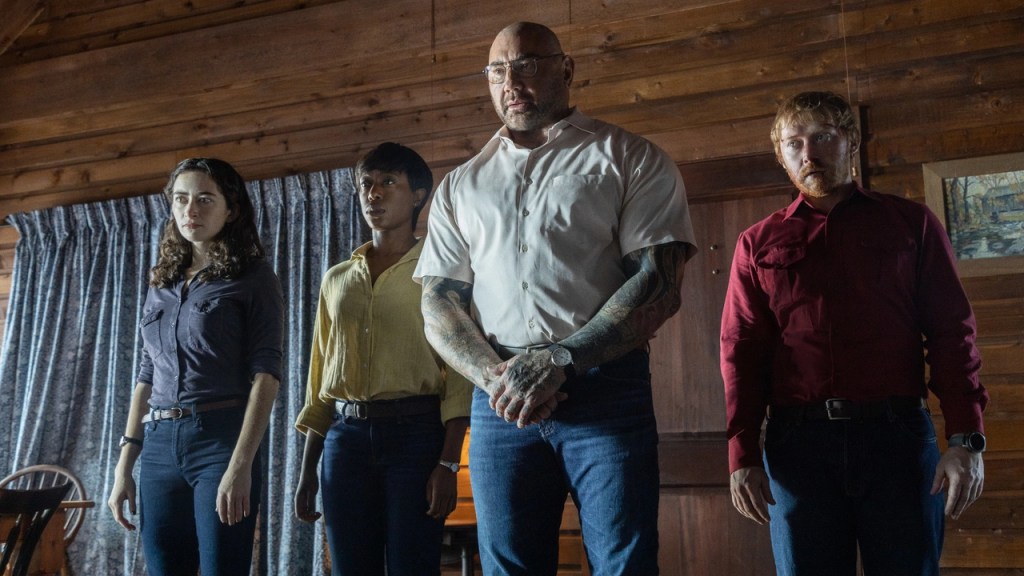
Knock at the Cabin (M. Night Shyamalan)

One of the better Shyamalans of recent vintage: lower highs, but higher lows, tighter plotting, and another year where he enlivens the post-Oscar “genre film” doldrums with genuinely interesting material. Themes include first-world isolationism, the costs of having a society (made provocative by a hard-won fight to join it), and plenty of 2023 doom-scrolling. Is it reactionary? Advanced? Depends on your interpretation and how much you detect a sense of humor. But it excels at claustrophobic action and restores “the end of the world”—a numbingly common stake at the multiplex—to its rightful place of anxiety.

✬✬✬✬✩

*****

Beau is Afraid (Ari Aster)

Considering that reactions to Beau have included “dumpster fire” and “career killer”, I spent the first half hour (of a cocky 179 minutes) with a surprising feeling: that I was firmly in the film’s corner, digging its visual command, dense detail, and Kafka-in-America humor. But its drawn-out Freudian hangups are short on insight; its challenges and explorations simply aren’t as meaningful or worthy of epic treatment as it thinks. Still, far from a career killer—more like a director biting off more than he can chew while still proving he can chew quite a lot. More than Hereditary, whose distention generally “elevated” itself above playfulness, Beau makes me want to track Aster’s future. And its final shot has a claim to being the meta moment of the year.

✬✬✬✩✩

*****

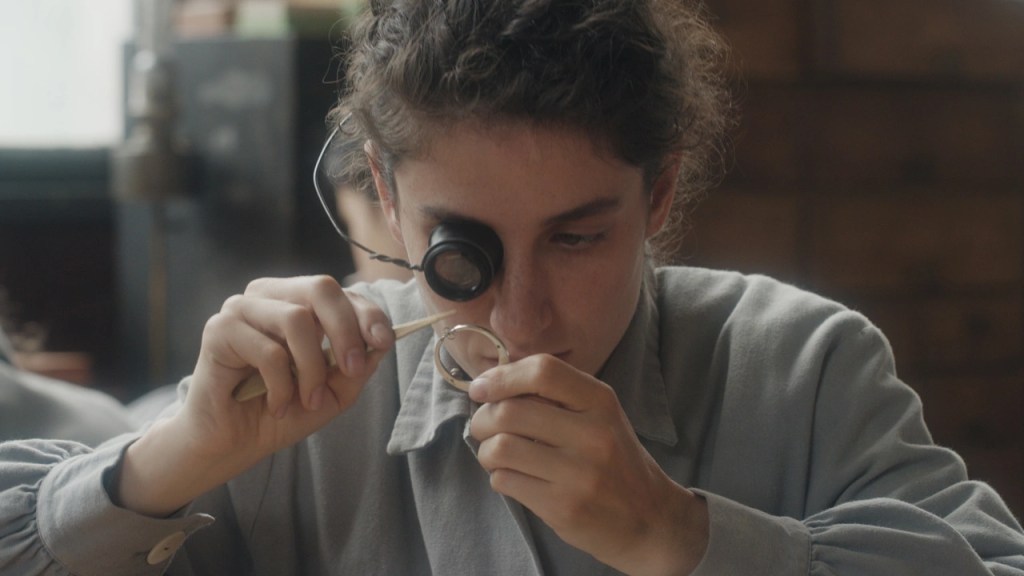
Unrest (Cyril Schäublin)

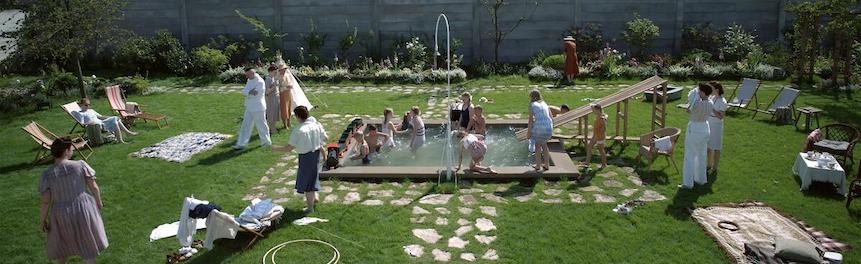
That opening is a sly one: a 19th century discussion of radical politics that takes place with sun dresses and parasols and ends with a photographer’s flash—already, you know what will end up in that photo and what won’t. The formal strategy continues from there, and the way its tight compositions seem purposely incomplete feels like a furtive look at forgotten history. That it also might be the most tranquil study of anarchism ever made has a perverse appeal. The fascists said they’d make the trains run on time. The question here—no less complex for reaching an ecstatic finish—is who knows how to tell what time it is in the first place.

✬✬✬✬✩

*****

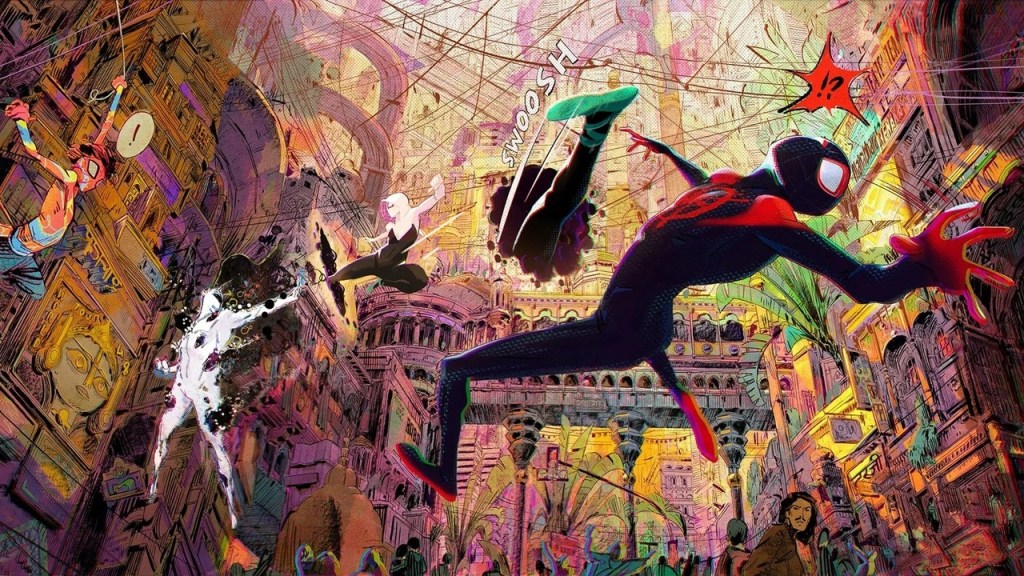
Spider-Man: Across the Spider-Verse (Joaquim Dos Santos, Kemp Powers, & Justin K. Thompson)

Dig the animation. Combining 2D and 3D, paper and cyberspace, its sensory overload is deft in a way that Everything Everywhere All At Once just left me exhausted. Five years after the first Spider-Verse, that look is still fresh. I wish I could say the same for the multiverse concept, which has become an increasingly less clever home for self-referential humor in a cosmos where “infinity” just means our favorite franchises. So I wasn’t all that taken at first. But then it veers towards an honest-to-goodness “to be continued” that makes you realize how rarely the Marvel or DC universes even attempt such a thing.

✬✬✬✬✩

*****

No Hard Feelings (Gene Stupnitsky)

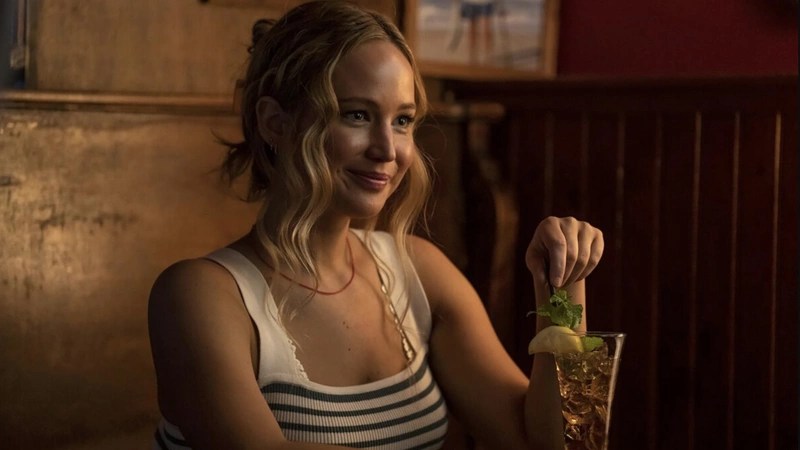
The ads played up every crass angle, but potential lay within: a look at millennial and Gen-Z failures to launch, the theme of sex work as a metaphor for the gig economy, and the sense that nowadays, reviving the teen raunch-com counts as a weird act of idealism. It’s wittier than expected—it could teach Marvel a thing or two about how to edit comic dialogue—and it ends up taking the emotions of its scenario surprisingly seriously, sometimes to surprising effect. I suspect we’ll all be tickled in 2033 when the Criterion Channel pairs it on a double bill with A Short Film About Love. Other notes: Jennifer Lawrence’s DGAF-ness is only more lovable as our generation hits middle age, and it contains cinema’s most emotionally delicate use of Hall & Oates.

✬✬✬✬✩

*****

Passages (Ira Sachs)

In the grand tradition of All That Jazz, The Stunt Man, and gossip about Fassbinder, here comes a variation on the theme directors as personal tyrants. In fact, more than the 21st century pansexuality, that idea is what elevates Passages: the way its anti-hero tries to “direct” his life with same shameless megalomania he uses on his film set. There may be a dark part of cinephilia that partway wishes to see talented egoists get away with it, and Passages would be a more interesting film if it leaned into that unsettling link. As is, it’s content to be a solid love triangle and a tart, well-acted moral tale.

✬✬✬✩✩

*****

Priscilla (Sofia Coppola)

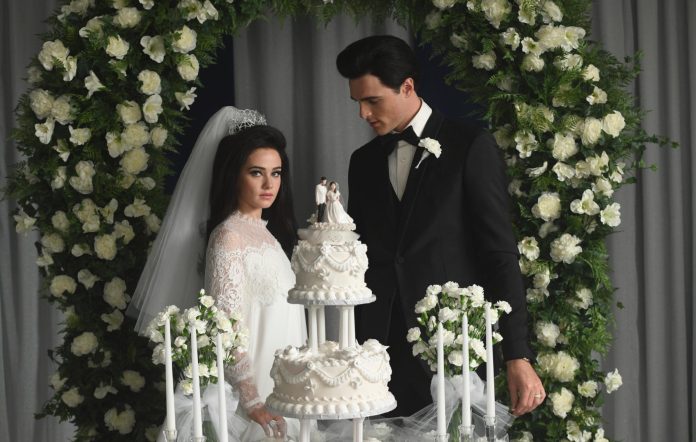
Elvis the creep, the gaslighter, the wingnut—sides that every Great Man biopic would skirt around. From the moment a girl tiptoes across shag carpet and the Ramones’ “Baby, I Love You” kicks in, Coppola’s aesthetic is perfect for the material. And at its best, all the scandalous details signify as something more than gossip: a metaphor for women plucked from girlhood and fetishized for their potential wifeliness. But the second half is a plateau—it doesn’t develop, it just extends. And so the ending is abrupt/unsatisfying for an ironic reason: it hasn’t gone nearly far enough in rendering its heroine as more than a witness and a reaction to a man.

✬✬✬✩✩

*****

The Killer (David Fincher)

Is Fincher our most covert parodist? Without ever making a film that belongs in the Comedy section, he’s made several that derive their richest meaning from a screwball subversion of their own violent, dire surfaces. So as the nth movie with hitmen as a metaphor for modern alienation, what Fincher has to add is his style (precise and forceful as ever) and the sneaking sense of a put-on—that the monologs are inane, the antihero not quite a badass, and his world of brand names and sitcom aliases so tacky that even if alienation is a natural response, there’s no way to be alienated with dignity. At least, not with any more dignity than a middle-aged man who listens to The Smiths.

✬✬✬✬✩

*****

Ferrari (Michael Mann)

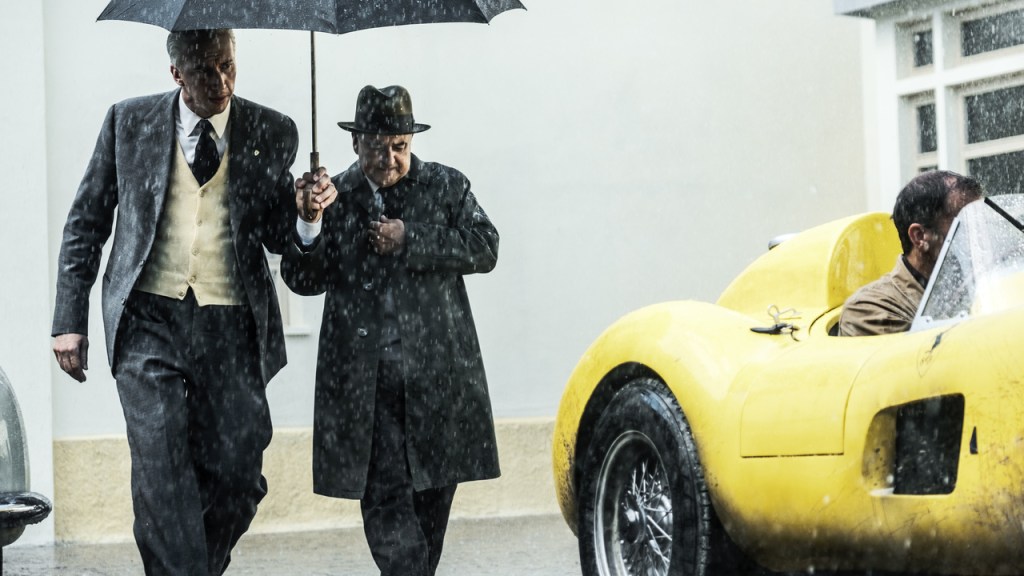
Tarry, and you’ll miss the moment after a Michael Mann film flops but before it becomes a cult classic. As for the flop, I imagine the Academy was turned off by the chintzy CGI and Shailene Woodley’s questionable accent, while anyone after pure genre kicks had to sit through a somber older man’s film. But this is the best “Howard Hawks movie” we’re likely to get for some time, and even as it reworks the obsessions of Only Angels Have Wings, Mann brings a formal flair rare in Hawks. And in Penelope Cruz—one of Mann’s most complete heroines, which is actually saying more than it sounds—you get a tragic arc that balances the wages of machismo.

✬✬✬✬✩

*****

Maestro (Bradley Cooper)

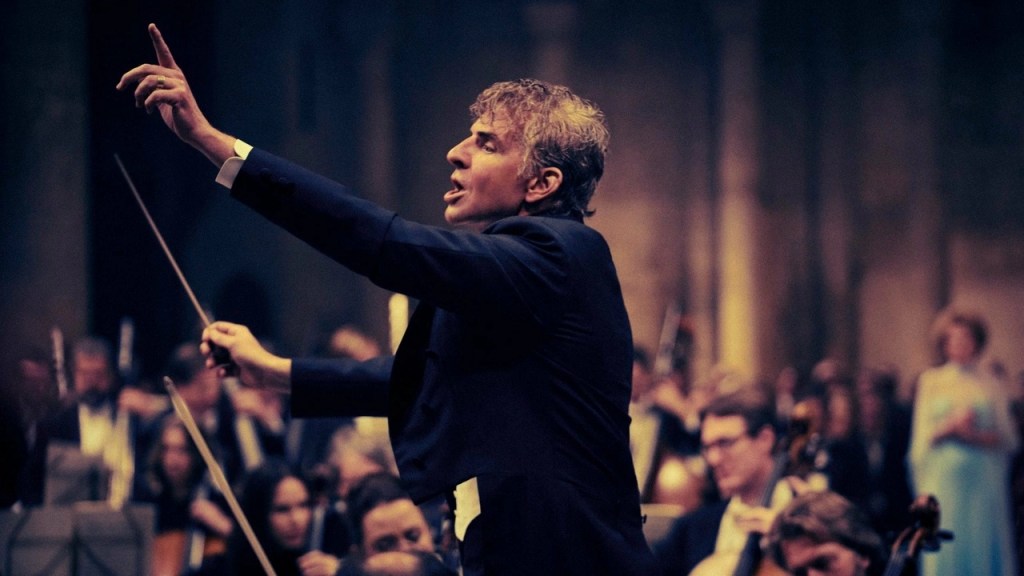
Bradley the Actor is fussy, doing a showy imitation through his sinuses. Bradley the Director is reaching for the gods, and it’s a credit to ambition/inspiration that the two most memorable shots are a sudden, rocket-fast tracking shot and a completely static long take. That, plus his improvisional handling of actors, and just about any scene of Maestro has more life than most Oscar bait. But it’s hard to say it adds up to much, certainly not the complexity and contradictions promised by the opening quote. And it’s hard to say what audience it’s meant to reach. Other than fellow insiders who want yearly assurance that Hollywood-as-art isn’t dying.

✬✬✬✩✩

*****

All of Us Strangers (Andrew Haigh)

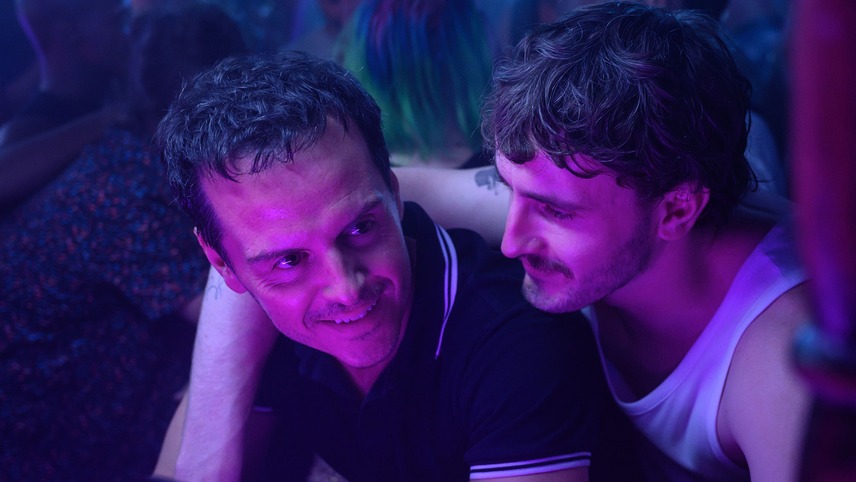
The color scheme—crepuscular neon acid rave—is plenty otherworldly even before the film quietly becomes a kind of ghost story. It all makes London seem like a necropolis, and it wrings some eerie intrigue from making you wonder which side of the great beyond any particular character is on. Admittedly, like many mysteries, it gets less compelling as it demystifies itself; its psychoanalysis is pretty literal, its double meanings too blunt. But Haigh excels at a very English style of hushed intensity, of humble emotional helplessness. There are conversations here that would be moving on any plane of existence.

✬✬✬✬✩

*****

The Holdovers (Alexander Payne)

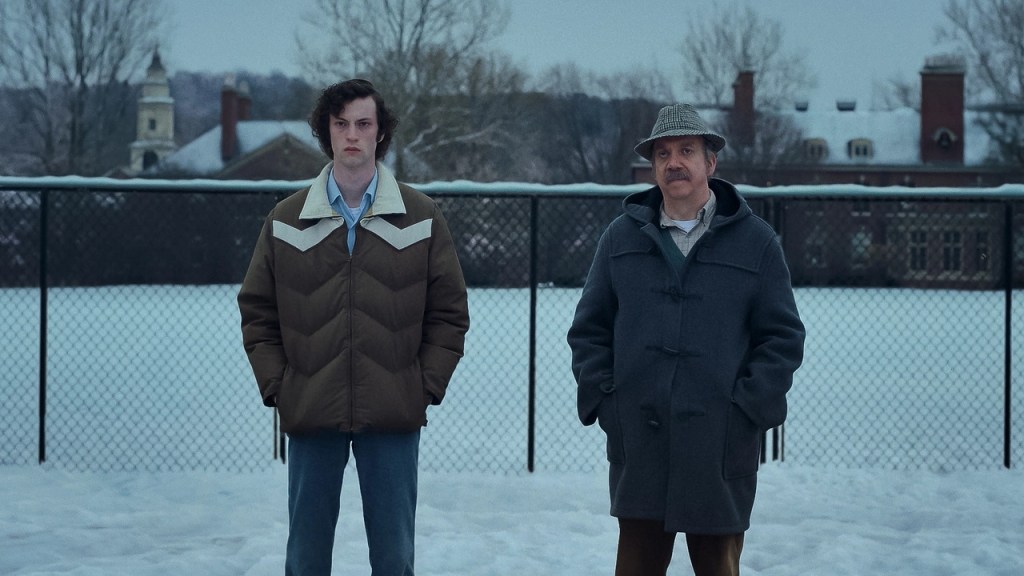
The tensions of a good Payne movie (and this is one of them) are tied to the system he works within: making character-driven “small” films—about unfulfilled dreams, unresolved fates, unremarkable people, etc.—even as you sense showmen in the back of the theater gauging the crowd’s reaction and deploying the right readymade at the right time. Even if The Holdovers didn’t rope in Cat Stevens, it’d register as ersatz Hal Ashby. A good portion of its DNA recalls Harold and Maude and The Last Detail, but the difference is crucial: each of those movies aimed to connect with the world outside the theater, and The Holdovers is so safely ensconced in the past-tense, even with a few gestures at class consciousness, that it’s hardly any less sealed off than most fantasy films. But since Ashby films are a finite resource, and even imitators are rare, why fight the fantasy? Payne plants some surprises on this journey, if not in the destination. And there are moments where emotional delicacy signifies as more than showmanship.

✬✬✬✬✩

*****

American Fiction (Cord Jefferson)

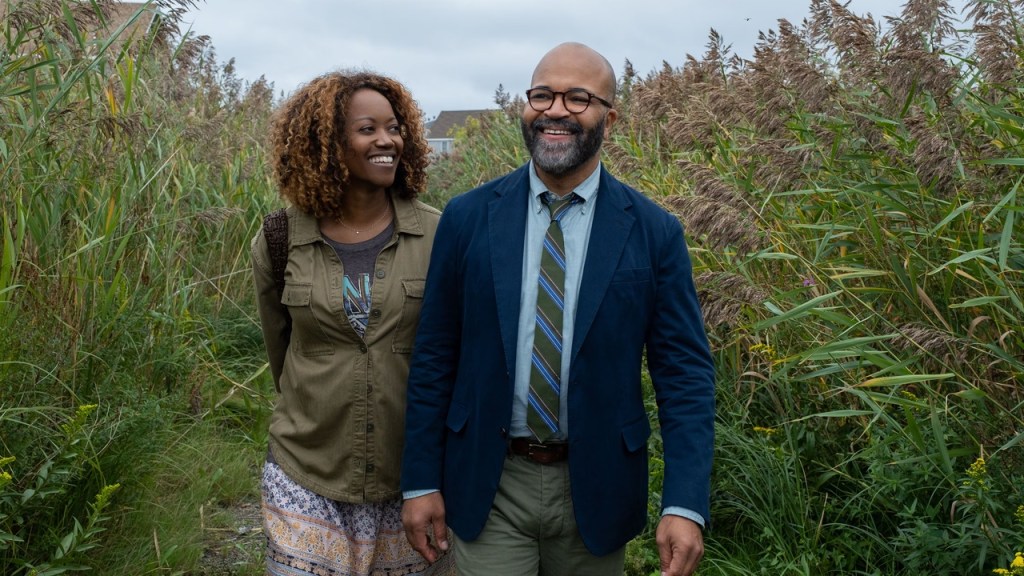
More than one person has asked how this holds up to Spike Lee’s Bamboozled, and the comparison is instructive. Spike Lee’s film, dotted with alienating decisions, was hardly sensible. But it had enough fire in its belly to make sensibility look like the enemy of passion. It’s jarring and hallucinatory—it turns being smothered by media representation into a waking nightmare, and any five minutes with its mess of ideas and styles will give you an idea why it flopped. American Fiction, for its part, is reassuring, ingratiating, even cutesy—and so its polish fades away. Tepid as satire, its virtues lie in the other side of the coin: a fine show-don’t-tell portrait of a “non-stereotypical” family. And in its final confrontation between Jeffrey Wright and Issa Rae, it lands one rhetorical coup: a tentative, thorny dialogue, never resolved, just cut short once someone white enters the room.

✬✬✬✩✩

*****

Dumb Money (Craig Gillespie)

With I, Tonya, Gillespie struck me as one of the most “have your cake and it eat too” directors of our moment: someone who’ll strike a pose of populism even as his movie snidely positions itself above its subjects. Dumb Money has less of I, Tonya‘s irksome hypocrisies, and its entertaining script balances the irony involved in seeking victory on a crooked playing field. But as it apes The Big Short and The Social Network for style and structure, its own populism (“the little guy”, “regular Joes”, “the movement is just beginning”) is so mild, imitative, and cursory that its main rallying cry is just to buy a movie ticket.

✬✬✩✩✩

*****

The Taste of Things (Trần Anh Hùng)

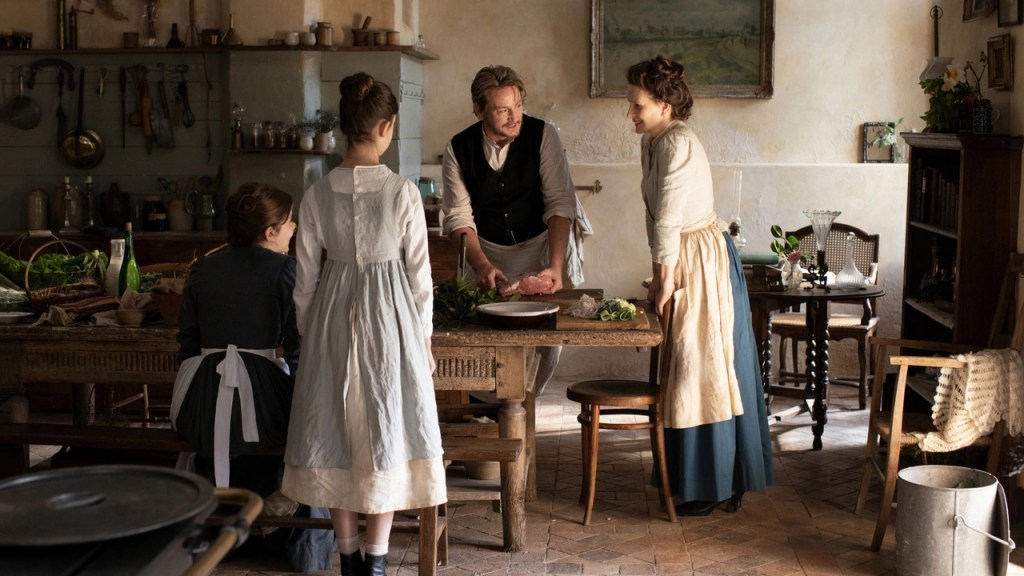
A real treat for foodies—the opening forestalls story for 30 minutes of cooking the way an action movie might do the same for a car chase, and to a similarly spectacular effect. Most of all, the camera is nearly always on the move—hovering, following, circling. It alternately recalls Ophüls, Altman, or Scorsese, and if one might pump the brakes on comparison to such revered masters, it’s still wonderful to see camera motion as a worldview. Food is cinema is love is life, and all can ravish you. What it says about grief and rebirth may not be all that novel or deep. But it’s a sumptuous rendering.

✬✬✬✬✩

*****

Next Door to Prestige 6: Magic of the Movies Edition

Salient question: are we in hell?

I know that the general consensus is that yes, the world as a whole very much is. But if we narrow our perspective from “the world” to “the movies”—it is Oscar night, after all—what’s the prognosis?

That, at least, is what spurred a round of discourse in the Fall when Quentin Tarantino proposed that our current era is the worst in Hollywood history. It’s an exhaustion, or an anxiety, hardly exclusive to him: the sense that whatever confluence of inspiration and economics kept movies relevant for a century is now stuck in a creatively arid time-loop, with no end in sight.

His assessment comes with a few asterisks. Alongside the present, his picks for Hollywood’s nadir were the 1950s and the 1980s, which understandably cocked a few eyebrows. Hollywood in the 50s, after all, had Alfred Hitchcock, John Ford, Howard Hawks, Fritz Lang, Vincente Minnelli, Douglas Sirk, Nicholas Ray, Sam Fuller, Billy Wilder, etc., on golden runs. And it was a decade when such adult-friendly films as The Bridge on the River Kwai, The Quiet Man, Some Came Running, and From Here to Eternity stood a chance of placing among the biggest box office hits of the year. As for the 1980s, yes, it was an era where relatively empty-headed and juvenile spectacles swallowed up the adventurism of the New Hollywood. But I imagine both audiences and critics would be thrilled to get a steady stream of proper 80s blockbusters today. In fact, you don’t need to imagine—you just need to look at the rapturous response to Top Gun: Maverick.

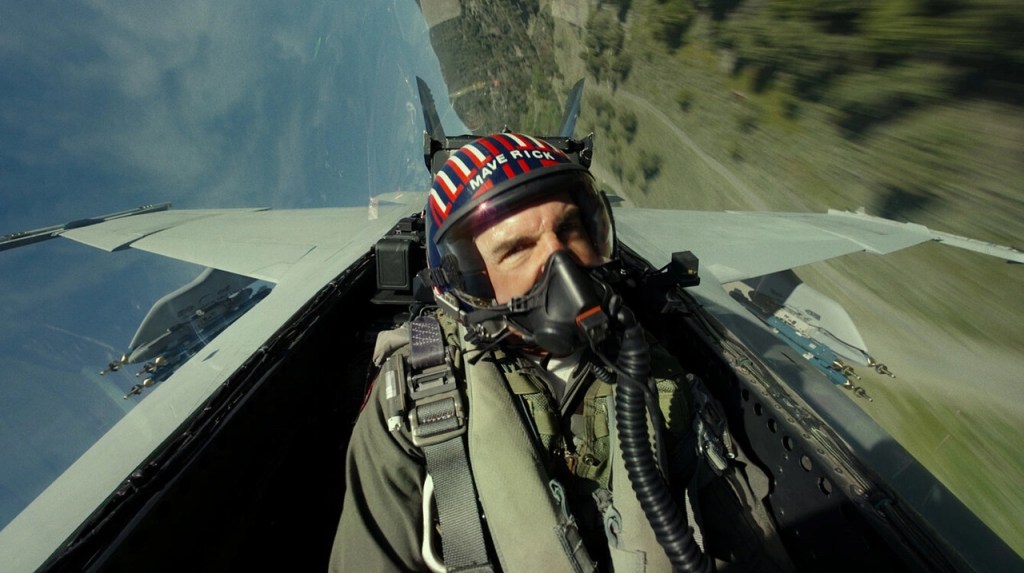
Top Gun: Maverick restores your faith in the magic of movies,” trumpeted the advertisements, as the summer’s biggest hit extended its run into the winter. Their marketing team was playing a bit fast and loose. The exact quote (from ScreenCrush’s Matt Singer) is that the film “restores a little of your faith in the magic of movies”, which manages expectations but looks worse in a YouTube ad. But I can’t quibble with a marketer’s liberties. In 2022, there wasn’t a greater unifier than Top Gun: Maverick across every conceivable metric in my social circle—gender, age, politics, etc. It’s not expected to pick up many Oscars tonight, so instead I’ll note a curious grand prize it already won: the AARP’s “Movies for Grown Ups” award. Which is notable first because, for children of the 90s, the headline “senior citizens praise Jerry Bruckheimer sequel as a breath of fresh air” sounds insane. And second, because in 2022, it makes perfect sense.

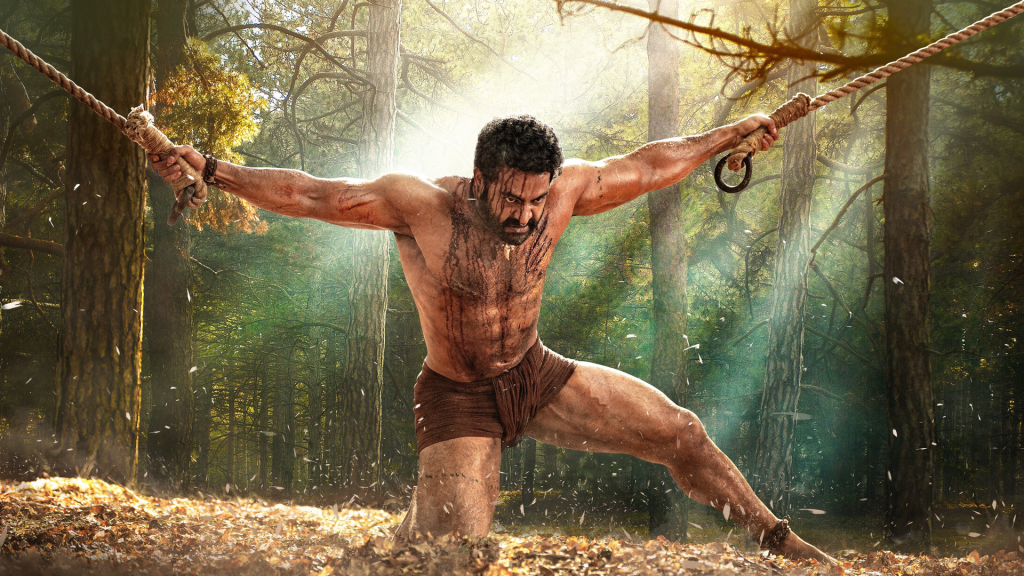
The new Top Gun was not the first post-pandemic movie to do pre-pandemic box office, nor is it remotely alone in revivals of 80s franchises. But rather than hip fan service, it felt like a lost era of classicism—not just in its structure and practical FX, but in its understanding of an audience’s relationship to spectacle, to movie stars, and to the promise of big screen experiences. And I’m optimistic enough to think that, after two years of topsy-turvy box office, there was enough of a vacuum that if Tom Cruise and company hadn’t come along, someone else would have. That vacuum helps explain why surprisingly large American audiences sought out unironic cinematic excess from two sources known for it: Baz Luhrmann (Elvis) and India (RRR). It explains the Academy’s disproportionate love for the German-language All Quiet on the Western Front, whose nine nominations only remind you that Hollywood used to make this sort of movie itself every Oscar season. And it explains why I spent a few weeks over the winter quietly rooting for Avatar: The Way of Water to hit its insanely risky $2 billion break-even point, as if the 13 years since the first Avatar have turned James Cameron into an underdog. (Yes, it’s a CGI blockbuster, but a CGI blockbuster willed into existence and very much informed by the idiosyncrasies of one man).

So it’s serendipitous that “the magic of the movies” was itself an explicit subject of several films throughout 2022. And what those films had to say was often far from simple pie-eyed nostalgia.

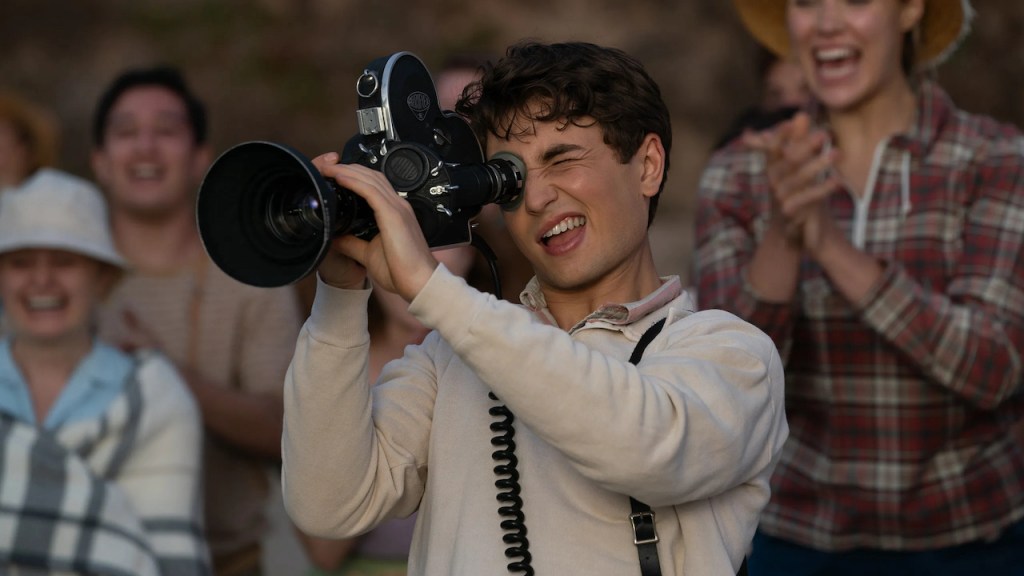
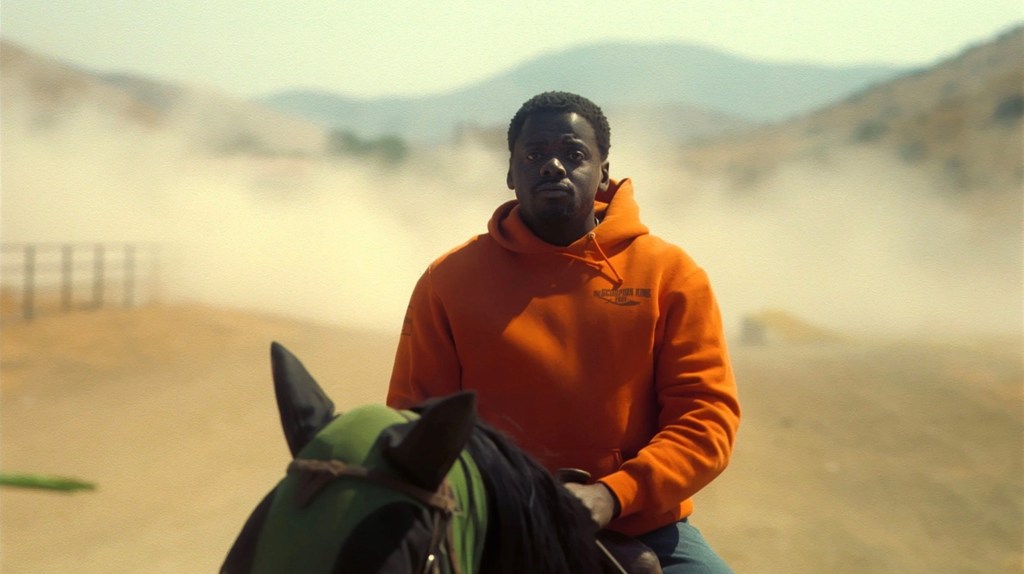
Steven Spielberg’s The Fabelmans is the most obvious example, both expectedly joyful and surprisingly uneasy about the effects movies have on their audiences and their creators. It’s too difficult to succinctly pitch The Fabelmans based on what’s exceptional about it—its motherlode (pun not intended) of complex meta statements—so the studio instead sold it as simple uplift and then watched it stiff at the box office. Far more successful was Jordan Peele’s sci-fi blockbuster Nope, which is, in a manner of speaking, all about a group of filmmakers trying to nail a single shot. And the dissatisfaction that some Peele fans initially felt with the ending—that it feels like an abdication or even a betrayal of the movie’s subversive attitude—might be chalked up to how filmmakers can be far more sympathetic in their struggle than in their success. Meanwhile, Ti West’s X and Pearl explored how the stuff of dirty movies overlaps with the stuff of life. And on the festival circuit, the year’s most euphoric take on moviemaking was also its smallest: Hong Sang-soo’s The Novelist’s Film. Barely released in the US yet, it traces a causal chain from sitting alone in a bookstore to having something of your own in a theater. And the source of its happiness is purely in the creative process itself: reception is irrelevant. Even Clerks III, which I expected to find depressing and largely did, has its best moments when Kevin Smith gives a curtain call to the local actors and personal buddies who shared in his DIY original.

“Good luck to you,” a cranky John Ford, played by a cranky David Lynch, advises at the end of The Fabelmans. “And get the fuck out of my office.” And surely the spirit of that valedictory is one reason The Fabelmans is so resonant to its admirers. It is, in the end, a passing-of-the-torch movie. And it comes at a time when I’m honestly not sure who in my generation is there to receive it. In 2022, who was even a contender?

Damien Chazelle? He made his own “magic of the movies” film last year. And although what Babylon has to say could conceivably place it among the year’s most relevant, its tonal mess also magnifies what’s dogged him ever since Whiplash: a gap between precocious aspirations of tough, worldly wisdom and making those tragic lessons actually feel earned.

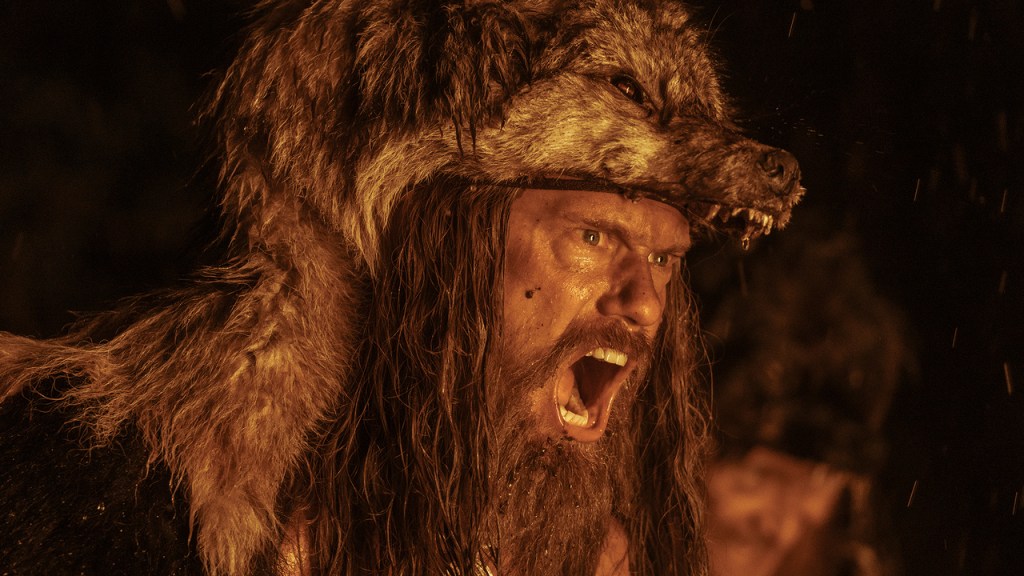
Robert Eggers? You have to admire anyone who cashes in their chips on an ambitious undertaking like The Northman. But the ambition of his films is physical, not dramatic—it’s difficult to argue that there’s much he wants to say at all.

So what about Daniel Kwan and Daniel Scheinert?

The Daniels (as they prefer to be known) are set to win big at the Oscars tonight for writing and directing Everything Everywhere All at Once. If they take home Best Director, as they’re widely expected to, it’ll be the first time in Academy history that that statue has gone to someone (just barely) younger than I am—and I must confess that there was no movie last year whose popularity made me feel older. True to its title, Everything Everywhere is a lot, so there’s a lot to like: a perfect cast it never underestimates, and an opening act that beautifully establishes a family unit under pressure. But its blockbuster maximalism exhausts me for the same reason it does in far less thoughtful films: this is not a movie that will ever quit a conceit while it’s ahead, or build up to one climax when it could pile on three or four in a row. Which could be over-interpreted as a sign that today’s liberatingly weird youth movies are beholden to an idiom I’d rather they weren’t. Or it could simply mean that the Daniels have the kind of creative union where they crack each other up so much that they’re more than happy to repeat any non sequitur gag far past the point of novelty.

Still, even saying so makes me feel like a grinch—or worse, Bosley Crowther—because the film’s giggly dedication to excess is part of what its fans love about it. And make no mistake, those fans are there. Even if A24 is merchandizing it within an inch of its life, Everything Everywhere qualifies as an authentic audience phenomenon to a degree that most Oscar campaigns can only pretend. And while it would be easy to succumb to cynicism and say that the Academy’s picks fell out of touch with the zeitgeist long ago, such intersections have happened more often, more recently, and with more justification than cynics tend to remember. To find a comparable example, you only need to go back three years: to Parasite, in 2019.

In other words, there are plenty of reasons on this Oscar night to believe we’re not in hell. And one of them is that, for the first time since the pandemic, compiling a list of favorites required some tough decisions and painful cuts. This was a packed year, and even 25 films don’t do justice to the unexpected trends and happy surprises it offered.

Are we in heaven, then? The same way that someone who looks back at the 50s and sees only the conservatism of kitschy Bible epics and family matinees might miss that they’re in a cinematic golden age? Not remotely, not even for a Pollyanna-ish exercise such as this. But if you hold purgatory upside down and shake it, some real gems might fall out.

My 10 favorites of 2022:

10. Pacifiction (Albert Serra, France/Spain)

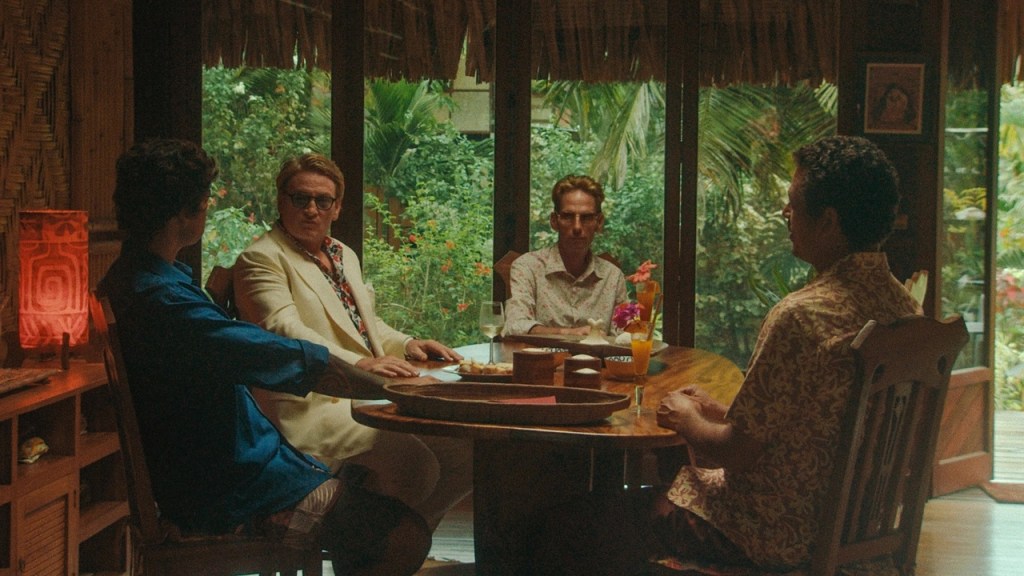
In far-off Tahiti, a local politician—white suit, white teeth, white skin—moves back and forth between the French authorities and the native population, all while something ominous is brewing. He’s both a glad-hander and a quasi-sympathizer, and the film’s achievement is to give his journey an air of unreality while feeling discomfortingly close to the world of our own. To say that there wasn’t anything else quite like it last year isn’t simply meant as a rave, but a statement of fact; I’ve been wary of the total praise swirling around Albert Serra, but it’s undeniably impressive how much his tone, images, and structural choices defy cliche even while he gives you the hook and payoff of a classic paranoia thriller. The haunted final passage and climactic speech are something chilling.

9. Alcarràs (Carla Simon, Spain)

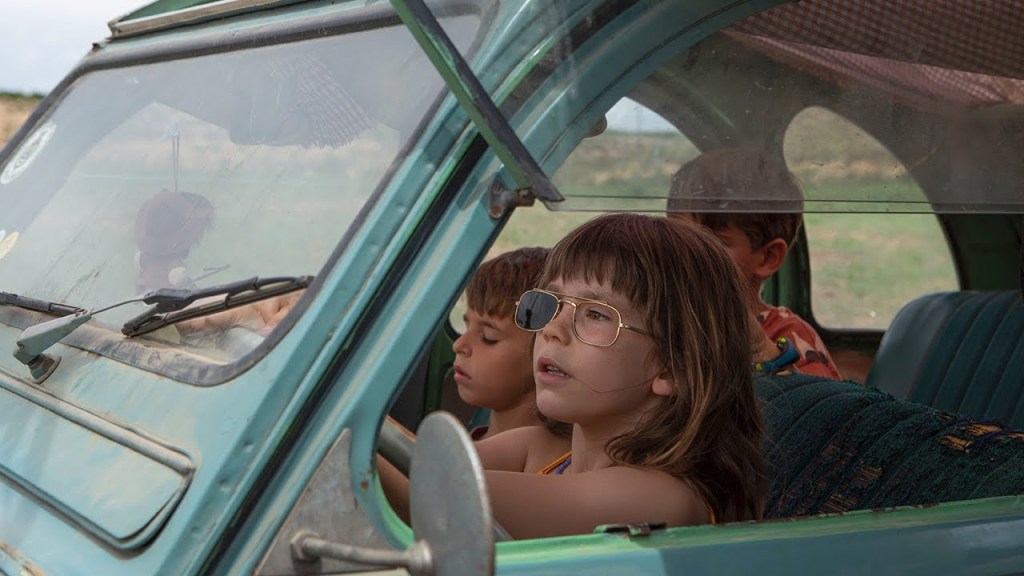
In a pitch meeting, Carla Simon’s Berlinale hit is nothing we don’t have plenty of already: socially conscious neorealism about ordinary people caught in an economic shift. But all the human behavior, large and small, is gloriously unaffected, and the drama is neither over- nor underwritten—rare virtues, even at the world’s most celebrated festivals. So it’s a beautiful film, not just about change, but about how even close families share space while living in different worlds. I wish we had more like it.

8. Top Gun: Maverick (Joseph Kosinski, US)

At a time when so many films feel small even in a theater, this feels big even on a TV. It just about turns movie star hubris into a real elegy. It has all the macho/jingo stuff to let guys pretend it’s not really for big softies. And it hits its nostalgia buttons more in the ways that matter than the ways that don’t. (You can take it as a sign of integrity that it never replays “Take My Breath Away”). The happiest the ghost of Howard Hawks has been in ages.

7. Aftersun (Charlotte Wells, UK/US)

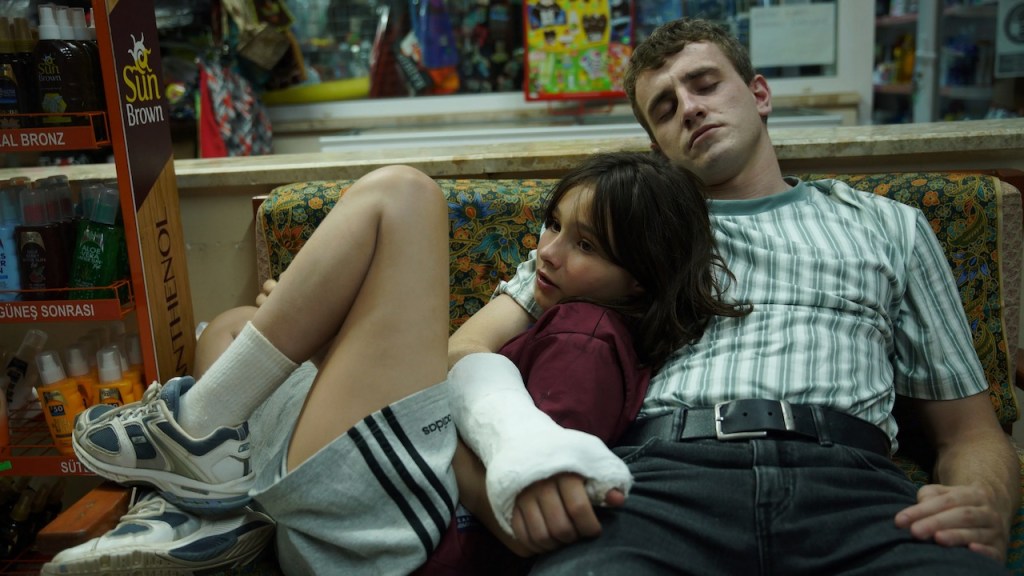
A girl and her divorced dad at a vacation getaway. We see their bond, the worries weighing on him, and how she might notice them too whether she realizes it or not—only she’s also 11, and growing her own way. Aftersun captures this dynamic so beautifully that I spent most of the movie hoping that it wouldn’t feel the need for any more plot than that. It doesn’t. And if it does labor in search of an ending for a story that doesn’t really have or need one, it nonetheless announces Wells as a rising star. It’s the best “Sofia Coppola movie” since Sofia herself made The Virgin Suicides.

6. Happening (Audrey Diwan, France)

Did Texas play a part? At the 2021 Venice Film Festival, the jury unanimously awarded Happening the Golden Lion mere days after bombshell news about Texas’s abortion ban. And needless to say, by the time the film landed in America in 2022, things had only gotten worse. The concept—a young woman runs the gauntlet to terminate a pregnancy—is hardly new. But Diwan’s film expands on such previous renditions as Never Rarely Sometimes Always and 4 Months, 3 Weeks, and 2 Days with a wider context of sexual dynamics, personal relationships, and social stigma. And unlike those two films, it manages to convey urgency and intensity without hitting a sensationalist note.

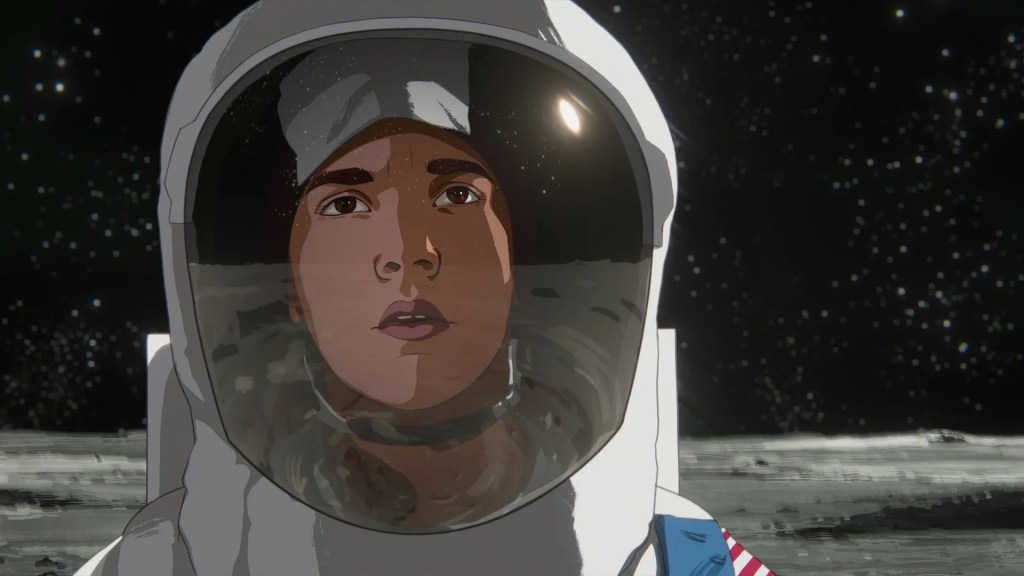
5. Apollo 10½: A Space Age Childhood (Richard Linklater, US)

Linklater’s latest rotoscoped animation anchors a wild flight of fancy in an Amarcord-style memory film with even less plot than usual. Linklater isn’t interested in stories, or even episodes. He’s interested in turning artifacts and fragments into a compendium of boundless charm. In this context, the animation works not just visually but conceptually, to dissolve barriers between the endearingly mundane and the flagrantly impossible. Which a lovely last line about remembering magnificently brings home.

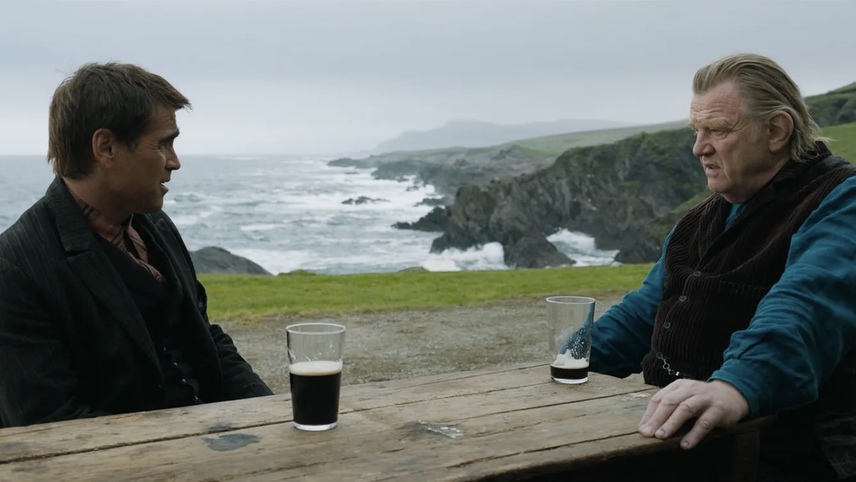
4. The Banshees of Inishiren (Martin McDonagh, Ireland/US)

After the tourist trap of In Bruges and the Anytown USA of Three Billboards, Martin McDonagh finds another reason to distrust the picturesque. For him, a village isn’t quaint or charming just because it’s small; after all, all you need for bad blood is two people. I understand the hesitations about McDonagh the Director, and I even share a few of them. But McDonagh the Writer is at a brilliant peak, and his cast rises to every challenge. An unpredictable, dark, and humane allegory about messy coexistence.

3. All the Beauty and the Bloodshed (Laura Poitras, US)

In Laura Poitras’s documentarty, two tracks run side by side. The first is an all-purpose biography of photographer Nan Goldin’s life and art, and the other a present-tense chronicle of her activism against the Sackler family of opioid barons. How do the two movies connect? One answer is simply that Poitras structures the material so well that it toggles back and forth without a hiccup. Another is that the film is about culture vs. counterculture: how society needs outcasts to keep itself honest. And yet another is that it’s all about art: those who create/live it, and the wealthy patrons who merely buy it. The fact that the world of art may be the only one Goldin and Poitras can change has a bittersweet aftertaste. All the more so because the film knows it.

2. Crimes of the Future (David Cronenberg, Canada/Greece)

Cronenberg is definitively not for everyone, but few directors have a body of work as uncompromised. Nearly every Cronenberg film has been, if not necessarily better or worse than the one before it, at least some kind of progression. His much-hyped return (his first feature in nearly a decade, and his first “body horror” movie since the 90s) is both something old and something new, and unique in the chemistry: it reclaims the genre trappings of his past without ditching the austerity he’s developed since. Indeed, Neon’s marketing campaign—a highly selective supercut of gross-outs and nightmare fuel—shortchanged how this compelling noir maze is less transgressive than soulful. It is a film about aging, even about love, and an anxious but fully-fleshed theorem of things to come. And that ending? Probably the year’s best, and certainly the one we deserve. Equal parts warning and ecstatic release.

1. The Fabelmans (Steven Spielberg, US)

If anyone in Hollywood has a right to self-mythologize, Spielberg does, but The Fabelmans is much more. Charges of excess sentimentality have dogged him forever, but if innocence (or naivety) is a narrow approach to art, Spielberg also proven that the desire for innocence/naivety can be a complex subject. And in that regard, The Fabelmans is not just slick, not just entertaining, but fascinating. This is about movie geeks and showmen and how those urges mediate experience: what gets played up, what gets left out, what slips in unconsciously, and what function the final product serves. So while he hasn’t (couldn’t?) make a film that’s raw, even the glossy tidiness of The Fabelmans registers as both face-value and commentary. Film theorists will be more moved than sentimentalists. But don’t doubt that there’s overlap. Especially now.

*****

The Honor Roll: 15 more films that made movie-going worthwhile this year:

Armageddon Time (James Gray, US)

Close (Lukas Dhont, Belgium)

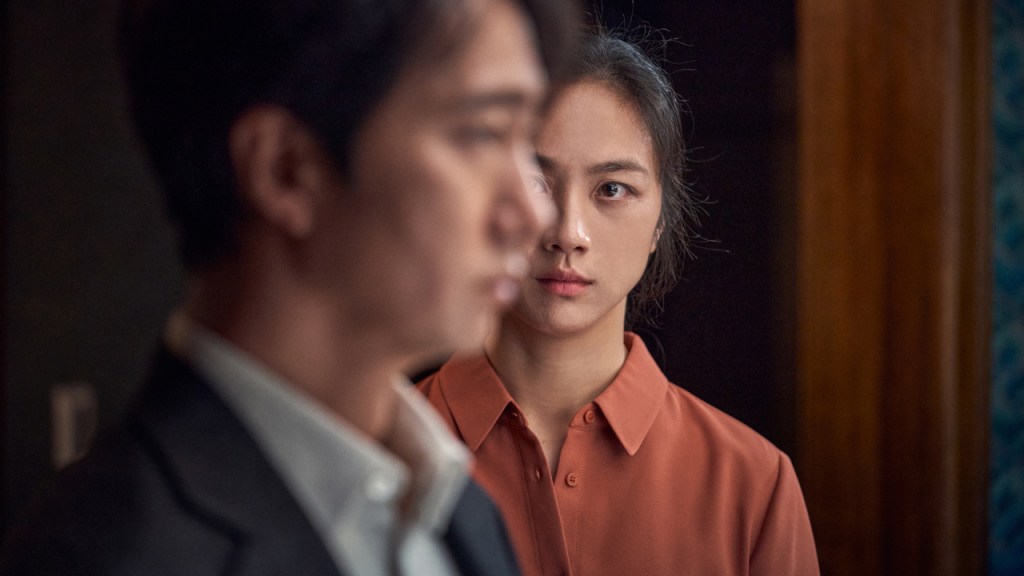
Decision to Leave (Park Chan-wook, South Korea)

Elvis (Baz Luhrmann, US)

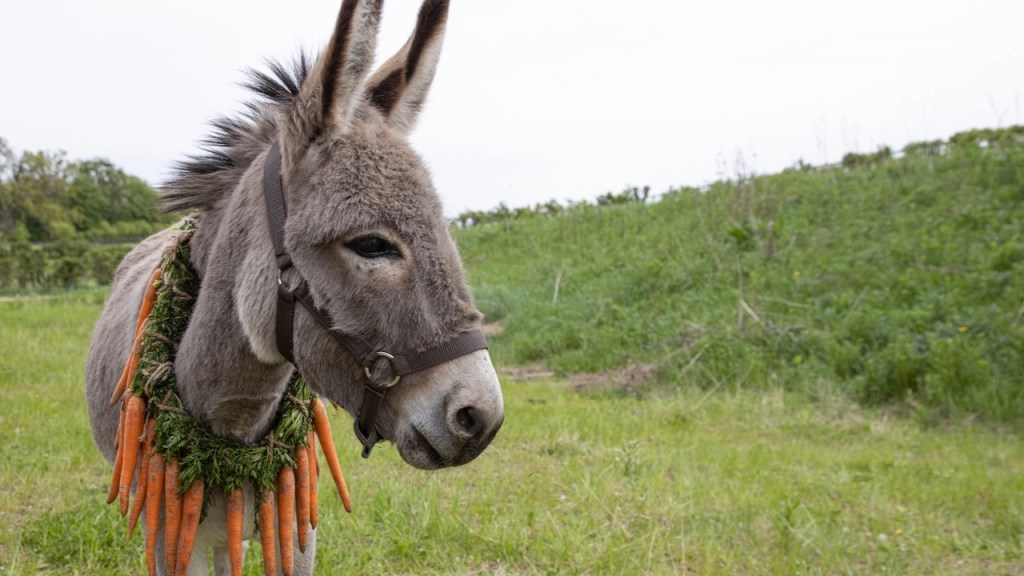
EO (Jerzy Skolimowski, Poland)

The Girl and the Spider (Ramon & Silvan Zürcher, Switzerland)

Nope (Jordan Peele, US)

The Novelist’s Film (Hong Sang-soo, South Korea)

Pearl (Ti West, US)

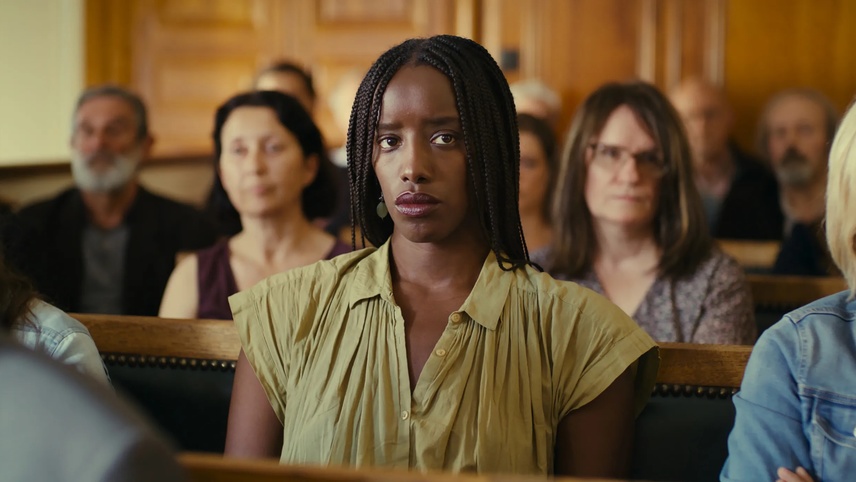
Saint Omer (Alice Diop, France)

Stars at Noon (Claire Denis, France)

Tar (Todd Field, US)

Triangle of Sadness (Ruben Östlund, Sweden/UK)

Turning Red (Domee Shi, US)

X (Ti West, US)

THE ROUND-UP: 14 for ’22

The Round-Up is a collection of capsule reviews for new releases that filled up my notebook but never got a full dive. As awards season comes to a close, here’s a speed run of some highlights from the last year that’ll miss my year in review.

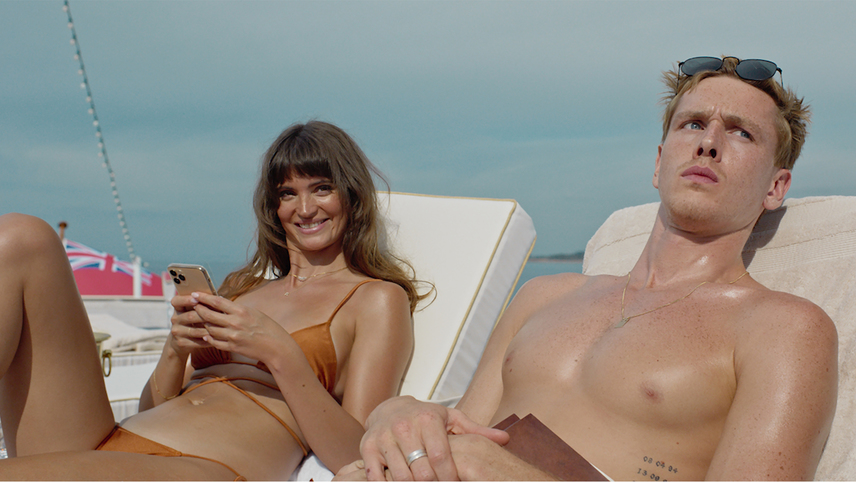
Triangle of Sadness (Ruben Östlund)

If laughter, not just vomit, lives in the gut, Östlund knows how to draw it out, and when his jokes are about male insecurity or the failure of well-intentioned people to connect, they’re meaningful too. As a commentator or provocateur, he can’t hold a candle to Wertmuller, let alone Bunuel. As a miniaturist gone maximal, he’s thin, and when he addresses politics by name, you doubt the class clown even cares. But he has a humanistic affection for bumblers who’d be natural bedfellows if not for sociopolitical barriers—a cockeyed character warmth that wouldn’t be on Wertmuller’s or Bunuel’s agenda. So If you see anyone praise this as a brilliantly satirical “takedown of the rich”, don’t believe them. Its value lies in its sense of thwarted romance.

✬✬✬✬✩

*****

RRR (S.S. Rajamouli)

Tops most of Hollywood’s latest in pacing, twists, and flair, and it never exhausts itself—even at three hours, you never feel like you’ve seen it all. But as someone who considers irony a virus on contemporary movie viewership, I’m as leery as I am optimistic about its American film buff crossover appeal. Is it a sign of cine-hipsters accepting each unironic affect of a fundamentally unironic movie? Or more proof that it’s easier to pitch a film on its bonkers midnight movie/cult appeal than as something meant for serious reflection? Because if you reflect on RRR, you could get hurt. You’ll chiefly see a “foreign film” with as much fascistic numbness towards violence as anything we make in the West.

✬✬✬✩✩

*****

Guillermo Del Toro’s Pinocchio (Guillermo Del Toro & Mark Gustafson)

Kids today have it easy: too many Minions, not enough troubling, potentially traumatizing children’s films. In that department, artistic principles explain why Del Toro’s retelling feels closer to the Disney original than Disney’s own remake did. It is a tad overstuffed, and the none-too-memorable songs get in the way. But when Del Toro assumes the role of an eternally young lapsed-Catholic pedagogue, he evokes just the right amount of skepticism towards authority. Kids have already started to figure out that some questions only have troubling answers. So I’m glad they have this to chew over.

✬✬✬✬✩

*****

Nope (Jordan Peele)

Peele runs the risk of being praised too much too soon, especially since his payoffs have been shakier since Get Out. But vision is vision and layers are layers, and he’s one of our few current hitmakers who’d design a movie good both for writing a thinkpiece about media exploitation and for grabbing friends/popcorn and anticipating the Big Reveal. The most glory Fry’s Electronics has gotten in years. Chris Kattan too.

✬✬✬✬✩

*****

Bodies Bodies Bodies (Halina Reijn)

I suspect this would make a good double bill with Scream: slasher films whose frights/laughs are rooted in the respective social maladies of Gen-X and Gen-Z. The latter’s scare me more. But although this clever exercise ultimately feels too ungrounded to fulfill its promise as a statement about intimacy and alienation, I’m tempted to round it up to 4 stars because it clocks in at ninety unwasted minutes and makes me glad I’m middle-aged. The whole cast is excellent.

✬✬✬✩✩

*****

The Northman (Robert Eggers)

As someone eager for more American directors born after 1980 who might someday qualify for Valhalla, it hurts not to be all-in on Eggers. This one has more to say than The Lighthouse, and as he pursues ever greater size and scale, some sequences astound. But his obsessive detail toggles between real vision and humorless camp, and what it boils down to isn’t much deeper or more distinct than any number of revenge flicks. Including ones proud to be cheap.

✬✬✬✩✩

*****

All Quiet on the Western Front (Edward Berger)

I dragged my feet until the Academy forced my hand because I doubted it’d be anything I hadn’t seen before. It’s not; its main distinction is how it modulates the tone and intensity of earlier war films to greet an audience of 2022. The battle scenes are very well-directed and incredibly frightening, and its perspective on saber-rattling summons an anxiety that belongs to our time as much as 1918. But when a scene isn’t battle or politics—when it’s “merely” human interest—it lapses into blander, generic repetitions whose level of insight into the arbitrary/absurd nature of war can’t sustain how long it’s drawn out. I do wonder if the Academy is jealous. 30 years ago, this is the sort of movie Hollywood would make itself.

✬✬✬✩✩

*****

Black Panther: Wakanda Forever (Ryan Coogler)

Look at how the opening scene handles the death of Chadwick Boseman in one handheld long take, or how Coogler’s endings show at least a passing interest in the link between a comic book universe and the outside world, and you can’t argue there’s no filmmaking imagination in these movies. But you can argue that said imagination is tethered to a project that’s 75% pre-fab and has built-in disposability. The Black Panther movies, like Captain America, are better in this regard than the average Marvel property. But there’s not the urgency here to power 160 minutes. Even if fifteen of that is credits.

✬✬✬✩✩

*****

EO (Jerzy Skolimowski)

It’s a bold director who invites comparisons to Au Hasard Balthazar, and Skolimowski certainly uses close-ups of his “star” in sentimental ways that were beneath Robert Bresson. But he adds absurdist humor and stridently replaces Bresson’s austerity with a flood of sensations. EO maintains, convincingly, that a rush of color and motion is what you’re gifted/saddled with the moment you’re kicked out into the world. Some passages are rapturous, others terrifying, and as it picks up the quality of a sustained 80-minute sequence, a case could be made for it as 2022’s best action film. Still, given its sparse, fatalistic narrative sensibility, it feels narrow. If you’re wondering how a movie about an ordinary donkey could possibly feel otherwise, that’s what Balthazar is for.

✬✬✬✬✩

*****

Corsage (Marie Kreutzer)

Beautification as bondage—the corset is a perfect metaphor. Maybe too perfect, since Corsage‘s arc (the weight of performative womanhood, and being discarded once you turn 40) feels so predetermined that the film’s repetitions equal or even outnumber its surprises. It accumulates interesting details, like early cinema and quack psychology, while its intentional anachronisms are more a distraction than a bold pastiche. But Krieps is indeed as exceptional as ever.

✬✬✬✩✩

*****

Decision to Leave (Park Chan-wook)

Park’s latest surfs a wave of frenzy—hardly 10 seconds go by without an abrupt transition or a restless, vertiginous camera movement. But it never loses control, so its dramatic and tonal idiosyncrasies render old tropes thrillingly unpredictable: the relationship between a sap and a femme fatale is rarely this emotionally complex. Still, unlike Bong Joon-ho, I can’t trust Park for soul or commentary, more for style and twists. How many you can stand in a row is up to you.

✬✬✬✬✩

*****

Saint Omer (Alice Diop)

Roaring out of Venice comes a downbeat courtroom drama full of beguiling choices, including rendering the verdict irrelevant. A mother is on trial for infanticide, and claims that she was under the influence of sorcery. Is she crazy? Is it all a calculation, leveraging her “exotic” background for an insanity plea? Or is sorcery—or something like it—at work? There are certainly hints that reality might not be so tidy, and could even be a relative term. So the film’s achievement is to juggle rational discourse on race, gender, and class with some inevitable law of metaphysics acting upon the spectator. Its plea for humanization is simple. Its sense of an unseen world is not.

✬✬✬✬✩

*****

Holy Spider (Ali Abbasi)

There’s a kind of Cannes selection that gets branded in the US as an “art film” when its weapons of choice are the same as Hollywood’s: sensationalism; simplicity; bluntness; procedural economy; and a hero defined largely/solely by their skill, pluck, and perseverance. So it’s not bad. It’s dramatically engaging, moves fast, and has a comparatively interesting last act. But it plays almost every element with such a lack of subtlety that, no matter how much is based in fact, or how much the handheld camera signifies “realism!”, it all feels as transparently orchestrated as any piece of fiction.

✬✬✬✩✩

*****

Three Thousand Years of Longing (George Miller)

“What if I make no wish at all?” With that line, George Miller gets his hands on what has the potential to be the melancholy metaphor of the year. After all, is never pursuing your heart’s desire really better than briefly touching it before it all goes awry? But despite the dazzlement Miller brings to bear, I’m not sure it ever goes from an idea for a movie to a movie proper, chiefly because Tilda Swinton’s own arc feels so sidelined and thinly sketched. Still, it’s an all-too-rare exhibit of how our new CGI era can be used lyrically. If you can get someone to pay for it.

✬✬✬✩✩

*****

Next Door to Prestige 5: Merry Maladies

Time is hard to gauge. But somewhere between delta and omicron, my parents called to discuss plans for maybe reviving the holidays, and they took the opportunity to ask what they should look out for during Oscar season. I started rattling off titles before arriving at how Steven Spielberg’s long-delayed remake of West Side Story was coming out soon and looked pretty good.

“They remade West Side Story?” my dad said. “That’s good. We need something happy.”

“‘Happy’?” my mom objected. “West Side Story isn’t happy.”

And no, strictly speaking, it’s not. It’s Romeo and Juliet with songs. But it’s also something that few films of 2020 were. It is robust, and in a particularly Hollywood way. 2020’s Best Picture nominees were almost exclusively downbeat, quiet, grave, or penitent. West Side Story is color, music, and spectacle. It is love at first sight, comic relief, big displays of emotion, and the marriage of old-fashioned hokum to the latest in technical craft. Pauline Kael, currently resting in as much peace as she lived, praised Spielberg in the 1970s by saying, “this is something only movies can do: dazzle you by sheer scale.” For most of 2020, dazzling you with scale simply wasn’t a tenable business model. In 2021, that aspiration was back with a vengeance—albeit with a bumpy box office success rate whose casualties included Spielberg himself.

So in this disorienting year, where we weren’t collectively sure if we still had an active pandemic, a functioning democracy, or a shared definition of “normal” to go back to, something robust was in demand. Anecdotally, the two movies that got the most people I know to make their first trip back to the theater since COVID were No Time to Die and Dune. Neither one is a “happy” film either, I suppose—No Time to Die is even the rare 007 tear-jerker. But if you were to place an order for several metric tons of “movie”, I imagine that those two films might be the result. Meanwhile, on the repertory circuit, stir-crazy but freshly-vaxed older audiences made a surprise hit out of The Swimming Pool, a 1969 French erotic thriller starring Alain Delon and Romy Schneider. It was held over at Film Forum for months last summer, earning a lengthy riposte from Richard Brody, who begged vicarious thrill-seekers to remember that the film had been forgotten for a reason. I liked it well enough, and its sleeper appeal isn’t hard to divine: its logline is impossibly attractive movie stars nipping at each other and committing murder on a decadent riviera holiday. In short, it showed that arthouse audiences—the ones who show up early to Film Forum to get a good seat—are moviegoers like any other. They crave stimuli.

In that spirit, here is a brief, off-the-cuff, and by no means all-inclusive catalog of stimuli offered by the movies of 2021. Be they good, bad, small, or odd.

  • For starters, the Cannes Film Festival returned in full force. For all the ways that Cannes can be, should be, and has been taken to task by cinephiles, the difference in having it back as a launchpad for discourse, debate, hype, and backlash was palpable. 
  • …and for those following the festival as a thread of film history, don’t miss that Julia Ducournau’s Palme d’Or win for Titane is not only the second for a female director, but the first for any filmmaker born after 1980. (Which raises a sensitive question: when will a millennial canon form, and who’s a plausible contender for it?)
  • The disreputable subgenre of “nunsploitation” got a moment in the sun. Paul Verhoeven’s Benedetta was worthy of all the debates, and Ken Russell’s long-unavailable shocker The Devils briefly glimpsed the mainstream spotlight.* (*As an easter egg in Space Jam 2).
  • Clint Eastwood proved how little he could do and still have a worthwhile Clint Eastwood movie.
  • Edgar Wright delivered a double bill showing the dangers of excessive fandom—a point that Last Night in Soho makes on purpose and The Sparks Brothers makes by accident.
  • The Mitchells vs the Machines became the first family film to feature a cartoon of Hal Ashby.
  • David Cronenberg released a 60-second NFT of himself hugging his own corpse, and I’m not being glib when I say I got more out of it than I did from some of the Oscar contenders.
  • Lana Wachowski flushed a cherry bomb into the plumbing of the reboot machine, and the mess that resulted—The Matrix Resurrections—was genuinely fascinating.
  • For most of the year, the highest grossing film in the world was a propaganda epic commissioned by the Chinese government, until Disney/Sony took over the top spot by conscripting every living Spider-Man. (I await the geopolitical thinkpiece).
  • And Don’t Look Up got people to care. Not about climate change—I can’t imagine it moved the needle there—but about an Oscar contender. As of this writing, it has more user ratings on both IMDb and Letterboxd than The Power of the Dog, Belfast, King Richard, and Nightmare Alley combined. So whatever your take is (and mine is that it has the right targets, but is barely sufferable), it demonstrates the combination of subject matter, presentation, and release strategy that can get tentpole levels of attention for a director’s undisciplined passion project. For better or worse.

Which brings us to the Oscars themselves. I can’t think of another year with such a dour lack of enthusiasm within the L.A. bubble for the nominees, as if a ceremony built for self-congratulation were set to backfire and reveal an industry with little to congratulate itself about. I’ve given up prognosticating the Oscars with any degree of confidence. And if I knew what was good for me, I’d give up drawing any symbolic conclusions from them either. The Oscars are too swayed by hyper-specific electoral dynamics. And too likely to change in the next cycle.

But the word is that Apple TV’s CODA has gone from a long shot to the principle frontrunner, largely thanks to two factors. First, by the time final voting began, a narrative had set in that the previous frontrunner, Jane Campion’s Netflix film The Power of the Dog, was too slow, too odd, and too alienating—for all its prestige, did it actually have many ardent fans? And second, this vacuum of consensus allowed Apple to position an Oscar win for CODA as a feel-good Cinderella story not unlike the film itself.

Either would be the first Best Picture win for a streaming service, so there’s a high chance that tonight will make history in a way that doesn’t really satisfy anyone. (A lot to expect of history right now, I know). If the Academy does go with CODA, a fatally flavorless film, my guess is that it’ll be remembered with the ignominy previously reserved for Crash. But on a symbolic level, it does have a certain kind of logic. The Oscars are the Academy not just recommending a film, but the idea of a film—a notion of what (the Academy imagines) people go to the movies for. And of the ten Best Picture nominees, the one distinction that CODA deserves is that it’s the happiest. The most uncomplicated.

I don’t begrudge the Academy, or anyone, for gravitating towards that superlative.

But I wouldn’t want anyone to look back on our movies and think for one minute we lived through flavorless times.

My 10 favorites of 2021:

10. All Hands on Deck (Guillaume Brac, France)

Let the record show up front that the List Industrial Complex can be good for something: Guillaume Brac’s lovely comedy would likely have passed me by had it not popped up on a few. It’s one of 2021’s breeziest films, though when it comes to the vicissitudes of youth, life in a rapidly pluralizing society, and understanding why people do what they do, it actually has a keener eye than most self-serious takes on those subjects. The place: a summer vacation spot where different barriers might dissolve. The hope: that it lasts as long as it can.

9. Titane (Julia Ducournau, France/Belgium)

A Palme d’Or win invites a degree of backlash. So as this body-horror spectacular made the rounds and the word “transgressive” kept popping up, some skeptical critics asked just how transgressive Titane really is in the scheme of things. To which I would agree: not very. But suppose Titane came not for transgression, but for sentiment? Suppose it comes from a social mindset where a degree of fucked-up-ness is taken as a given—perfectly respectable for films festivals, certainly—except that no amount of cheerfully disintegrating taboos can make the emotions of sex or solitude any simpler? Granted, “supposing” is a lot of what you have to do; part of the nature of Titane is that what it “means to say” is coy, mucky, and up for debate. But you’ll be repaid for wading in. Its combo of souped-up passion and deep ambivalence, not to mention sensory craft, is a striking vision from a director who shows every sign of having more to come.

8. Annette (Leos Carax, France/US)

Annette dropped on Amazon Prime as the most divisive movie in a lull that needed one. I’ve seen the film twice since then, dipped into excerpts, and literally, in a sense, walked past it. (The opening shot, which turns a random block of Santa Monica Blvd. into a musical, was filmed not far from where I live, on a stretch of road I traveled regularly during the pandemic). And each time, it looks less and less like a gimmick and more like something whose arch humor, po-mo games, and isn’t-it-unironic? tragedy could only come from veterans of their craft. Confound certain categories it may, including which nation it belongs to. But whether it’s wringing its affect from extravagant set-pieces or a close-up of two hands, it belongs to a musical tradition as old as The Red Shoes: those cautionary tales about the limelight, where any warning is belied by the ecstasy.

7. Licorice Pizza (Paul Thomas Anderson, US)

Aimless? Capricious? Shambolic? Insanely messy? I’m not sure there’s a criticism you can throw at P.T. Anderson’s storytelling that doesn’t also perfectly describe the phase in life he’s trying to evoke, which is what can make Licorice Pizza so frustrating—at least until it’s satisfying. Not for nothing does the final shot return, for the umpteenth time, to its hero and heroine running—not ever arriving anywhere, but now happier than ever to be in transit. Rumors that this comedy is a “more accessible” Anderson film may be greatly exaggerated; I’d have wagered it contains as many alienating decisions as anything he’s done. But the full potency and complexity of their dynamic—two awkward, dueling imitations of adulthood in a California where no actual adult is doing wonders for the term—can quietly sneak up on you.

6. Introduction (Hong Sang-soo, South Korea)

With the exception of Steven Soderbergh, no one shows the potential of light, mobile digital filmmaking like Hong Sang-soo. And if, like Soderbergh, he doesn’t set his eye on capital-M Masterpieces, it may be because his “masterpiece” is one long filmmaking project—in his case, to show how rich and heady you can get with only a few actors and a tripod. And so he arrived at 2021’s (virtual) Berlin Film Festival with a 65-minute meal: a game of connect-the-dots that ponders where to draw the line between life and art. It’s terrific. And by the time it opened in American theaters, he’d already made two more.

5. Memoria (Apichatpong Weerasethakul, Colombia/Thailand)

Tilda Swinton wanders a foreign land, having conversations with people who may or not be real, seeing details that may or may not be connected, and getting afflicted by loud sounds from some phantom source. It’s hard to believe this haunted allegory was shot before the pandemic; I can’t imagine a film more abstractly in tune with the anxiety that a whole world might fall ill. So Memoria is a difficult film, first for all of Apichatpong’s usual reasons—slowness, ellipticism, diffusion—and second, because you can’t miss the despair. Which sounds austere or joyless, but isn’t. His imagination is too lush for that, and he remains one of the few filmmakers who can invoke cosmic ideas without coming across as a charlatan. Running theme: the world’s mysteries are sacred, so attend to them with humility. And open ears.

4. The French Dispatch (Wes Anderson, US)

In which Wes Anderson piles on miniaturism until it becomes maximalist. The French Dispatch is a short story collection where each “short story” is really a condensed epic, stuffed with tangents, character histories, and flashbacks within flashbacks, until it’s all too much. But like (almost) all of Anderson’s comedies, the density rewards revisitation, offering an endless inventory of wistful/comic detail that says little about the real France but a lot about a fantasist growing older. So as the stories and their framing devices fall into dialogue, the whole air hanging over its maximalism seems to ask: how much longer do we get to do this?—and that question arrives at an unexpectedly, even exquisitely moving final resting place.

3. Drive My Car + Wheel of Fortune and Fantasy (Ryusuke Hamaguchi, Japan)

Drive My Car is long for the same reason Kenneth Lonergan’s films are: because the characters’ crises take time to process, and their detours are necessary for doing so. It keeps on growing, but I’m not sure the instant-masterpiece reputation that’s preceded it since Cannes necessarily does it any favors. People expect masterpieces to knock them off their feet, and Hamaguchi prefers a quieter key. So instead, I’ll note his other film of the year: Wheel of Fortune and Fantasy, a trio of short stories that’s smaller than Drive My Car in every way and has earned only a fraction of the attention—and yet 2021 wouldn’t quite be his year without it. What Drive My Car does as a life-sized epic, Wheel does as an omnibus, spinning encounters in which no person is a main character and no plotline is central. So if this has indeed been “his year”—and in terms of festival hype, critical acclaim, and unexpected crossover appeal, I don’t see any way to argue the point—there’s a good reason for it. After a year of social distancing, he delivered two delicate, perceptive features about how badly people need each other.

2. The Worst Person in the World (Joachim Trier, Norway)

Turning thirty, with a considerable margin of error, becomes the modest saga it deserves in the hands of Joachim Trier. What starts as a wonderful comedy of millennial flightiness ends as an appealingly open take on how where a person ends up is a mixture of choice and chance. Which is hardly a new observation—more like something each generation figures out for themselves. But the specifics of this rendition rise high. And Renate Reinsve deserves every acting award thrown at her because she hardly seems to be acting at all.

1. Red Rocket (Sean Baker, US)

Sean Baker’s latest film is a wildly funny, daringly alive, and deeply alarming new comedy. Its very premise—a washed-up porn star tries to convince a teenage girl to be his ticket back into the industry—may go some ways in explaining why, when awards season arrived, A24 didn’t seem to know what to do with it. But buckle up. Baker (Tangerine, The Florida Project) remains one of the most vital voices in current American cinema—a seasoned pro at mixing comedy with shocks, the offhand with the composed. And the success of his tightrope walk suggests that having the good taste to navigate bad taste may be the only honest way to make a movie about America right now, especially if you find a perspective that’s moral but not moralizing, critical but not condescending, and as much in love with this country’s energy as it is mortified by it. You can take this metaphor as far as you want; Red Rocket plays out against the backdrop of the 2016 election, a context that Baker is ambitious enough to include but shrewd enough not to belabor. Simon Rex is terrifyingly, hilariously plausible as a corrupter who’s also a naif—the classic image of a bullshit artist who believes his own lies. And Suzanna Son supplies such nuance and vibrancy that Rex’s blindness to her real potential becomes a grim, mordant joke. I don’t suppose the US will ever run out of hucksters or meat for its meat-grinder. But try this on for a scene of the year: a teenager plays a piano cover of NSYNC’s “Bye Bye Bye”, transforming a pop sugar high into something impossibly soulful, while across the room, a blank man-child watches and sees only a resource to exploit.

*****

The Honor Roll: 15 more films that made movie-going worthwhile this year:

About Endlessness (Roy Andersson, Sweden)

Azor (Andreas Fontana, Switzerland/France)

Benedetta (Paul Verhoeven, France/Netherlands)

Bergman Island (Mia Hansen-Løve, France/Belgium)

Days (Tsai Ming-Liang, Taiwan)

The Green Knight (David Lowery, US)

The Hand of God (Paolo Sorrentino, Italy)

The Mitchells vs. the Machines (Mike Rianda & Jeff Rowe, US)

Parallel Mothers (Pedro Almodóvar, Spain)

The Power of the Dog (Jane Campion, Australia/New Zealand)

The Souvenir: Part II (Joanna Hogg, UK)

Summer of Soul (Ahmir “Questlove” Thompson, US)

Unclenching the Fists (Kira Kovalenko, Russia)

The Velvet Underground (Todd Haynes, US)

West Side Story (Steven Spielberg, US)

THE ROUND-UP: For Your Consideration

The Round-Up is a collection of capsule reviews for new releases that filled up my notebook but never got a full dive. For awards season, some heavy contenders and noteworthy films that’ll miss my year in review.

Belfast (Kenneth Branagh)

The city block of Branagh’s Belfast is not unlike Spike Lee’s Brooklyn: a theatrical stage that political violence might crash. But as a film, it’s also cutesy and irksomely mannered, as if it doesn’t trust any moment to land without an on-the-nose stylistic flourish. Branagh is comfortable working with stock figures and devices, and he demonstrates a certain faith that they have power for a reason. With familiarity, tidiness, and reassurance as his method of tribute, there’s little to distinguish this particular set of cherubic children, wise grandparents, schoolyard crushes, and nostalgic trips to the movies from any others you’ve seen, which is the film’s chief flaw but also part of its point. So it doesn’t capture memories in amber (a la Terence Davies) or politics merging with life’s theater (a la Lee). But you’d have to be more cynical than I not to be moved by any of it.

✬✬✬✩✩

*****

Dune (Denis Villeneuve)

Visually astonishing, though I’d hasten to add that the hot-mess Lynch version had a hypnosis of its own, and a more vivid sense of character to boot. With an approach that’s half psychedelic, half YA Hunger Games, the new Dune is an improvement on the old by virtue of pure narrative coherence. But it only adds to the sense that Herbert’s mythos might still be too unwieldy for film adaptation. Villeneuve’s taste for atmospherics over dramatics makes the arc both glacial and capricious, a relentlessly slo-mo catalog of incidents whose structure—alternating rushed exposition with long sequences that get lost marveling at production design—is ironically the same trap Lynch fell into. But it deserves credit for uncommon ambition. And the unreconstructed geek in me (the one who spent middle school plowing through sci-fi paperbacks) wouldn’t dream of passing up a sequel.

✬✬✬✩✩

*****

CODA (Sian Heder)

A victory for representation is offset by how everything else, from its bland populism to a comically flamboyant choir teacher, is contrived, formulaic, sanitized, banal—hell, there’s no way to even describe CODA‘s flaws without using the language of cliche. It feels like neither the real world (not always a problem for a film) nor an imaginative vision of it (most certainly a problem). It’s more like anodyne proficiency. The kind you can half-pay attention to without missing anything.

✬✬✩✩✩

*****

Tick, Tick… Boom! (Lin-Manuel Miranda)

A musical for theater kids instead of cinephiles, and I’m fine with that. In fact, in a speed-run of 2021 Oscar contenders, Tick, Tick…Boom! is refreshing. It’s not as if it’s any less “cheesy”/”schmaltzy”/etc. than King Richard or Belfast. In fact, it may be more. But the musical idiom, and a palpable love of it, provide an energetic earnestness in which “you’ll laugh, you’ll cry” constructions signify more often than not as genuine expression. And Andrew Garfield is terrific.

✬✬✬✩✩

*****

West Side Story (Steven Spielberg)

The Spielberg remake has obstacles to overcome: the shadow of the original, the question of urgency or necessity, and Ansel Elgort’s general air of obnoxious entitlement. But there are too many great shots and great cuts to list, and all of them (or most, anyway) serve a narrative function. The staging is clearly the work of a Hollywood master, with an emphasis on “Hollywood” and all its spectacle, colors, unironic emotions, and star-is-born narratives. The most satisfying needle it threads is being inherently nostalgic (even adding in the theme of a vanishing world) while being made from techniques that would be unimaginable thirty years ago, let alone sixty. It runs out of fuel short of greatness; that question of urgency/necessity continues to nag, as do a few decisions in the adaptation. But anyone with a starry-eyed view of why people go to “the movies” has the right to be concerned that it got its lunch eaten at the box office by the CGI ghost of Harold Ramis.

✬✬✬✬✩

*****

The Power of the Dog (Jane Campion)

A bit Rebecca, a lot Liberty Valance. As someone favorably disposed towards interrogations of nostalgia for “real men”, I like the ingredients. But narrative pieces seem to be missing, and its sense of the West is inconsistent; the whole thing is shot with the verisimilitude of a prestige period piece, but every time Benedict Cumberbatch says the name “Bronco Henry”, it sounds affected. “A story of the deepest human needs” is how it’s pitched by the For Your Consideration promo that keeps popping up in my news feed. And one of the worst things about being in LA during awards season is how it invites backlash that a film doesn’t deserve. So when it comes to “the deepest human needs”, or dissecting the masculine dynamics of westerns, I’m not sure The Power of the Dog‘s details or commentary can withstand a great film’s worth of scrutiny. But where it triumphs is as a slowed-down, artied-up potboiler—the kind where nasty psychodramatic tensions are going to surface in lurid ways and lead to a dead body. So maybe a better comparison is Duel in the Sun, another psychodrama on the range. And how Campion’s good taste compares to David O. Selznick’s bad taste is a debate I’d love to see in earnest and in full.

✬✬✬✬✩

*****

Don’t Look Up (Adam McKay)

A real test of any policy that it’s better for Hollywood directors to have too much ambition than too little. It lands a few salient points and laughs, and at the very least, we should all be happy in the year 2021 for any “studio movie” that a) feels like it was passionately willed into being, and b) became a cultural conversation piece. Its reception drew a line between those who found it a cathartic affirmation and those who found it insufferably smug, even if they aligned with it politically. Count me in the latter camp: this is a poor satire whose hyperactive surface barely disguises a lazy way of commenting on the world. And the careening editing rhythms that felt liberated in The Big Short are now formula, as rotely executed as shot-reverse-shot.

✬✬✩✩✩

*****