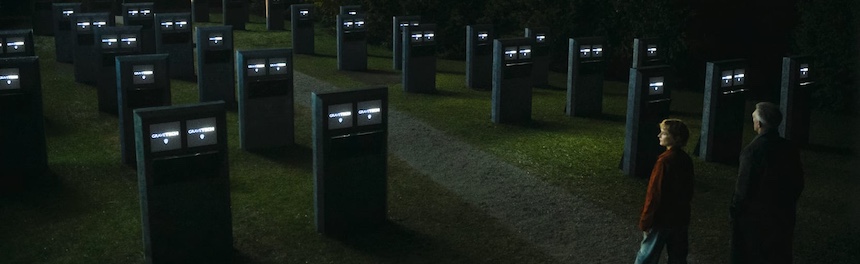
Time does not exist, but it controls us anyway.
That homily comes from One Battle After Another, as the secret password to the question “What time is it?” And it lands, as it’s meant to, as a strain of meaningless New Age nonsense. Leonardo DiCaprio groans. The audience laughs.
“Time”, at last, seems to have turned for Paul Thomas Anderson, at least where the Academy Awards are concerned. After 30 years of Oscar-worthy work but nary a win, One Battle After Another is set to get him at least one, possibly three. He’s a virtual lock for Best Adapted Screenplay, and he’s a predicted favorite for Picture and Director, even if a Sinners upset is still in the cards. But as Oscar night kicks off, the relationship of Anderson’s film to the current moment—its own answer to the question “What time is it?”—is something that I’ve been fascinated by since I first saw it. Especially since it began filming well before the last election, with its third act still largely “TBD”. And even more so since Anderson himself, whose films are rarely topical, let alone programmatic, has seemed so hesitant about fronting such a political contender.
“Who wants to see a movie about the world on fire if the world is on fire?” Anderson said to Sight & Sound. “I don’t.” The project, a father-daughter epic inspired by Thomas Pynchon’s Vineland, was a bucket-list idea that he had been publicly kicking around for well over a decade. When asked what got him to finally tackle it now, he denied that the current political climate had anything to do with it. A closer reason may be the one he gave on The Big Picture podcast: that it was time to get to work because “we’re not getting any younger.”
Time controls us indeed. In a better time, or a road-not-taken, how would One Battle After Another have played? Strange as it may sound, I think that it might be more easily understood—or rather, understood not for its timely qualities but its timeless ones. I won’t be surprised if at least one presentation at the Oscars tonight makes the movie sound like a kind of Stanley Kramer-esque issue film; elements of one are there for the asking. But closer to the heart of the movie is how it uses a dystopian cartoon of America to explore “being political” in the abstract: the pros and cons of radical idealism, its paradoxes, its generational dynamics, its futility, its necessity. And if everything is going to flow from there, did it just happen to land in an America that was well on its way to becoming a dystopian cartoon on its own?
“Happen” is too passive a verb, and it would discount Anderson’s looser-than-usual process of assembling collaborators and feeling their way through the material. Crucial elements of the finished “TBD” third act have been credited to discovering locations and building off of decisions made by the actors. I don’t know what other endings were planned or considered. But it’s worth noting that the ending we got scales back the film’s most ambivalent dialectics—the fetishistic codependence of radical and reactionary, the contrast between good parent/bad revolutionary and bad parent/good revolutionary—to offer its audience a more unambiguous kick of energy. Nothing more than it can deliver, or that pretends to know more than it does. Just hope for everyone who deserves it. Whether Anderson is jousting with the outside world or the outside world has invaded his own, the sentiment does not feel like bullshit.
So future generations seeking to suss out the vibe of our era could do worse than to look at One Battle After Another. Or, for that matter, at any of the 2025 films that very much were made for/by people who want to see a movie about the world on fire if the world is on fire. Quite a few new releases this year were eager to have their finger on the pulse, and they were sometimes telling in their failure as well as their success. Surely there’s a spiritual kinship between One Battle‘s mounting freakout and the conspiracy theorists of The Shrouds, Bugonia, and Eddington? Or the doom-scroll editing style of 28 Years Later? Or the vague but overwhelming apocalypse of Sirat, in which the western world tries to get in one last rave before WWIII? Weapons imbues its suburban horror plot with a free-floating metaphorical dread that suggests several things at once, from COVID to school shootings to a generally decaying social fabric. And with all due respect to Amy Madigan’s chipper, demented Aunt Gladys—if she wins tonight, I won’t be mad—the weakness of Weapons is when it comes time to replace that dread, that paranoid sense of something, with a concrete explanation.
Aspirations to relevance can most certainly be found. A better question is how many people are actually watching. Existential fears about the state of the industry have become traditional, and they always seem worse during Oscar season. Just this week, a Pew poll found that nearly half of Americans hadn’t even gone to the movies at all in the previous year. So before I get to my top 10, here a few stray notes about new releases, some serious and some frivolous, that say something to me about 2025. If not about the world, then about moviegoing.
- A Minecraft Movie. Though it’s since been narrowly edged out by Zootopia 2, for most of 2025 America’s biggest box office hit was this video game adaptation, which drastically outpaced tracking to give a beleaguered Warner Bros. a sleeper they didn’t know they had. Weirdly, of all films, I thought of Easy Rider: young people turning up in unexpected droves to see their subculture on the big screen. And as with Easy Rider, I suspect they’ll have some explaining to do, not just to their elders but their youngers. I actually liked the film more than I expected; it has a thoughtful empathy for why gamers game that goes beyond any particular IP. But along with Deadpool & Wolverine (the #2 film of 2024) and even Barbie (the #1 film of 2023), it creates a trend line for meme-era cinema that I’m not hugely optimistic about. That is, each is a big event movie where an implicit, ironic joke is how crazy it is that someone would even bother to make a movie of this at all.
- That hesitance may be one reason I found myself so happy to go along with Mission: Impossible – The Final Reckoning. It’s hard to think of a film that rips so many plot holes per minute of screen-time, or that’s so light on its feet that it gets away with it. The use of Tom Cruise’s “last movie star” persona has a messianic self-regard worthy of Chaplin in Limelight, but its belief in cliffhanger logic amounts to a weird kind of aesthetic idealism. When it works, it’s old school, and all its digital-age anxieties contrast with fundamentals from far longer ago than the 1990s. (At one point, the villain jumps into a biplane and shouts “Catch me if you can!” He might as well have tied the heroine to the railroad tracks.)
- Speaking of which, the best argument that the star system still exists—not just that we have famous actors, but that an actor’s fame can drive box office—can be found in the success of Marty Supreme. And as Timothee Chalamet’s Oscar frontrunner status rose and fell, the chance that he may simply have been too thirsty for it, in a role too uncomfortably similar to his own press junket, is a compelling narrative of its own.
- On the festival circuit, Radu Jude’s body of work has become unmissable, even if the individual parts are tossed off. Something similar could have been said about Jean-Luc Godard in the sixties, a comparison plenty of others have leapt at, both for the general style and for being defiantly present-tense. And if the main difference is that Jude’s world is more sclerotic, more resistant to change, that’s either Jude vs Godard, Romania vs France, or the 2020s vs the 1960s.
- And last but not least, a shout-out to Kelly Reichardt’s The Mastermind, which misses my top 10 but may have the best ending of the year. As a film about sleepwalking through history, enamored by art and not thinking too much about anything else, it snaps shut on a line of dialogue that only gets more haunting as the credits roll. “Wait! There’s been a mistake!”
Without further ado, my Top 10 (technically 11) of 2025:
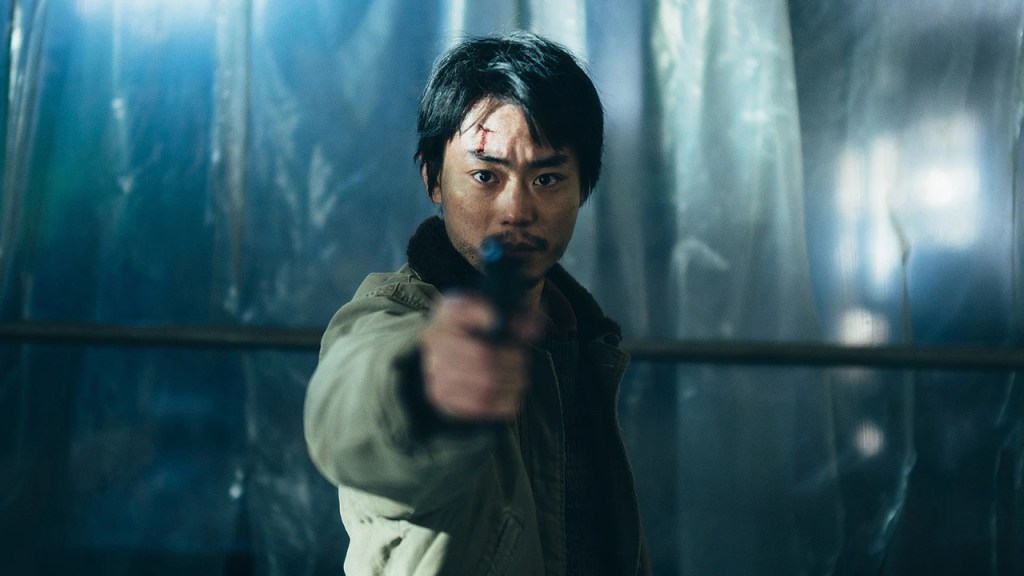
10. Cloud (Kiyoshi Kurosawa, Japan)
Kiyoshi Kurosawa’s films take their time coming to the US, and considering that I was one of only two people at the Nuart, it’s likely to stay that way. But since Cloud‘s subject is capitalism in the age of the internet, there’s something fitting about watching it both in public and virtually alone—and with movie theater speakers to rattle you. As it escalates from paranoia to action and from banality to insanity, there’s joy in seeing it stretch a metaphor to the breaking point. Does it go too far? Probably. But no matter. Few directors today are so adept at rendering their fears in formal terms.
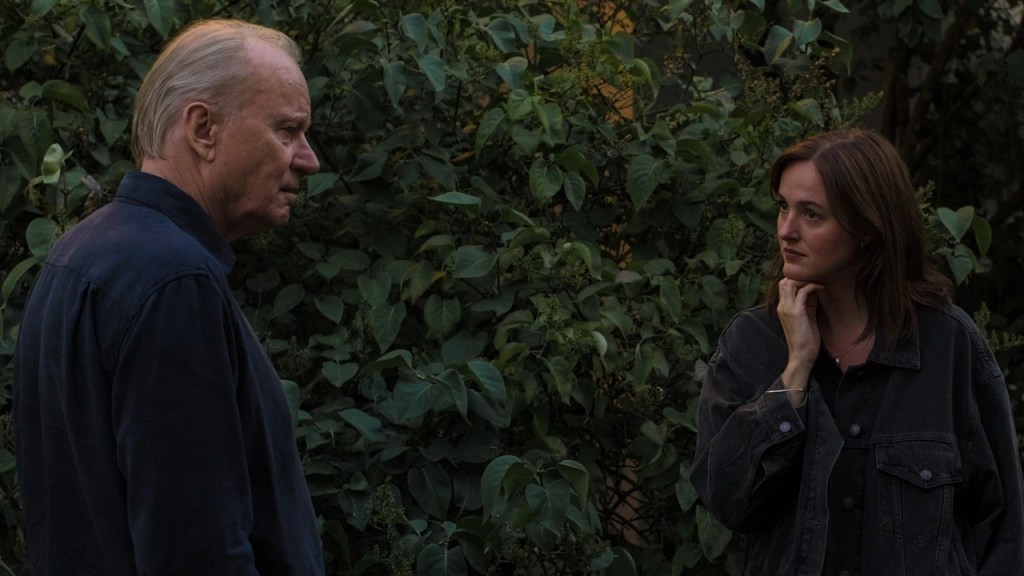

9. Sentimental Value (Joachim Trier, Norway) + Dreams (Dag Johan Haugerud, Norway)
Two arthouse highlights from Norway, connected only in that both are studies of people who work their way through personal dilemmas using fiction. Sentimental Value is the flashier and more sensational; I’ll confess that there’s something to the critique that Trier is too ingratiating towards both his audience and his industry colleagues. But its tangle of life and art is a warm, witty hedge maze to walk, with nuances tucked into little corners and every actor nailing the assignment. Dreams, the Golden Bear winner at Berlinale, might be even better. Its elements are familiar: first love, coming of age, coming out. But they find a more interesting home in the ambiguous space between what’s fantasized about and what actually occurs, and how each side of that divide is viewed differently by us as audiences, to say nothing of us as people. It’s often quite funny, too. And not just because it compares Flashdance to a Nuremberg rally.
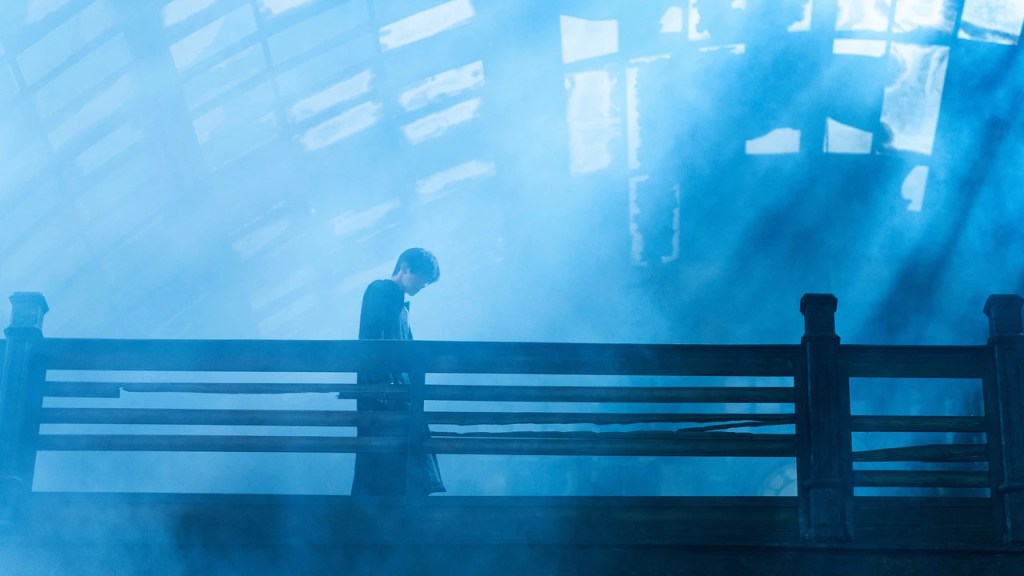
8. Resurrection (Bi Gan, China)
Not the first reincarnation anthology, or even the first to star Shu Qi. But Bi Gan’s six-course meal—a strikingly arty blockbuster in China, a strikingly deluxe arthouse film over here—makes an electrifying argument for maximalism as the essence of moviemaking. Forget plot. As themes plus style, its self-reflexive odyssey never loses the thread, touching on cinema as comfort, as nightmare, as spirituality, as opportunism, as a way to live out wish-fulfillment or make social statements or record the natural world. The sheer grandiosity can trigger your disbelief, but its abundance means that if something isn’t entirely to your taste, something completely different isn’t far behind. If you’re up for a trip from the Lumiere Brothers to Wong Kar-wai, the relish it takes is infectious.
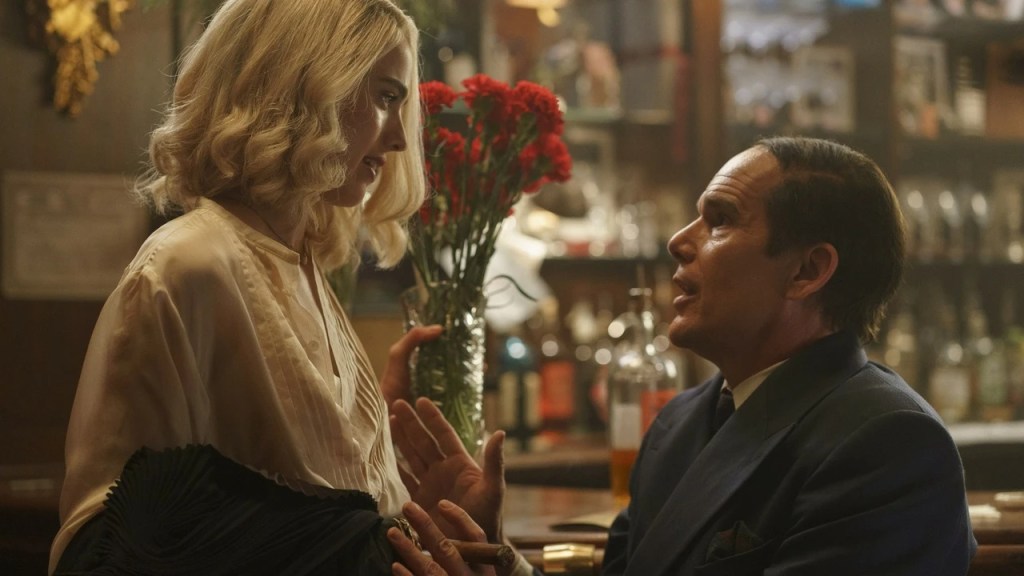
7. Blue Moon (Richard Linklater, US)
Considering that you have no memories of Ethan Hawke where he’s short or bald, he disappears into the role quickly. And especially considering that there’s only one scene where he’s not the main focus, he carries it with ease, delivering page after page of brilliant dialogue and bringing out the ache in everything his character actively tries to hide: that his best work is behind him, that he never cured what ails him, that he’s too old for Margaret Qualley, and that if he makes peace he can savor what’s left. It’s one of the year’s finest tragicomic creations. And a memento mori as lively as every memento mori should be.
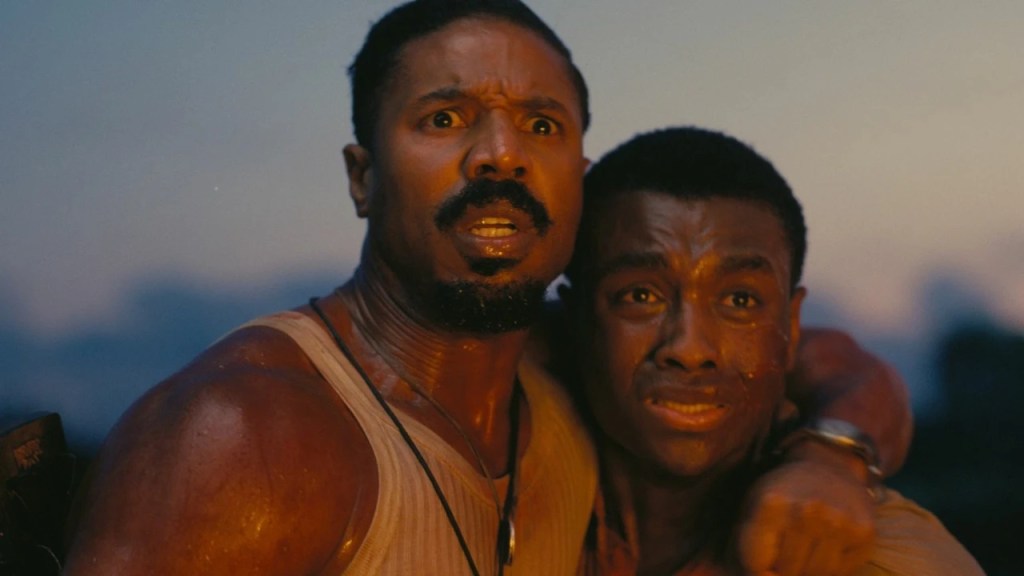
6. Sinners (Ryan Coogler, US)
Ryan Coogler’s genre-bending tentpole was praised so much so fast that I suppose some backlash was inevitable; I’ve met a few people this Oscar season who chased the hype and felt disappointed. But Sinners isn’t going anywhere, and whenever I revisit it, its plateaus bother me less and its peaks delight me more. Quite apart from the principle of the thing—a blockbuster that’s not based on prior IP, that isn’t soaked in hip detachment, that takes its time to develop mood and character, and that’s very much about something—its craft and vision are robust. If the responses to social deprivation include religion and outlawry, somewhere in between lies a wealth of American music.
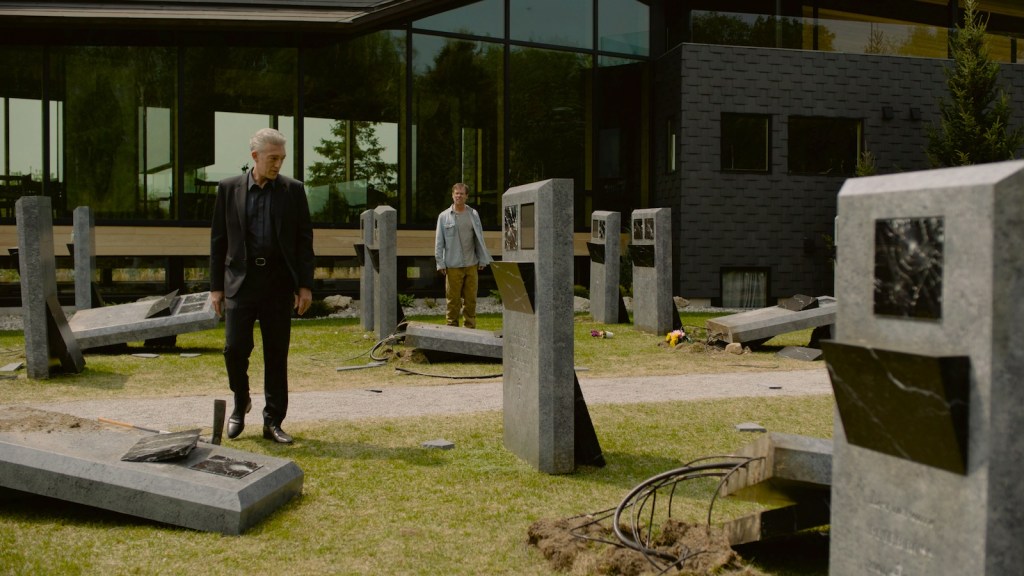
5. The Shrouds (David Cronenberg, Canada/France)
Another film that demanded a revisit. My initial gut reaction was that this was the least engaging Cronenberg film in decades. But his films were always so much more for the head, and The Shrouds quickly got stuck in mine. Its opening act (soulful, morbidly witty) shows a sci-fi conceptualist undiminished. And as it gambles on tangents and dead ends, what it amounts to is less a paranoia thriller than a film about the role paranoia plays in processing unstable times—a theme for 2025 if anything is. Other brain-ticklers: the use of dream states, and how Cronenberg’s latest “futuristic” vision is uncommonly filled with signifiers of the present, be they topical, self-referential, or totally mundane. The weirdest, funniest product placement Tim Horton’s ever got.
4. Misericordia (Alain Guiraudie, France)
The opening car ride feels like something more: a trip to the past, or to some recess of the subconscious. The instant unease is exquisite. And as you wonder if everything is going according to plan, or if there’s even a plan at all, Guiraudie’s murder story can get away with withholding answers, sometimes indefinitely, because he’s an exceptional director. The film gets so much from its eerie autumn imagery that you can hear them hurrying to get every shot before the leaves fall. And it might slowly dawn on you that its whole world is somehow empty except for the main characters. A Freudian noir, and one that lingers.
3. Henry Fonda For President (Alex Horwath, Germany/Austria)
After playing Berlinale in 2024, Horwath’s epic video essay had a limited release last Spring and has popped up at a few festivals and cinematheques since. But as of now, it’s still unavailable to buy or rent on demand, so cheers to Le Cinema Club for giving it a week-long run online for cinephiles to catch up on one of the year’s very best. Using a beloved Old Hollywood persona to explore a century or more of American ups and downs, it’s truly an outstanding work of documentary construction. A crash course in how we got here that’s not just insightful, impassioned, and enthralling, but proof of what any repertory hound could tell you: that movies, even “old” ones, exist in dialogue with the world outside the theater.
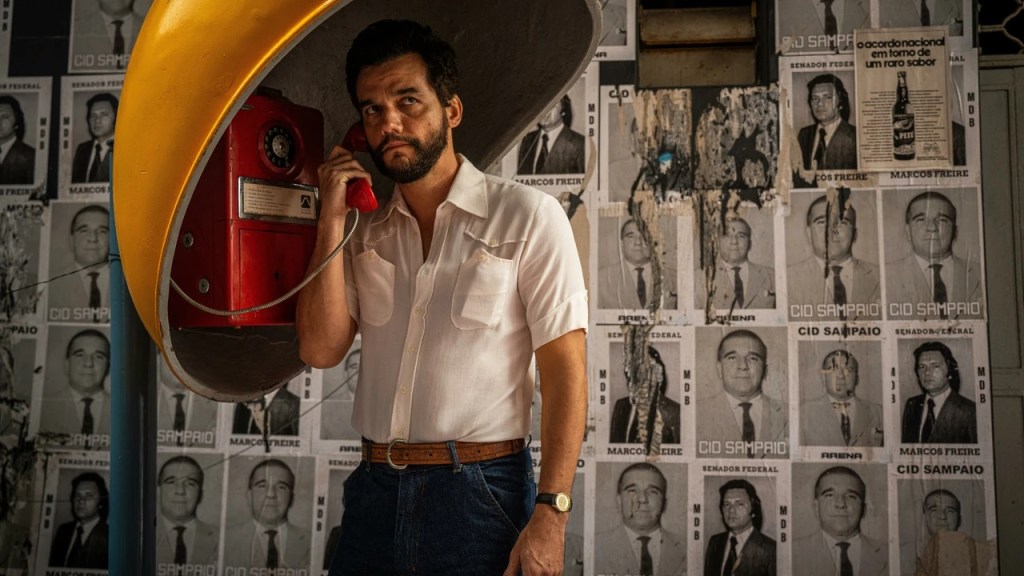
2. The Secret Agent (Kleber Mendonça Filho, Brazil/France)
The opening scene of this political thriller dances around a corpse abandoned in the road, covered up as tastefully as possible but still a rotting reminder for the public square. So you can credit Kleber Mendonça Filho for picking pungent metaphors—and one of the film’s most fruitful is “the movies” themselves, because how better to get at collective memory and scary scenes you close your eyes for? It lands. Even at two and a half hours, it doesn’t run out of revelations, and even the big swings that don’t quite work leave you productively unmoored. A key touch: its structure, which draws out the helplessness of any story that unfolds in the past tense.
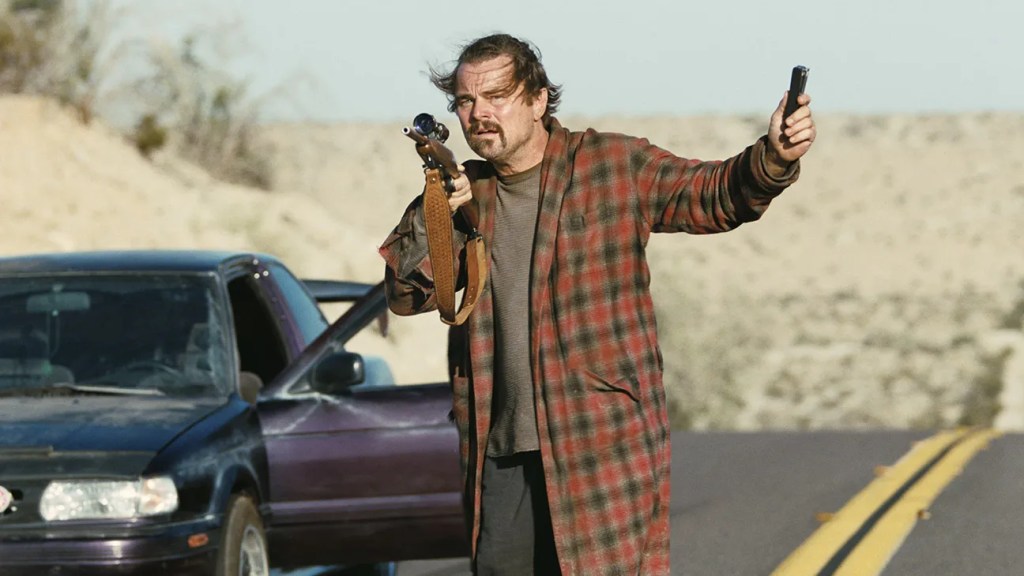
1. One Battle After Another (Paul Thomas Anderson, US)
The rare P.T. Anderson film to put it all on the surface; I suspect thornier films like The Master and Inherent Vice will have secrets to give up for much longer. But if what you see is what you get, what you get is some of the most dazzling filmmaking of the decade—a sterling case of imagination and engagement running in tandem. Its creation of an America that’s both speculative and grounded is downright tactile. There are scenes where I’d swear you can feel the California air. And from its action to its performances to its earnest hopes for Zoomers, the effect is alarming but ultimately a rush. Special notice to Sean Penn’s sexually repressed slapstick and the hilarious serenity of Benicio Del Toro. Regardless of how the Oscars go tonight, I foresee a long future of it being revived at repertory festivals here in LA. In fact, that future may have already begun.
*****
The Honor Roll: 15 more films that made movie-going worthwhile this year…
Afternoons of Solitude (Albert Serra, Spain/France)
Bugonia (Yorgos Lanthimos, US/UK)
The Empire (Bruno Dumont, France)
Hamnet (Chloe Zhao, US/UK)
I Only Rest in the Storm (Pedro Pinho, Portugal/France)
It Was Just an Accident (Jafar Panahi, Iran/France)
Kontinental ’25 (Radu Jude, Romania)
Marty Supreme (Josh Safdie, US)
The Mastermind (Kelly Reichardt, US)
No Other Choice (Park Chan-wook, South Korea)
The Phoenician Scheme (Wes Anderson, US)
Presence (Steven Soderbergh, US)
The Smashing Machine (Benny Safdie, US)
Sorry, Baby (Eva Victor, US)
Weapons (Zach Cregger, US)
 The Perpetual Present