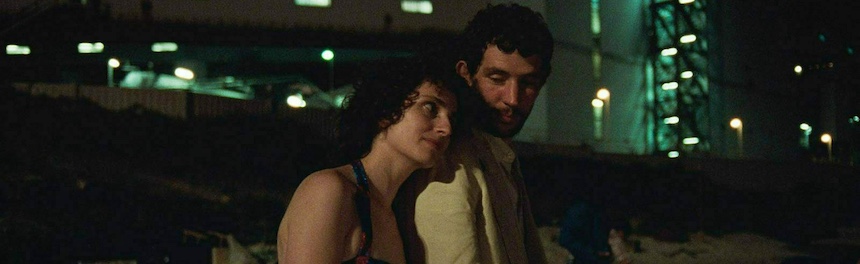
This Oscar season, with LA recovering from the wildfires, Trumpists and tech bros taking over the federal government, and any annual event confronting whether/how to pretend that everything is normal, somewhere in the back of my mind I’ve kept a small secret.
I did not hate Emilia Perez.
Granted, I didn’t love it, and even “really liked” would be an exaggeration. But then, as now, I thought it worked just fine as pure spectacle, capable of snowplowing scrutiny if not withstanding it. Seeing it at the Nuart rather than on Netflix surely helped. And after I tottered home, I was surprised that my 3-out-of-5 Letterboxd rating was higher than anyone else’s in my network. When it got 13 Oscar nominations—a record for any non-English language film, and almost the highest of any film ever—there was chatter that the Academy was on track to make its most embarrassing self-congratulation since Crash. Going into the big night, Emilia Perez‘s Letterboxd average, derived from 430,000 online cinephiles, is 2.1 out of 5 stars—slightly below Howard the Duck.
There were reasons the backlash came swift, and before Karla Sofia Gascon’s Twitter history scuttled most of its Oscar hopes. (More on that in a minute). Indeed, a degree of skepticism was warranted right from its debut at Cannes. It’s bad enough that “visionary” has become such an overused word in movie marketing; Netflix running an ad campaign with the term “renegade auteur” was a new level of cringeworthy. Especially if that “renegade auteur” is Jacques Audiard, a director who, at least from my American perspective, always seemed like a perfectly respectable, mild, bourgeois, well-schooled, middle-of-the-road arthouse quantity, and not someone known for biting the hand that feeds. So Emilia Perez right away drew the well-earned wariness of a certain kind of festival hype: novelty acts that are sold as daring, important, groundbreaking, etc., when most of what they seek is attention. Which, for a lot of cinephiles, is irritating enough. And then there’s all the ways it felt touristic, and thus angered a lot of the people it presumed to speak for.
As far as I can tell, Audiard’s trans musical is divisive at best in the trans community. And as a film that freely uses stereotypes about Mexico, but is written and directed by Europeans, filmed in France, and stars actresses from Spain and the United States, its Academy love has pissed off our southern neighbors in a way that “The Gulf of America” could only dream of. Audiard ended up having to bow out of a Q&A in Mexico City, and a Mexican crowd-funded response film—”Johanne Sacreblu”, a musical about France starring no actual French people—is available on YouTube for any connoisseurs of cinematic trash-talking.
Suffice it say, Emilia Perez is in a much weaker position now than when the Academy nominated it, and certainly than when I went to the Nuart last fall. Even the prize for Best International Film is up in the air. But if I’ve lingered on a film that doesn’t make my top 10, it’s because it isn’t every Oscar night that a streaming service causes such a ruckus. Or offers such an array of case studies.
For one, there’s a serendipitous lesson in how Emilia Perez is up for a record number of Oscars the same weekend that Francis Ford Coppola’s Megalopolis was up for the Golden Raspberries, when any critical consensus on the two (or lack thereof) doesn’t quite jibe with that polarity. Both arrived from Cannes with a carnival barker’s pitch of bold artists doing things that just aren’t done. Both were derisively excerpted on social media as examples of crazy, self-evidently bad ideas for a movie—never mind that those excerpts are much more natural, and more self-aware, in their full context. And neither can be sensibly championed without heavy asterisks.
But the question of why Emilia Perez fit the Academy while Megalopolis attracted the Razzies is a brand proposition worth mulling, and may have something to do with the fact that Megalopolis a) was doomed from the start to lose a lot of money, b) is far off from any notion of contemporary trendiness, and c) is close enough to Hollywood that charges of pretension and egomania stick to it more than they would to a “foreign” “art film”. (In defending Megalopolis against accusations of self-indulgence, Time critic Stephanie Zacharek asked, “haven’t we had enough movies that are audience-indulgent?” The question was rhetorical—and Deadpool & Wolverine hadn’t even come out yet).
Megalopolis isn’t in my top 10 either. But it comes a lot closer than Emilia Perez and is already lasting longer. Despite the negative reviews, its unlikely fusions—silent-era techniques and CGI, personal essay films and massive blockbusters—are a heady, stimulating response to a timid cinematic ecosystem. Jonathan Rosenbaum once spoke of the importance of “the cinema of personal obsession.” And my own preference, hardly unique, for Megalopolis over Emilia Perez comes from how Coppola’s film feels genuinely obsessive while Audiard’s feels like the work of a social dilettante.
And last but not least, there’s the politics of the Karla Sofia Gascon affair. With her nomination, she became the first openly trans actress to be up for an Oscar. But if Emilia Perez was divisive before, it became a PR catastrophe after Gascon’s old Tweets resurfaced: a cascade of toxic reactionary sludge about everything from Muslim immigrants to China to (of all things) the Academy’s own recent diversity efforts. Netflix retooled their campaign, scrubbing her from their For Your Consideration ads, and Audiard distanced himself. It wasn’t until this week that Netflix confirmed she’d be attending the ceremony. If her nomination had been meant to represent something simple—a trailblazer—any symbolism of the saga is now a good deal messier, but so much more indicative of our times that maybe the sanest reaction is to just want the whole damn thing to be over with. (I suspect that’s where a lot of the Academy is). As clusterfucks go, it was a fitting coda to 2024: what was intended as a feel-good but mostly toothless left-of-center moment got caught up in the western world’s lurch towards nativism, opening up a chaotic power vacuum in the process.
At the Oscars at least, that power vacuum looks likely to be filled by Sean Baker’s Anora, which picked an ideal moment for a burlesque comedy about how the American dream is more accessible to Russian oligarchs. Conclave, which gathered momentum at the BAFTAs and the SAG Awards, could be a spoiler as the more traditional candidate. A common line on The Brutalist was that people were sold on the first half but colder on the second.
I could say the same for Anora. For that matter, I could say the same about such festival hits as All We Imagine As Light and Evil Does Not Exist: that the launch and the buildup were more satisfying than the destination. Which is fair enough, I suppose. In early 2025, compiling a list of the “best of” anything for the last 12 months felt a bit like salvage. But worthy contenders abounded, and the list below has films I value as much anything to come out this decade—a mixture of old verities and new experiments, festival riches and intelligent pop, big statements and miniaturist gems, familiar icons and young upstarts.
As we accelerate into what’s already a new season in hell, “don’t lose your capacity to feel shock” is a good piece of advice. “Take comfort in the things you don’t hate” is another.
My Top 10 of 2024:
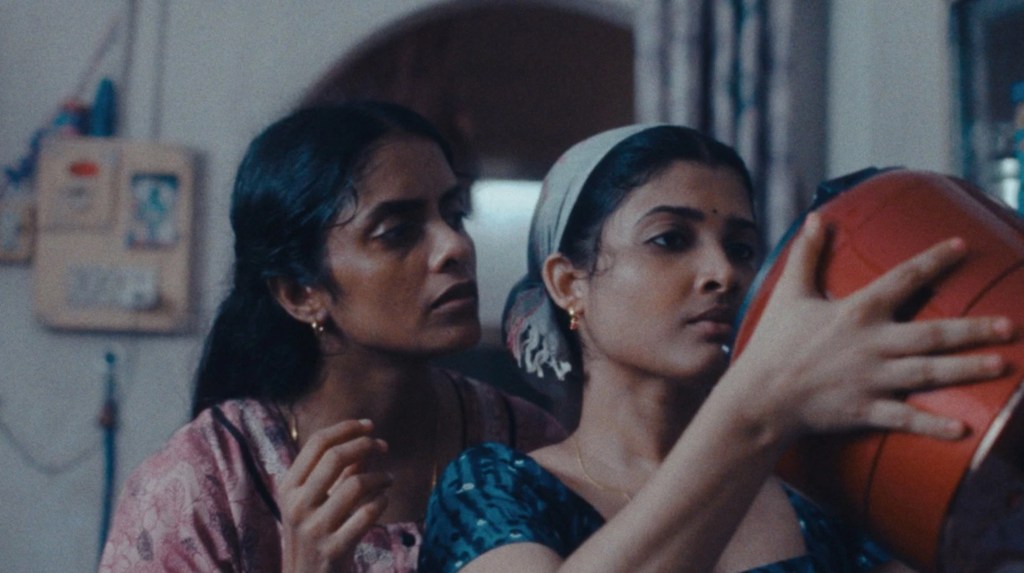
10. All We Imagine As Light (Payal Kapadia, India)
Payal Kapadia’s feature debut landed at or very near the top of a lot of critic’s lists. So take its relatively low placement on mine less as certainty that we have a new arthouse classic than that we have a new director (one under 40) who’s capable of one. There’s so much in All We Imagine As Light to love, and Kapadia’s eye is undeniable. She gets beautiful, naturalistic performances from her cast. She builds suspense without leaning on sensationalism. She makes the personal political, and vice-versa. And she turns “light” into such a lucid running metaphor that she hardly needs to put it into a speech: the fluorescent or overcast mediation of the crowded city, paired with music that evokes neither happiness nor melancholy, but a kind of serenity.
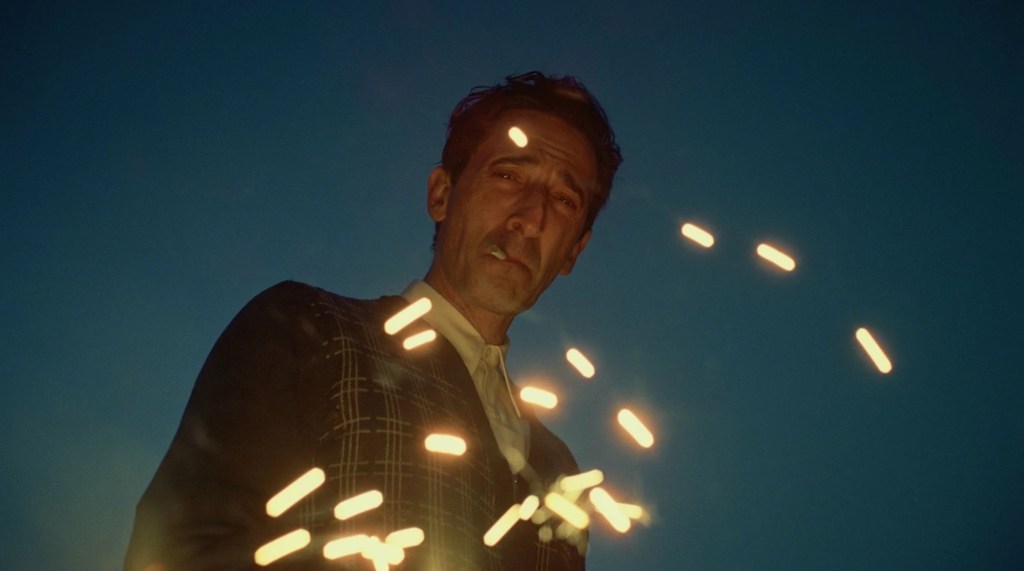
9. The Brutalist (Brady Corbet, US/UK)
Does Corbet touch a hot-button issue without taking a clear stance on it? Is the third-act shock too much? Are its characters remotely as well-rendered as its most elaborate shots? Did they set out to film a magnum opus before they’d fully conceived of one? In short, is Corbet the Director let down by Corbet the Writer, never mind Corbet the Interview Subject? It’s been a while since we’ve had a swing at an American epic where such questions were worth debating, and admittedly not all the answers trend in Corbet’s direction. But there are reasons to favor The Brutalist beyond the 70mm principle of the thing. The narrative hook and sheer physical craft of it all. The transporting defamiliarization of America. The squirming, implacable sense of being an unwanted stranger. (Casting Adrien Brody has made people leap toward The Pianist, but a closer Polanski comparison is The Tenant). And most of all, the surprising ways that certain themes get left suspended—including by the epilogue, whose final touch projects back on the movie, opens the context, and niggles away at you.
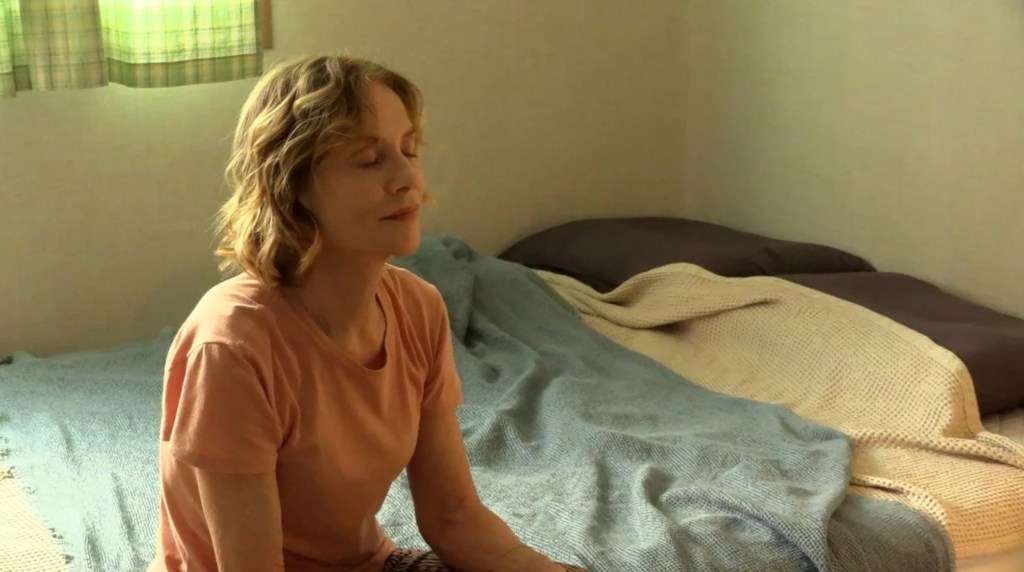
8. A Traveller’s Needs (Hong Sang-soo, South Korea)
“You’ll love your true emotion expressed in a foreign language.” Moving back and forth between three languages—four, if you count music—Hong Sang-soo’s latest gets the most out of its multilingual nature, serving up a story about connections and separations, about perceptions of strangers, about what people hide or reveal. Charming and non-academic for a director who isn’t always, and buoyed by a poker-faced Isabelle Huppert, it adds another sneaky installment to his sketchbook of the big themes that are lying around in plain sight. “Dandelions” and “magpies” for sure.
7. Hard Truths (Mike Leigh, UK)
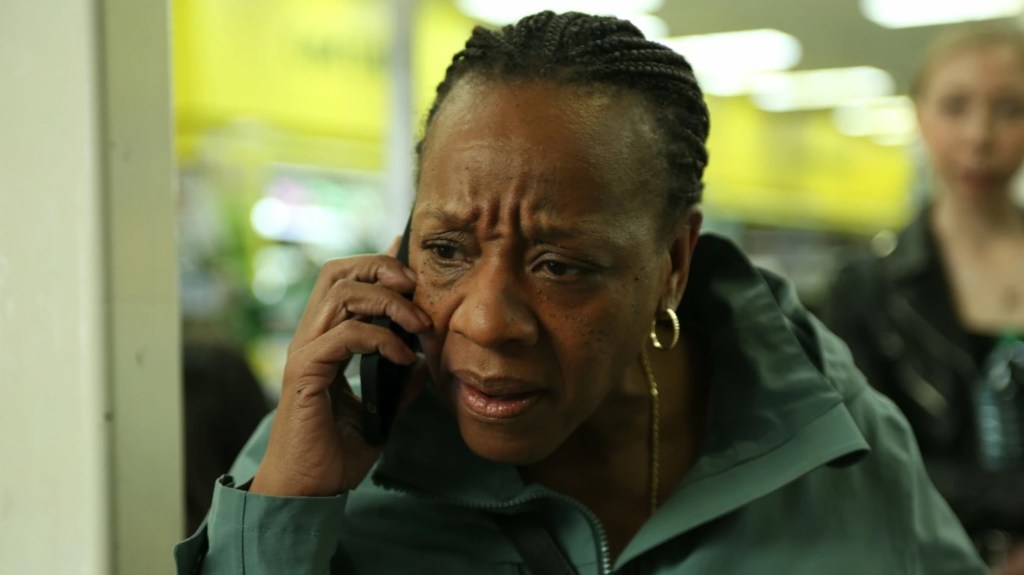
It’s a mystery why so many festivals passed on the new Mike Leigh film when you’d think he’d be set for life. True, it asks you to spend 100 minutes in the orbit of the most disagreeable wretch in Britain—but the trip is abrasive, funny, and ultimately heartbreaking in all the right ways. As the antiheroine hurtles judgmental invective at everyone in her life, at times she even makes a point that’s no less correct, or more incorrect, than one of Leigh’s desperate optimists. But Leigh’s hard truth, as ever, is that happiness is what you actively make it. And in Marie Jean-Baptiste, we got an Oscar-level acting showcase that’s less about surface transformation than revealing something human. The Academy passed too.
6. Last Summer (Catherine Breillat, France)
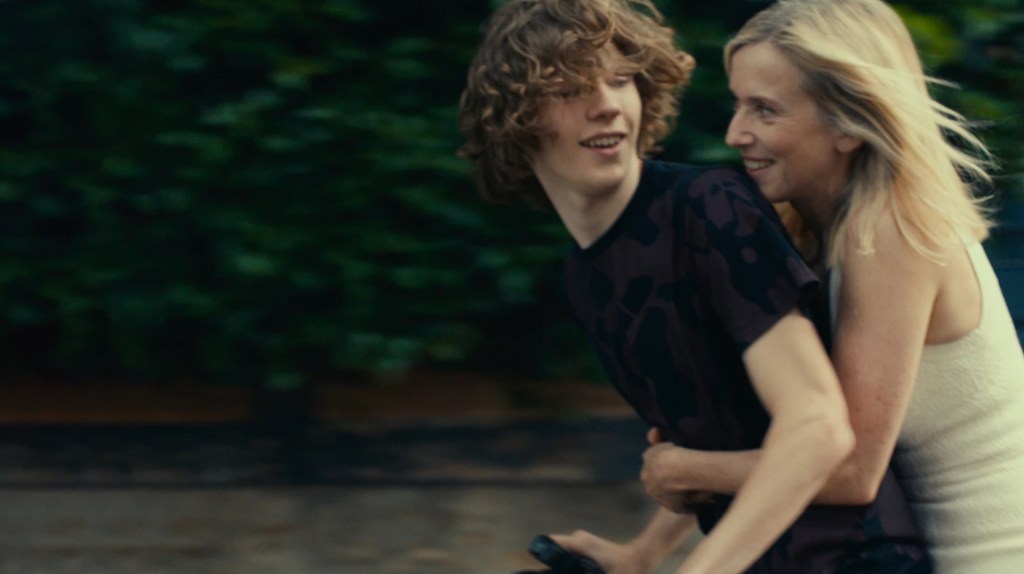
Catherine Breillat’s return to the director’s chair finds her in a less transgressive mode—at least, as much as a drama about sexual impropriety could allow. But if explicitness is scaled back, implications are not, and despite its pared-down plot they may be stuck in your mind the next day. Whether any character is sympathetic keeps twisting, scrambling any labels or messaging while staying totally coherent. One irony of which is that, while Breillat has controversially defined herself as “anti-MeToo”, she’s offered an unsettling, crystalline rendering of the conditions—the hypocrisy, the denial, the protection of one’s own—in which the dam burst.
5. I Saw the TV Glow (Jane Schoenbrun, US)
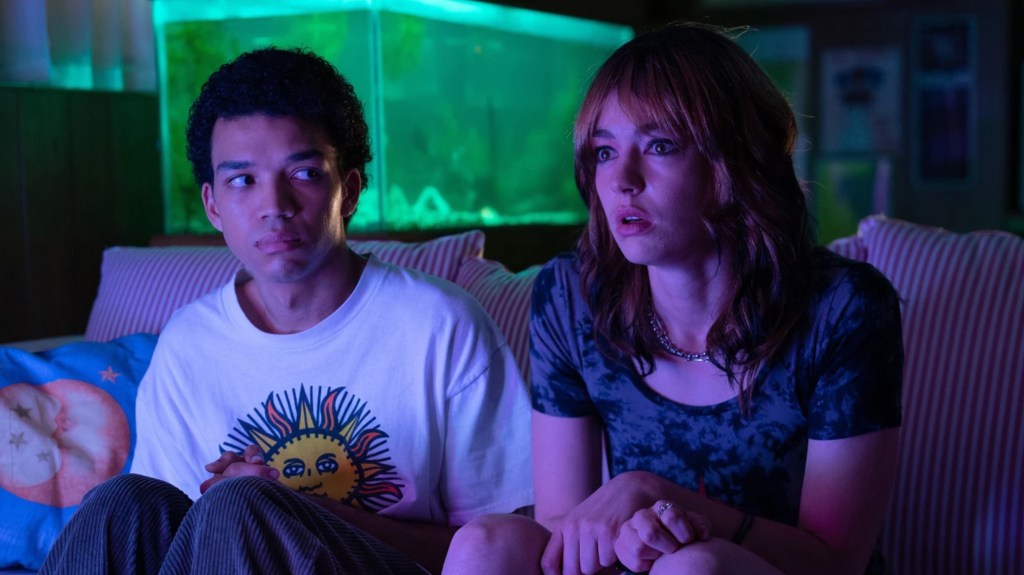
A true scare: the 1990s—their Lisa Frank colors, Smashing Pumpkins needle-drops, pre-VOD television, pre-internet fandom—are now fit for a period piece. But Jane Schoenbrun finds such fresh, vivid use for them. This is like if Todd Haynes did a Halloween sequel: suburban horror where a Queer-coded gaze picks up undercurrents beneath “normal” culture. Tragic and genuinely freaky. And unlike a lot of the current crop of “elevated horror”, it’s not elevated over moving fast and having fun.
4. Furiosa: A Mad Max Saga (George Miller, Australia/US)
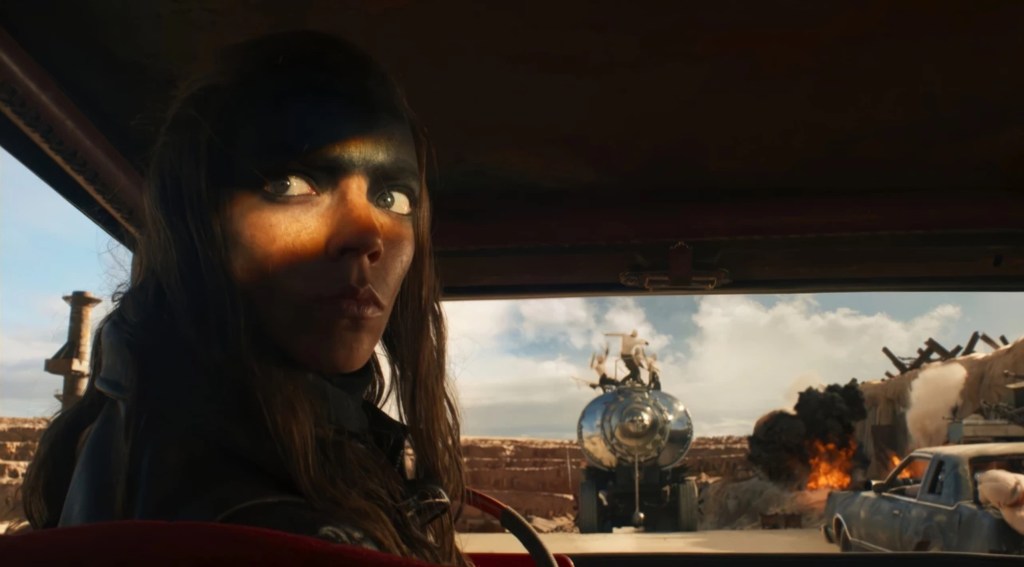
In its play for non-stop action, Fury Road left context and psychology mostly just gestured at. But the word “saga” isn’t in this prequel’s title for show: Furiosa feels like a history being recounted more than a story being told, and all its methodical world-building is a true twist for a series whose M.O. was always to drop you into the middle of the most gonzo shit imaginable. Which is not to say either method is better, just that Miller is trying something new and pulling it off. The action is superb. The arc is meaningful. No franchise blockbuster this year did better by any metric, except box office.
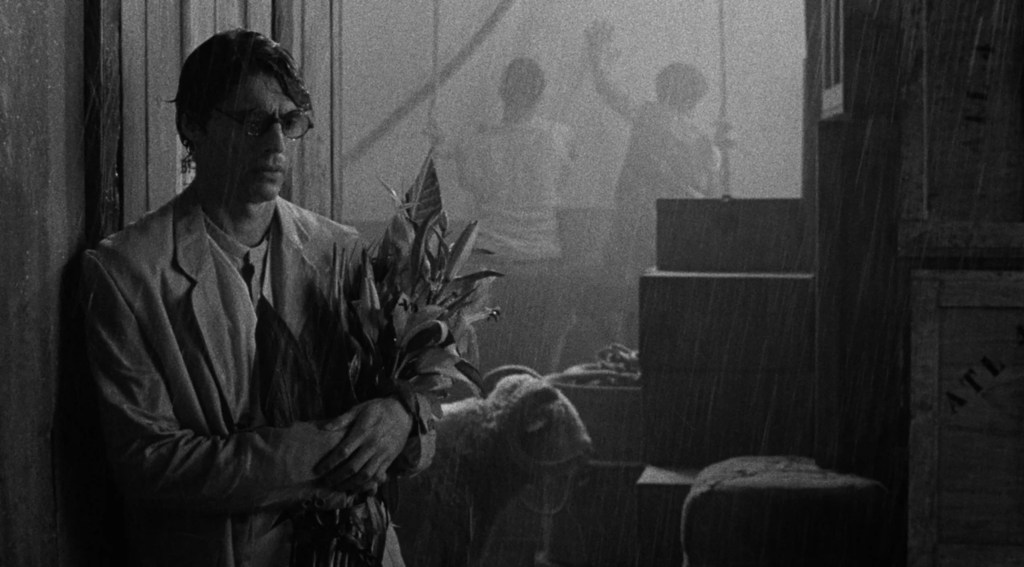
3. Grand Tour (Miguel Gomes, Portugal)
Few movie experiences of 2024 were as bewitching as being a stowaway on Miguel Gomes’ ship. The dissolution of barriers is exquisite: Grand Tour toggles between dream and reality, past and present, black-&-white and color, Sternbergian studio sets and documentary footage, and a half dozen all-knowing narrators. And it does so without obeying any logic but its own, with an utterly focused continuity of purpose. Perhaps it can collapse such planes of existence because “Molly” and “Mr. Abbott” are an eternal story on all of them. And Gomes understands better than most that being “a story” (no more and no less) encompasses a lot.
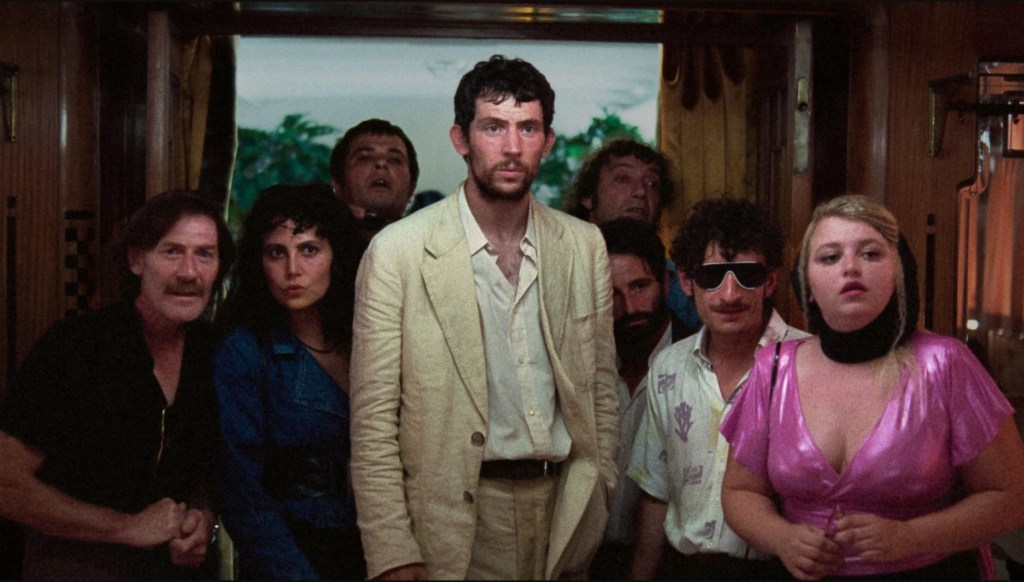
2. La Chimera (Alice Rohrwacher, Italy)
Rohrwacher excels at a kind of casual, earthy magic. The naturalistic photography feels like all its beauty was simply found, that none had to be juiced by filmmakers, and that shots were determined by the position of the sun. But “natural” is not the same as “realistic”, and the enchantment of La Chimera is its certainty that something extraordinary exists. As romantic metaphors go, wondering what treasure is undiscovered beneath your feet is a good one. As “outer” and “inner” blur together, the film chases it to a conclusion more tragic than expected. But no less honest. Or magical.
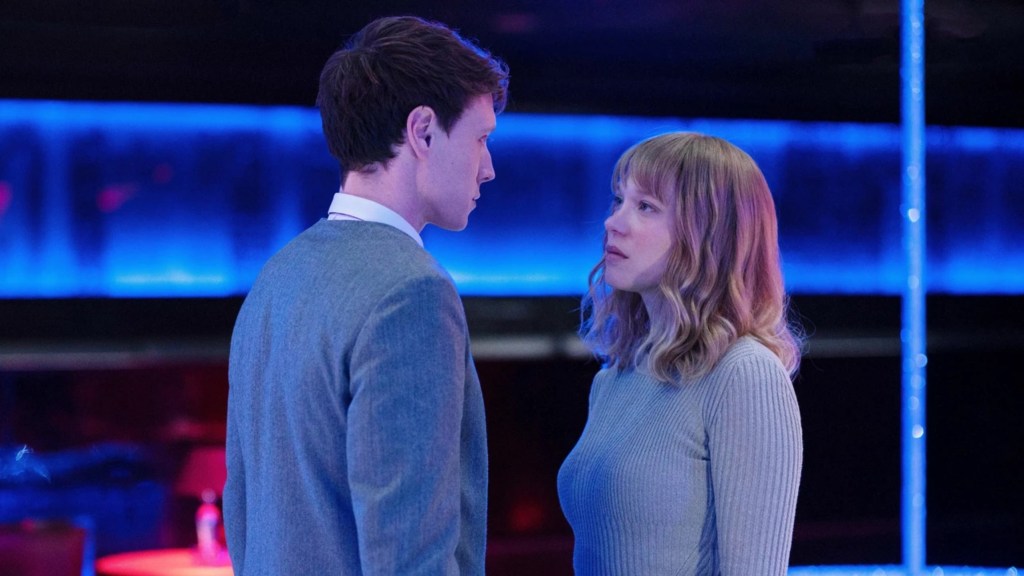
1. The Beast (Bertrand Bonello, France)
Bertrand Bonello’s latest is one of those films where a big part of the suspense is what on earth it’s all about. So ideally, you should go in knowing nothing—just curiosity about why there are those of us who found it the movie of the year. But if you need a pitch, it’s a time-bending sci-fi romance in a French New Wave vein; one virtue is that it gives an idea of what it must have been like to see something like Alphaville or La Jetée when it was new, before the future became the past. But the true arc of its love story belongs to love itself, and only romanticism could power its ultimate sense of horror. Bonus: intentional digital tics that make watching it at home on your streaming system uncannily appropriate.
*****
The Honor Roll: 15 more films that made movie-going worthwhile this year…
Anora (Sean Baker, US)
Caught By the Tides (Jia Zhangke, China)
Chime (Kiyoshi Kurosawa, Japan)
Evil Does Not Exist (Ryusuke Hamaguchi, Japan)
The First Omen (Arkasha Stevenson, US)
Here (Robert Zemeckis, US)
Inside the Yellow Cocoon Shell (Phạm Thiên Ân, Vietnam/Singapore)
It’s Not Me (Leos Carax, France)
Janet Planet (Annie Baker, US)
Love Lies Bleeding (Rose Glass, US)
Megalopolis (Francis Ford Coppola, US)
Nickel Boys (RaMell Ross, US)
No Other Land (Basel Adra, Hamdan Ballal, Yuval Abraham and Rachel Szor, Palestine/Norway)
A Real Pain (Jesse Eisenberg, US/Poland)
The Substance (Coralie Fargeat, US/UK/France)
 The Perpetual Present